Measures sought to promote sustainable use of genetic resources

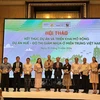
The Ministry of Science and Technology (MoST) on July 29 organised a conference to evaluate the programme to use genetic resources sustainably in the 2015-2024 period and orient its implementation in the 2025-2030 period.

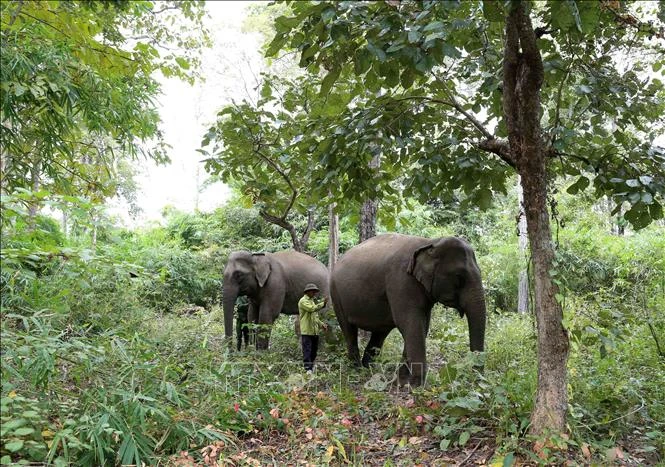
Domestic elephants are raised in a semi-wild form in the forest of KRongNa commune in Buon Don district of Dak Lak province. (Photo: VNA)

Hanoi (VNA) – The Ministry of Science and Technology (MoST) on July 29 organised a conference to evaluate the programme to use genetic resources sustainably in the 2015-2024 period and orient its implementation in the 2025-2030 period.

The event provided a chance for managers, scientists, and experts to share their experience, pointed to difficulties and challenges in the work, and proposed solutions to enhance the efficiency of the programme.

Addressing the event, MoST Minister Huynh Thanh Dat said that in the 2015-2024 period, the programme has preserved over 80,000 endemic, precious, and rare genetic resources, which is an extremely valuable source of materials, serving the selecting and crossbreeding of new varieties with better productivity, quality and higher value.

Besides, researchers have initially evaluated nearly 56,000 genetic resources, many of which have been exploited and applied in production and life such as Ngoc Linh ginseng, mantis shrimp, “ho” fish (Catlocarpio siamensis), high-quality native rice, Vu Huong tree, and “lon i” (Vietnamese pot-bellied), he said.

The minister said that the programme covers living biological genetic resources requiring regular and continuous conservation and development. Therefore, it is urgent to build a legal corridor to continue implementing it in the next phase, ensuring there will be no interruptions.

Prof. Dr. Chu Hoang Ha, Vice Chairman of the Vietnam Academy of Science and Technology, said that the Fourth Industrial Revolution has shown the importance and role of indigenous genetic resources in socio-economic development based on the strengths of agricultural development and diversity of indigenous genetic resources.

Therefore, in the 2025-2030 period, it is necessary to continue to prioritise the development of in-depth basic research on genetic resources combined with traditional research on animal, plant and microbiological genetic resources, the expert held.

Participants at the event highlighted achievements that the programme has recorded, pointed to limitations in mechanisms, policy and management as well as professional activities of parties engaging in the programme so far, and proposed solutions to existing problems in the work./.
VNA

See more

Crested goshawks are handed over by the People's Committee of Dong Le commune, Quang Tri province. (Photo: VNA)

Quang Tri rescues six rare wild animals

The animals are now receiving quarantine, treatment and specialised care. Once recovering their physical condition and wild behaviour, they will be reassessed for release back into the wild.

The Ministry of Industry and Trade has reported initial signs that the fuel is helping reduce emissions and protect the environment. (Photo: VNA)

E10 biofuel shows initial environmental benefits: Ministry

An official said the initial results indicate the nationwide rollout has begun to achieve its intended objectives, but more comprehensive monitoring over a longer period, with a wider observation network and more frequent measurement, is needed for a precise and objective assessment.

Forest development in Phan Son commune, Lam Dong province. (Photo: nhandan.vn)

Vietnam lays groundwork for transparent carbon market

Experts say the launch of the trading platform is only the first step. The long-term success of the market will depend on a transparent system backed by robust measurement, reporting and verification (MRV) standards to ensure every transaction reflects genuine emissions reductions.

A rubber plantation are in Dong Nai province. Vietnam has more than 900,000 ha of rubber plantations, with over 60% operated by smallholders. (Photo: VNA)

Rubber traceability accelerated as EU deforestation regulation deadline nears

Speaking at a conference held recently in Ho Chi Minh City to gather feedback on draft EUDR compliance guidelines for the rubber sector, Nguyen Quoc Manh, Deputy Director of the Plant Production and Protection Department under the Ministry of Agriculture and Environment, said that Vietnam had spent the past three years preparing for the regulation through awareness campaigns, training programmes and coordination with ministries, local authorities and businesses.

A view of the Can Gio mangrove forest, a crucial "carbon sink" ecosystem that contributes to generating carbon credits for operating Vietnam's carbon market. (Photo: VNA)

Vietnam earns 56.5 million USD from forest carbon credit sales to World Bank

Speaking at a conference in Hanoi on July 2 to introduce Decree No. 180 on forest carbon sequestration and storage services, Luong said the latest transaction brought the country's total revenue from the transfer to 56.5 million USD, covering 11.3 million tonnes of CO2 emission reductions at a price of 5 USD per tonne.

Dray Sap Waterfall is located within the UNESCO Dak Nong Global Geopark in Nam Da commune, Lam Dong province. (Photo: VNA)

UNESCO review spurs conservation drive at Dak Nong Global Geopark

The provincial Department of Culture, Sports and Tourism, in collaboration with the Vietnam UNESCO Global Geoparks Network and relevant agencies, surveyed 41 geological, cultural and tourism sites across the geopark, identifying a number of issues requiring urgent attention to safeguard the site's outstanding values.

The release site is carefully selected to provide suitable ecological conditions and improve the pangolin's chances of survival in the wild. (Photo: VNA)

Tay Ninh releases rare pangolin back to nature

Following health checks, care and monitoring, the pangolin was confirmed be in good condition and fit for release. The release site was carefully selected to provide suitable ecological conditions and improve the animal's chances of survival in the wild.

Sarus cranes cranes are being cared for at Nakhon Ratchasima Zoo in Nakhon Ratchasima province, Thailand. (Photo: VNA)

Six sarus cranes from Thailand arrive in Dong Thap

Of the six cranes, two are males and four females, with individual weights ranging from 5.3kg to 6.7kg. The birds were raised at Nakhon Ratchasima Zoo in Thailand and transported to Vietnam by air.