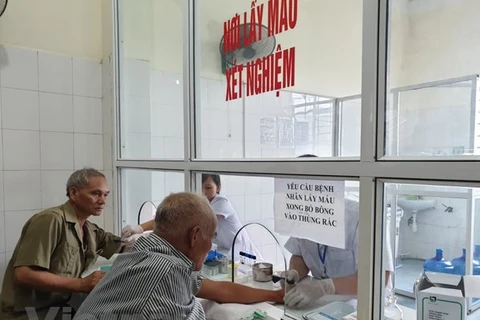
Most people with prediabetes are not aware of their health condition, putting them at high risk of diabetes (Photo: VNA)
 Hanoi (VNS/VNA) - Most people with prediabetes are not aware of their health condition, putting them at high risk of diabetes, health experts warned.
According to the International Diabetes Federation, about 5.3 million people in Vietnam have prediabetes, accounting for 8.6 percent of the total population.
The number of people with prediabetes is 1.4 times higher than the number of people with diabetes.
Studies show that about 11 percent of people with prediabetes turn into diabetes patients annually.
About 15-30 percent of people with prediabetes would suffer diabetes in five years and up to 50 percent in 10 years.
It is predicted that by 2045, about 7.9 million in Vietnam will have prediabetes which is a serious health condition where blood sugar levels are higher than normal, but not high enough yet to be diagnosed as type 2 diabetes.
The figures were unveiled at an event organised by Vietnam Association of Diabetes & Endocrinology and Merck Export GmbH Vietnam (Merck Vietnam) to raise public awareness of prediabetes and in response to World Diabetes Day (November 14).
At the event, president of the association Tran Huu Dang said early detection and intervention for people with prediabetes could help reduce diabetes cases.
Moreover, early detection and treatment would help avoid the disease’s implications, reduce medical costs and improve quality of life, Dang said.
However, he was very concerned that few people had a proper understanding of prediabetes, resulting in a lack of awareness of the health conditions.
“Almost all people know they are living with prediabetes thanks to medical checkups, diabetes screening programmes or by accident when they undergo medical treatment for other diseases,” Dang said.
“It’s time to consider prediabetes – a medical danger that needs to be warned,” he said.
Prediabetes doesn't usually have any signs or symptoms. Many risk factors can increase chances of developing prediabetes including being overweight, inactive, having high blood pressure, having high cholesterol, having a close family member with type 2 diabetes or giving birth to a baby weighing more than 4kg.
However, prediabetes can be tackled through positive changes in lifestyle like a healthy diet, increased physical exercise and not smoking.
If changed lifestyle fails to control blood sugar levels, people with prediabetes need to take medicine for 3-6 months.
According to statistics from the International Diabetes Federation, Vietnam has 3.53 million people living with diabetes, and 80 deaths due to diabetes complications per day.
Diabetes has reportedly started to harm more and more young people,
Associate Professor Ta Van Binh, former director of the National Hospital of Endocrinology and former head of the National Institute of Diabetes and Metabolic Disorders, said that about 30 years ago, it was rare to find a 40-year-old type 2 diabetes patient.
However, now, the average age of diabetes patients around the world is 40 years old. More young people are being diagnosed with diabetes, with the disease even affecting patients aged between 15 and 20./.
VNA