A farmer uses organic fertiliser to fertilse durian trees in Ben Tre province (Photo: VNA)
 HCM City (VNS/VNA) - Local authorities in the Mekong Delta have begun taking measures to cope with the effects of saltwater intrusion and drought in the upcoming 2020-2021 dry season.
In recent years, the Mekong Delta - the country’s largest rice, fruit and seafood producer - has faced severe saltwater intrusion from sea via river mouths during the dry season.
Local authorities in Can Tho City and the delta's 12 provinces, have warned farmers to sow rice and other crops in the dry season under certain schedules and in areas that can secure irrigation water.
The provinces in coastal areas have upgraded irrigation systems to protect crops and aquaculture.
The Department of Agriculture and Rural Development of Sac Trang province has warned farmers to sow the 2020-21 winter-spring rice crop one month earlier than normal to mitigate the impact of saltwater intrusion and drought.
Huynh Ngoc Nha, deputy director of the department, said farmers have been encouraged to use advanced farming techniques to cope with the shortage of fresh water.
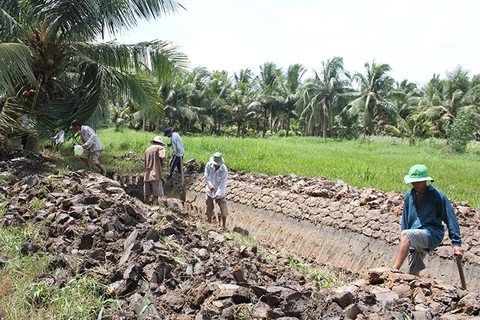
To store fresh water, the People’s Committee of Tra Vinh province has decided to dredge 10 irrigation canals at a total cost of 69 billion VND (3 million USD). Sea dykes, embankments and other infrastructure will also be inspected and repaired.
Pham Minh Truyen, Director of the Department of Agriculture and Rural Development of Tra Vinh province, said the level of saltwater intrusion in the province’s main rivers and canals in the 2020 - 2021 dry season is expected to be higher than in the 2015- 16 dry season.
“The water salinity in the 2020-2021 dry season could increase unpredictably and be unequal among rivers,” he said.
Local authorities in the delta have encouraged farmers to shift unproductive rice fields to other high-value crops, breed aquatic species, or engage in animal husbandry.
Provinces like Tien Giang and Ben Tre have supported farmers with money and farming techniques to upgrade their fruit orchards affected by saline intrusion and drought, and have carried out measures to protect fruit orchards in the next dry season.
Tien Giang, the largest fruit producer in the delta, has given money to orchard owners to buy fruit seedlings like durian and jackfruit to replace trees that died because of saline intrusion and drought.
In Ben Tre, authorities have instructed farmers to wash out salt in the soil and rehabilitate the root and leaf systems of trees.
In the last 2019 - 2020 dry season, saline intrusion with a salt content of four grammes per litre affected 1.68 million hectares of land in the delta, or 42.5 percent of the delta’s total area.
Most crops and fruit trees can tolerate a salinity rate of only one gramme per litre.
In the last dry season, saltwater intrusion caused damage to nearly 42,000ha of rice, more than 1,200ha of vegetables and other crops, and 8,700ha of aquaculture in the delta. And 96,000 households in the delta faced shortage of clean water for daily use at the time.
However, because the delta’s provinces and Can Tho city took preventive measures, the 2019-2020 dry season had less damage from severe saltwater intrusion than in the 2015-2016 dry season, according to the Ministry of Agriculture and Rural Development.
Clean water supply
The delta’s 12 provinces and Can Tho city are taking measures to ensure water supply for households in the next dry season. They have been upgrading water supply works and building new ones, and have instructed households to store clean water.
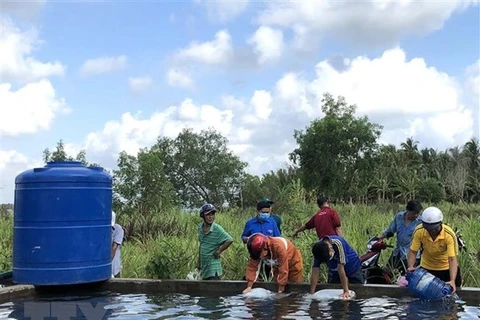
Ben Tre province has encouraged households in saltwater-prone areas and drought-prone areas to store fresh water and rainwater to use in the next dry season.
Many households in these areas are using water pots, cement containers and other receptacles to store fresh water for household use in the next dry season.
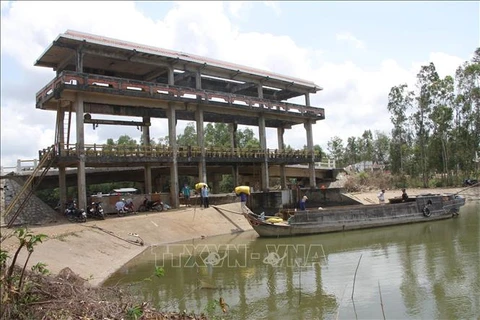
In An Giang province, irrigation canals will be dredged and sluices upgraded to store fresh water for the next dry season.
Nguyen Thanh Binh, Chairman of the An Giang People’s Committee, said that inspections would be carried out to identify households that lack access to tap water and are using water from wells, rainwater harvest, rivers and canals.
After the inspections, the province will supply clean water to these households. “The province has instructed departments, agencies and localities to mobilise funds to build, repair and upgrade rural clean water supply projects,” he said./.
In recent years, the Mekong Delta - the country’s largest rice, fruit and seafood producer - has faced severe saltwater intrusion from sea via river mouths during the dry season.
Local authorities in Can Tho City and the delta's 12 provinces, have warned farmers to sow rice and other crops in the dry season under certain schedules and in areas that can secure irrigation water.
The provinces in coastal areas have upgraded irrigation systems to protect crops and aquaculture.
The Department of Agriculture and Rural Development of Sac Trang province has warned farmers to sow the 2020-21 winter-spring rice crop one month earlier than normal to mitigate the impact of saltwater intrusion and drought.
Huynh Ngoc Nha, deputy director of the department, said farmers have been encouraged to use advanced farming techniques to cope with the shortage of fresh water.
To store fresh water, the People’s Committee of Tra Vinh province has decided to dredge 10 irrigation canals at a total cost of 69 billion VND (3 million USD). Sea dykes, embankments and other infrastructure will also be inspected and repaired.
Pham Minh Truyen, Director of the Department of Agriculture and Rural Development of Tra Vinh province, said the level of saltwater intrusion in the province’s main rivers and canals in the 2020 - 2021 dry season is expected to be higher than in the 2015- 16 dry season.
“The water salinity in the 2020-2021 dry season could increase unpredictably and be unequal among rivers,” he said.
Local authorities in the delta have encouraged farmers to shift unproductive rice fields to other high-value crops, breed aquatic species, or engage in animal husbandry.
Provinces like Tien Giang and Ben Tre have supported farmers with money and farming techniques to upgrade their fruit orchards affected by saline intrusion and drought, and have carried out measures to protect fruit orchards in the next dry season.
Tien Giang, the largest fruit producer in the delta, has given money to orchard owners to buy fruit seedlings like durian and jackfruit to replace trees that died because of saline intrusion and drought.
In Ben Tre, authorities have instructed farmers to wash out salt in the soil and rehabilitate the root and leaf systems of trees.
In the last 2019 - 2020 dry season, saline intrusion with a salt content of four grammes per litre affected 1.68 million hectares of land in the delta, or 42.5 percent of the delta’s total area.
Most crops and fruit trees can tolerate a salinity rate of only one gramme per litre.
In the last dry season, saltwater intrusion caused damage to nearly 42,000ha of rice, more than 1,200ha of vegetables and other crops, and 8,700ha of aquaculture in the delta. And 96,000 households in the delta faced shortage of clean water for daily use at the time.
However, because the delta’s provinces and Can Tho city took preventive measures, the 2019-2020 dry season had less damage from severe saltwater intrusion than in the 2015-2016 dry season, according to the Ministry of Agriculture and Rural Development.
Clean water supply
The delta’s 12 provinces and Can Tho city are taking measures to ensure water supply for households in the next dry season. They have been upgrading water supply works and building new ones, and have instructed households to store clean water.
Ben Tre province has encouraged households in saltwater-prone areas and drought-prone areas to store fresh water and rainwater to use in the next dry season.
Many households in these areas are using water pots, cement containers and other receptacles to store fresh water for household use in the next dry season.
In An Giang province, irrigation canals will be dredged and sluices upgraded to store fresh water for the next dry season.
Nguyen Thanh Binh, Chairman of the An Giang People’s Committee, said that inspections would be carried out to identify households that lack access to tap water and are using water from wells, rainwater harvest, rivers and canals.
After the inspections, the province will supply clean water to these households. “The province has instructed departments, agencies and localities to mobilise funds to build, repair and upgrade rural clean water supply projects,” he said./.
VNA