Mekong Delta urged to strengthen connectivity to attract FDI firms

Facilitating the foreign direct investment (FDI) flows is an effective solution to drive the development in the Mekong Delta region, according to insiders.

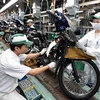
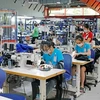
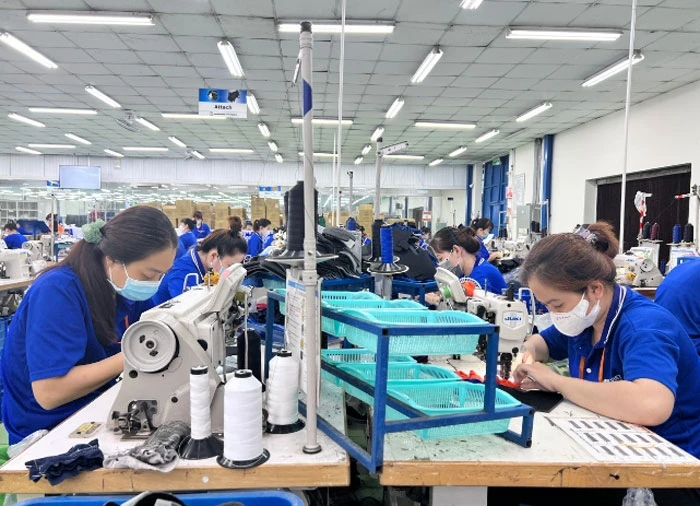
Workers at Tri-Viet International Co., Ltd., a 100% Japanese-owned company located at Tra Noc II Industrial Park, Can Tho city (Photo: qdnd.vn).

Hanoi (VNA) - Facilitating the foreign direct investment (FDI) flows is an effective solution to drive the development in the Mekong Delta region, according to insiders.

Over the past time, to attract businesses, regional localities have continuously improved their investment and business environment, resulting in a gradual increase in the annual Provincial Competitiveness Index (PCI). However, these have not yet been sufficient to attract significant FDI flows.

In addition to its potential as a major agricultural production hub of the country, the Mekong Delta also boasts advantages in industrial development, such as offshore wind power and the processing of agricultural, aquatic, and seafood products. Notably, with government investment, numerous expressways are being built, creating many opportunities for the entire region to attract FDI.

Pham Ngoc Thach from the Vietnam Chamber of Commerce and Industry (VCCI) stated that the 2023 PCI report released in May show that out of the top 30 localities with the most favourable investment environments, the Mekong Delta has eight.

The region has been also highly regarded by businesses for the dynamism and pioneering efforts of local authorities over many years of survey, scoring an average of 6.85 points in 2023, ranking second, after the Red River Delta region.

However, it ranks only fourth out of the six regions in terms of FDI attraction. Data from the Foreign Investment Agency under the Ministry of Planning and Investment shows that Vietnam has to date attracted approximately 484.77 billion USD in FDI, of which the Mekong Delta has received over 36.2 billion USD, accounting for about 7.5% of the country's total.

Toshiyuki Fukuda, General Director of Nippon Koei Vietnam International Co., Ltd., said that for small and family-owned Japanese companies investing in a region, it is essential to have international-standard amenities and schools to accommodate their families, but Can Tho city and the Mekong Delta region in general have yet to fully meet. Additionally, the lack of direct flights linking Can Tho to Japan poses a challenge for companies considering investment in the area.

Asked about the desired investment conditions in the Mekong Delta, Watanabe Michitaro, Mayor of Japan’s Nasushiobara city, noted that investors highly value Can Tho’s young and abundant workforce and the hardworking nature of its workers. However, to further enhance the competitive advantage in labour, it is necessary to build industrial work habits and job discipline, and focus on developing science and technology, he stressed.

Nguyen Phuong Lam, Director of the VCCI Can Tho branch, said that to attract “eagles”, the region should build a comprehensive strategy, with clear commitments, and incentive policies and mechanisms; while focusing on addressing the overlap between legal documents, unclear business conditions and decentralisation, and issues related to planning and planning adjustments, administrative procedures and export support.

Dr. Tran Huu Hiep, economic expert of the Mekong Delta region, advised localities to strengthen connectivity, step up investment promotion, and deal unfair competition and fragmented economic space, and work out systematic immediate and long-term strategies and solutions./.
VNA

See more

Road leading to VSIP Can Tho at the intersection with National Highway 80 (Photo: VNA)

Green industry lures more FDI to Mekong Delta

The Mekong Delta region, having earned the monikers of the rice bowl, fruit and seafood basket of the country, and following the restructuring of administrative units, is now standing at the threshold of becoming a modern, sustainable industrial centre.

The codification of Resolution 42 into the law, effective from mid this month, is an important step, marking a key milestone in completing Vietnam’s NPL resolution process. (Photo: thoibaonganhang.vn)

Bad debt settlement fully benefits from new policy from H2 2026

Resolution 42, enacted in 2017 to pilot bad debt settlement for credit institutions, was introduced in response to a sharp rise in non-performing loans (NPLs). It empowered credit institutions to seize and liquidate collateral assets, expediting debt recovery. After more than six years of implementation, the resolution delivered certain results but expired last year.

The total retail sales of goods and consumer service revenue were estimated at 5.7 quadrillion VND for the first 10 months of the year. (Photo: VNA)

Retail sales growth remains stable over 10 months

With the current recovery momentum, the trade and services sector is expected to continue being a bright spot in Q4, driving GDP growth and ensuring a balance between domestic consumption and exports amid ongoing global economic fluctuations.

Delegates at the event (Photo: Ministry of Finance)

ASEAN meeting to drive regional cooperation, growth by removing barriers

Running from November 5–11, CCS 111 focuses on advancing service liberalisation and facilitation in ASEAN by removing barriers, enhancing transparency, reducing policy risks, and simplifying administrative procedures to enable businesses and service providers to operate more efficiently.

Goods at Hai Phong Port in northern port city of Hai Phong. (Photo: VNA)

Vietnam determined to build transparent global trade system

The Government of Vietnam on November 6 updated the World Trade Organisation (WTO)’s Committee on Rules of Origin (CRO) on adjustments to the agencies and organisations authorised to issue certificates of origin (C/O), as well as on the application of QR codes in the C/O issuance process.

SemiExpo Vietnam 2025, themed “Powering Vietnam’s Semiconductor Ambition,” brings together around 5,000 delegates and feature 200 booths from major global technology corporations (Photo: VNA)

Vietnam opens largest int’l semiconductor exhibition

SemiExpo Vietnam 2025, themed “Powering Vietnam’s Semiconductor Ambition,” brings together around 5,000 delegates and feature 200 booths from major global technology corporations such as Lam Research, Coherent, Qorvo, Amkor, GlobalFoundries, Micron, Tokyo Electron, KLA, STMicroelectronics, Soitec, and Siemens.

Consumers learn about Hanoi's OCOP products. (Photo: VNA)

Hanoi launches digital booths to promote e-commerce

Hanoi will open an online store showcasing Hanoi's products on the e-commerce platform Shopee. It will introduce digital tools such as electronic signatures, e-contracts, e-invoices, and product traceability systems for local producers and businesses participating in the booth.

Loading rice for export at a port in Vietnam (Photo: VNA)

Exports hit new records following strong momentum

Vietnamese enterprises have set records across multiple areas, demonstrating strong export momentum that not only expands trade but also reinforces Vietnam’s position in global supply chains.

Products are promoted at the event. (Photo: VNA)

Vietnam connects resources to boost innovation, sustainable development

The Vietnam Innovation Summit, an annual international forum organised by InnoLab Asia, not only discusses policy and trends but also serves as a global bridge, bringing knowledge, resources, and cooperation opportunities from advanced innovation ecosystems worldwide to Vietnam.