Ministry issues guidance on COVID-19-vaccine associated heart issues

The Ministry of Health has released guidelines on the diagnosis and treatment of rare heart inflammation issues following receiving the COVID-19 vaccination.
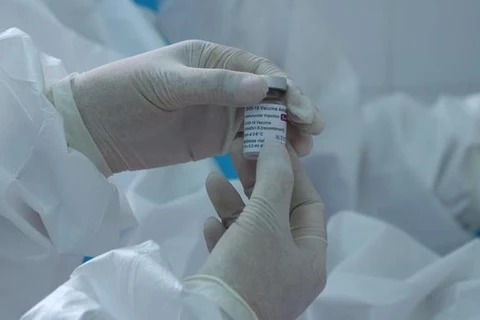
Ministry issues guidance on COVID-19-vaccine associated heart issues ảnh 1Vials of Pfizer/BioNTech COVID-19 vaccines. (Photo: AFP/VNA)
Hanoi (VNS/VNA) – The Ministry of Health has released guidelines on the diagnosis andtreatment of rare heart inflammation issues following receivingthe COVID-19 vaccination.

Healthauthorities in the US, Europe, and elsewhere have reported some rare cases ofmyocarditis and pericarditis occurring in individuals who received COVID-19vaccines, especially mRNA-based ones like Pfizer/BioNTech or Moderna, with thecause not yet made clear.

These heartissues are more common among younger males and more often following thesecond dose of COVID-19 mRNA vaccines, according to the latest statement fromthe COVID-19 subcommittee of the WHO Global Advisory Committee on VaccineSafety (GACVS).

However, the Ministryof Health noted the issues could worsen and become a danger to one’s lifewithout timely detection and treatment, and urged caution when the symptomsindicate myocarditis/pericarditis like chest pain, shortness of breath, orpalpitations following vaccination.

The symptomstypically appear 2-4 days after vaccination, but earlier occurrence (12 hoursafter vaccination) or later is also possible.

Physicalexamination may reveal no distinctive features or only pericardial frictionrub, and the individual in question could have a fever or not.

Myocarditis/pericarditisrespond well to conservative treatment and the condition improves within 3-5days, but in some cases, it could turn acute, with manifestations of symptomssuch as acute pulmonary oedema, acute heart failure, tamponade pericardialeffusion, cardiogenic shock, tachyarrhythmias/bradycardias, fainting, and evensudden death.

All people whosuffer from suspect symptoms need to notify the health ministry's hotline19009095 or come to the nearest hospitals to rule out the possibilities ofacute myocarditis.

In case ofacute myocarditis, the patient needs to be closely monitored at a facilitycapable of performing cardiovascular resuscitation, and if the condition getsworse, the patient would need to be moved to a specialised heart hospital.

There is nospecific treatment regime for post-vaccine acute myocarditis and pericarditisas yet. The recommended measures are to use nonsteroidal anti-inflammatorydrugs and the medical staff must be ready to provide respiratory/circulatorysupport when there are critical developments such as acute pulmonary oedema,acute heart failure, arrhythmia, cardiogenic shock or pericardial effusion.

In case ofheart failure with pulmonary oedema, the priority is to administer intravenousloop diuretics, oxygen, and assisted ventilation.

For people whohad myocarditis/pericarditis after receiving the COVID-19 vaccine, if anadditional dose(s) is required then another vaccine with a different technologyshould be chosen.

The ministrystressed the benefits of COVID-19 vaccines outweigh the risks of myocarditisand pericarditis even among young people and that the vaccine is theway out of the pandemic.

“Whileacknowledging the clear benefits of the mRNA vaccines in reducing deaths andhospitalisations due to COVID-19 infections, the subcommittee encourages allhealth professionals to report all events of myocarditis and other adverseevents observed with these and other vaccines,” the statement from the WHOreads.

Vietnam hasplaced an order of 30 million doses from Pfizer (the first shipment arrived on July 7) and received 2 million doses of Moderna as adonation from the US government via the COVAX Facility on July 10./.


VNA
See more

The caregivers’ club in Coc village, Pu Luong commune, the north-central province of Thanh Hoa, has established a livelihood support fund, helping households develop their economies through models such as rice cultivation, vegetable growing, fish farming and poultry raising. (Photo: VNA)

Community-based child nutrition care model benefits Thanh Hoa’s locality

After more than one year of implementation with the support of World Vision, the model has delivered positive outcomes in improving nutrition and enhancing the quality of childcare. Household livelihoods have improved, mothers’ awareness and caregiving skills have been strengthened, and notably, the rate of child malnutrition in Coc has declined markedly.

Assoc. Prof. Dr. Duong Duc Hung, Director of Viet Duc University Hospital, presents a token of appreciation in recognition of the noble gesture of the organ donor’s family. (Photo: baochinhphu.vn)

British teen’s organ donation saves three Vietnamese lives

A 19-year-old British tourist who died during a trip to Vietnam has saved the lives of three Vietnamese patients with end-stage organ failure, in a deeply moving act of compassion. The young woman is the first foreign national to donate organs in Vietnam.

A workshop at the One Health Summit, held in Lyon, France, from April 5 to 7, 2026. (Photo: VNA)

Vietnam backs global One Health commitments at Lyon summit

The MAE welcomed the French Government’s organisation of the One Health Summit, describing it as an important forum to advance global political commitments and strengthen international cooperation in preventing zoonotic diseases.

Ilustrative image (Photo: pngtree.com)

Vietnamese scientists unlock genetic insights into rare diseases

Prof. Dr. Nguyen Huy Hoang, Deputy Director of the Institute of Biology under the Vietnam Academy of Science and Technology, and his research team conducted a project titled “Genetic mutation analysis in Vietnamese patients with selected rare diseases using whole-exome sequencing technology.” The project, implemented from 2022 to 2024, aims to clarify the genetic causes of these diseases within the Vietnamese population.

Health workers and residents perform mass wellness exercises, promoting healthy lifestyles in the community. (Photo: VNA)

Ho Chi Minh City targets modern, inclusive healthcare system

On April 5 alone, 58 hospitals and health centres conducted screening programmes across 64 wards and communes, with a focus on outlying areas. Beyond early detection, residents receive consultations, long-term health monitoring guidance, and access to specialised services locally.

Vice Chairwoman of the National Assembly Nguyen Thi Thanh, Minister of Health Dao Hong Lan, and delegates attend the programme. (Photo: nhandan.vn)

Healthy lifestyles, disease prevention highlighted on national health day

Vice Chairwoman of the National Assembly Nguyen Thi Thanh emphasised the need for consistent and effective implementation of the resolution across the political system, with priorities including refining healthcare policies and institutions, strengthening preventive and grassroots healthcare networks, expanding population health management, promoting early detection, and improving school-based physical education and nutrition.

Politburo member, Secretary of the Party Central Committee and Chairman of the Commission for Information, Education and Mass Mobilisation Trinh Van Quyet (front row, fifth from left), together with delegates, participate in a walk after the launch of All People’s Health Day in Hanoi on April 5. (Photo: VNA)

All People’s Health Day promotes early disease prevention

The launch marked the first year the activity has been implemented in a coordinated manner nationwide. Members of the public were able to visit free screening areas, receive nutritional advice, participate in mass exercise performances, enjoy artistic programmes, and join a walk in response following the ceremony.

Volunteer young doctors are expected to provide free health screenings for around 10,000 residents (Photo: VNA)

Free cancer screening, health checks to benefit 10,000 people in Hanoi

Participants will receive comprehensive health checks through a streamlined one-stop process, including blood pressure measurement, height and weight assessment, BMI and cardiovascular risk evaluation, blood tests, general examinations and specialist consultations in internal medicine, paediatrics, obstetrics, ophthalmology, ENT, dentistry and oncology. Rapid blood glucose testing and biochemical screening will also be conducted to detect diabetes and metabolic disorders.