Monkeypox in Group B of infectious disease in Vietnam

he Ministry of Health has added monkeypox to the Group B infectious diseases with other dangerous, infectious diseases capable of spreading quickly and possibly causing death.
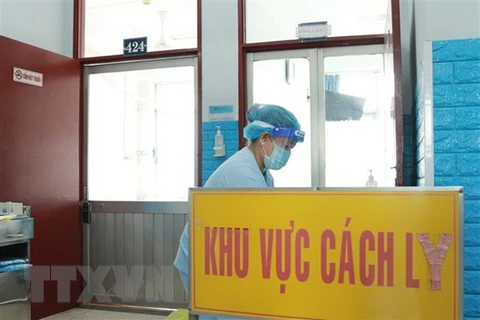
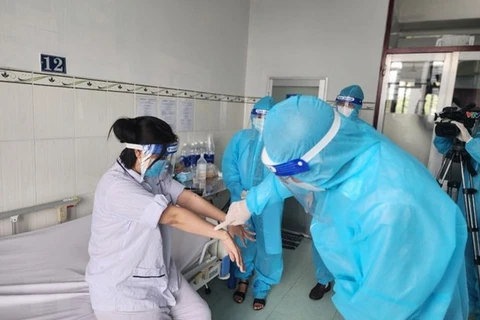
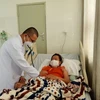
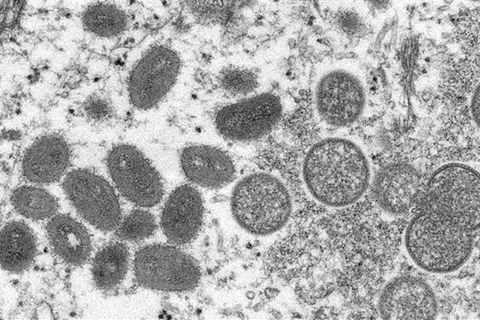
Monkeypox in Group B of infectious disease in Vietnam ảnh 1A Ministry of Health official inspects the prevention of monkeypox at Hanoi Dermatology Hospital. (Photo: VNA)
Hanoi (VNA) - The Ministry of Health has added monkeypox to theGroup B infectious diseases with other dangerous, infectious diseases capableof spreading quickly and possibly causing death.

Decision No. 3044/QD-BYT, issued on November 9, is based on the ministry'sDepartment of Preventive Medicine proposal.

Disease prevention and control activities are carried out following the Law onPrevention and Control of Infectious Diseases and based on monkeypox'sdangerous nature, transmissibility and mortality rate.

The situation of the monkeypox epidemic in the world is still complicated. Vietnamhas also recorded several positive cases returning from abroad.

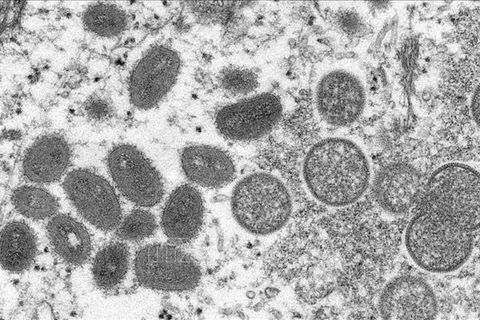
Monkeypox was first reported in 1958 in monkeys raised for research.

Since May 2022, the epidemic has developed abnormally, spreading to manycountries.

The incubation period is usually from six to thirteen days. Symptoms may vary,depending on the stage of the disease, but are similar to smallpox.

Common symptoms of monkeypox include fever, headache, muscle pain, back pain,swollen lymph nodes, chills, fatigue, and a rash that looks like blisters onthe face or inside of the mouth or in other parts of the body, such as thehands, feet, chest, genitals, or anus.

The disease can clear up on its own within 2-3 weeks.

In Vietnam, infectious diseases are classified into three groups./.
VNA
See more

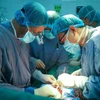
Doctors from Military Hospital 175 perform surgery on a patient on Truong Sa Island. (Photo: Military Hospital 175)

First successful open-chest surgery performed at Truong Sa infirmary

The successful emergency operation on a patient with serious chest injuries in Truong Sa showed that Vietnam’s military medical forces are now capable of handling complex emergencies at sea, boosting the confidence of soldiers and fishermen living and working on remote islands.

WHO donates 9,000 rabies vaccine doses to Vietnam’s high-risk provinces - Illustrative image (Photo: VNA)

WHO donates 9,000 rabies vaccine doses to Vietnam’s high-risk provinces

The post-exposure prophylaxis (PEP) vaccines, valued at 100,000 USD, were delivered to the Centres for Disease Control (CDC) in the two provinces through coordination with the National Institute of Hygiene and Epidemiology (NIHE), the Ministry of Health, and local authorities. The donation was made possible with financial support from Gavi, the Vaccine Alliance.

Delegates exchange views at the seminar (Photo: VietnamPlus)

Vietnam, Japan eye stronger healthcare cooperation

Vietnam and Japan are strengthening healthcare cooperation in preventive medicine, human resource training, and sustainable medical infrastructure development, aiming to advance comprehensive healthcare.