More affordable housing needed in HCM City

The real estate market in Ho Chi Minh City is on track to bounce back, but its sustainable development will only be ensured if housing demand from low-income and average-income earners is satisfied.
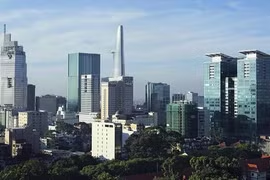
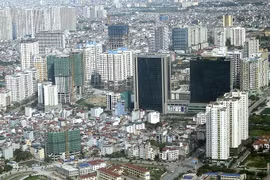
More affordable housing needed in HCM City ảnh 1HCM City's sustainable development will only be ensured if housing demand from low-income and average-income earners is satisfied (Photo: VNA)

HCM City (VNA) - The real estate market in Ho Chi Minh City is on track to bounce back, but its sustainable development will only be ensured if housing demand from low-income and average-income earners is satisfied, a report from the HCM City Real Estate Association (HOREA) has said.

The report, sent to the municipal People’s Committee early this week said there would be stronger investment this year in social housing and affordable commercial housing projects, as well as serviced apartments, office space and industrial properties, thanks to the anticipated liberalisation of trade under the upcoming Trans Pacific Partnership agreement.

According to the report, the city has a total of 1.8 million households and a population of 10 million. Many of these people need either rental or owned property, especially the 3 million who are migrants; the 200,000 government employees, particularly those working in the education and health care sectors; and the approximately 50,000 couples who are newly married each year.

However, the supply of apartments of one or two bedrooms priced at around 1 billion VND (45,000 USD) is still limited.

Early this year, the State Bank of Vietnam issued an adjusted Circular 36 which constrains credit in the property market.

Since February, commercial banks have increased deposit interest rates to over 8 percent annually for terms longer than 12 months.

Therefore, the lending interest rate might go up by one or two percent, HOREA Chairman Le Hoang Chau said.

According to current regulations, commercial housing projects of 10ha or more are required to allocate 20 percent of the land to social housing, which may not be suited to specific projects.

The association suggested an option whereby project investors could develop social housing inside their projects, exchange land lots or apartments of equal value at other locations, or pay the required 20 percent land allocation in cash.

HOREA also proposed that project owners be allowed to assign the development of the social housing responsibility to an affiliate without carrying out procedures to transfer that part of the project to the affiliate.

It is also recommended longer-term loans, from the current 15 years to 20 years for loans given to buyers of social housing.

Before decisions are made on resettlement projects, HOREA suggested that families that need to be resettled should be surveyed about their wants, their housing demands, vocational training needs, and their ability to earn a living in order to ensure that the new location fits their needs.

Currently, there are vacancies in resettlement projects, including Vinh Loc B, which offers 1,939 apartments and 529 house lots.

But only 306 units and 222 lots have been handed over to resettled households. The reasons include poor project quality and a lack of support facilities, transportation links and opportunities to earn a living. The residents are also unable to pay for the new units, which are larger (42 to 68sq.m in Vinh Loc B) than their previous ones, usually around 20sq.m.

The resettled residents should be provided preferential loans of 15 years to buy the larger units, HOREA said.

Nearly 2,100 apartments in the programme to build 12,500 units for resettlement work in the new Thu Thiem Urban Area have been handed over to owners.-VNA

VNA

See more

The sidewalks on Hung Vuong street in Quang Tri province are under renovation. (Photo: VNA)

Quang Tri approves 103 priority projects for investment during 2026–2030

The 103 projects are categorised into seven fields, comprising energy; logistics; tourism, services, and trade; green and high-tech agriculture; industry, industrial zones, and production infrastructure; urban development and commercial housing; and healthcare, wellness, and resort services.

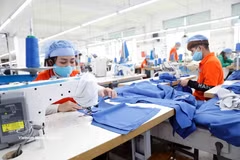
Workers make clothes for export to the Japanese market at Hung Viet Garment Company in Hung Yen province (Photo: VNA)

Vietnam’s textile-garment firms striving to achieve export targets, sustain employment

To achieve the annual target, textile and garment businesses are jointly implementing several core tasks, including diversifying export markets and partners, developing the supporting industries for raw materials and accessories to establish integrated supply chains, investing in technological innovation linked to AI, stepping up high-quality workforce training, promoting green transformation based on circular economy models, and building brands in both domestic and international markets.

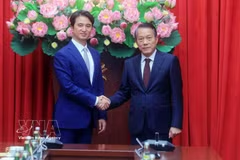
Minister of Public Security General Luong Tam Quang (R) receives Choo Hyeong Wook, President and CEO of the Republic of Korea’s SK Innovation in Hanoi on November 16. (Photo: VNA)

Vietnam promotes international cooperation in energy, high technology

Minister of Public Security General Luong Tam Quang called on the RoK's SK Innovation to share experience and work with Vietnamese partners in developing clean and renewable energy, hydrogen, liquefied natural gas, energy storage technologies and carbon emission reduction solutions.

Delegates pose for a photo at the Chile-Vietnam Business Forum in Hanoi on November 16 (Photo: VNA)

Vietnam, Chile seek to expand trade ties

Chilean President José Antonio Kast pointed to potential for cooperation in agriculture and food, and called for stronger technical cooperation, better market access and closer links in innovation, technology, services and sustainable development.

Production of footwear for export at Lefaso Tra Vinh Industrial Investment and Production Joint Stock Company, Tra Cu commune, Vinh Long province (Illustrative image. Source: VNA)

VEFTA implementation requires exporters to restructure supply chains: Experts

Under VEFTA, tariff reductions to zero will be meaningless for Vietnam’s key export sectors, including textiles and garments, footwear, and agricultural and aquatic products, if goods are found to contain banned chemicals, violate rules of origin or lack transparency regarding their carbon footprints.

Deputy Prime Minister Nguyen Van Thang meets with Martin Sommer, head of the IMF’s Article IV consultation mission team to Vietnam, in Hanoi on November 13, 2026. (Photo: VNA)

IMF sees positive growth prospects for Vietnam, urges cautious monetary policy

Martin Sommer, head of the IMF’s Article IV consultation mission team to Vietnam, noted that inflation risks in Vietnam remain under control, but several factors could add to price pressures. He therefore called for cautious monetary policy management and readiness to respond promptly if inflationary pressures increased.

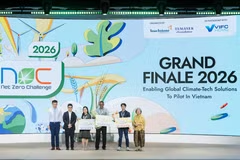
Representatives of the three first-prize-winning startups receive their awards at the event. (Photo: SGGP)

Seven green-tech startups secure 770,000 USD at Net Zero Challenge 2026

In its fourth year, the competition attracted more than 1,100 applications from 80 countries and territories, making it the most competitive edition since its launch in 2023. Nine finalists presented solutions in three categories, namely renewable energy and carbon removal; food systems and sustainable agriculture; and circular economy and waste management.