More comprehensive solutions needed for solar energy development

Rising concerns about the environment and livelihoods are setting barriers to developing solar energy in Vietnam, experts have said.
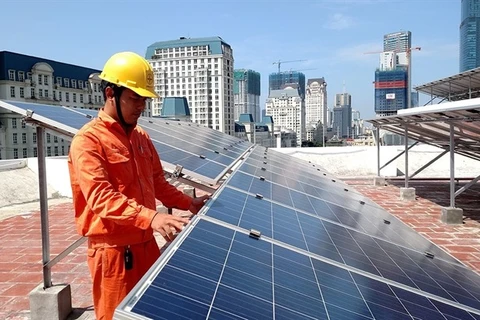
More comprehensive solutions needed for solar energy development ảnh 1Workers install solar panels in the central province of Quang Ngai (Photo: VNA)

Hanoi (VNS/VNA) - Risingconcerns about the environment and livelihoods are setting barriers todeveloping solar energy in Vietnam, experts have said.

The experts were speaking at a conferenceentitled “Solar energy Vietnam: grid integration challenges and opportunities”hosted by the National University of Civil Engineering Vietnam (NUCE) and theKU Leuven Belgium, with the support of the Embassy of Belgium in Hanoi.

Solar energy harvesting, especially through thePhotovoltaic system, has witnessed a boom in recent years.

The Government’s decision No 11 released in 2017has created good conditions to accelerate the industry.

Since then, Vietnam has attracted 20GW oflarge-scale developments, which makes the country the regional leader in solarenergy.

“Vietnam is standing in front of unprecedentedopportunities to develop solar energy,” said renewable energy expert Nguyen VanKhai.

He said 242 solar energy projects have beenregistered. Some 100 projects are at the stage of closing deals with VietnamElectricity (EVN) and 50 are due to come into operations.

The buying price for each kW rises, from 1,800VND to 3,000 VND (0.078 to 0.129 USD).

At the same time, the cost for solar panels andaccessories has fallen.

Beside the large-scale projects, people are interestedin smaller rooftop installations.

He stressed the advantages of solar energysystems installed in isolated areas, fishing boats or shrimp breeding ponds toserve basic needs.

However, new projects are causing concerns overgrid overloading and suboptimal operation of PV installation.  

Environmental concerns including the rapidgrowth of population, urbanisation expansion, the diminishment of agriculturalland for solar energy projects and impacted communities have posedchallenges to solar energy projects in Vietnam.

These problems have called for more innovativeand comprehensive solutions that are not only technical but alsosocio-economical.   

At the conferences, participants touched uponinnovations in solar harvesting and storage technologies which offer integratedsolutions for also food production, cultivation and sustainable development.

Vietnam’s annual power consumption has increasedby 10 percent in recent years, putting the country at risk of power shortagesin the future.

Renewable energy like solar and wind would playan essential role in helping Vietnam complete its long-term goal of connectingthe whole country to the national grid.

Both home rooftop systems and large projectsinvested by domestic and foreign investors are main focuses of the country’ssolar power development plan.

According to experts, Vietnam’s solar system hada potential to reach 35,000MW by 2030.

Government has applied tariff incentivesor renewable energy payments for solar power since 2017 in an attemptto accelerate investment in renewable energy. The fixed solar power price is setat 2,086 VND (0.08 USD).

The Ministry of Industry andTrade is working on new prices for solar energy based on geographical zones andopening the floor for feedback.-VNS/VNA
VNA
See more

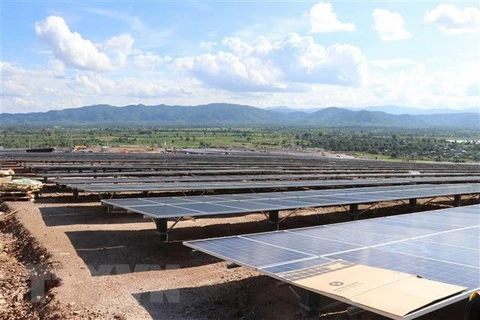
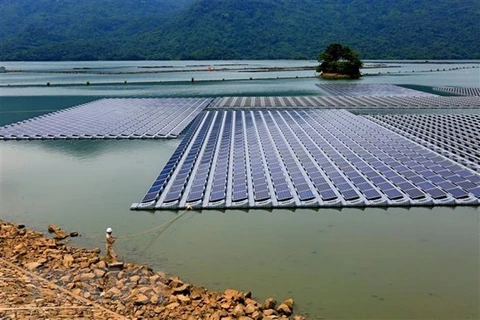
Illustrative image (Photo: VNA)

Australia announces import conditions for Vietnamese pomelos

Australia’s formal publication provides an important legal basis, marking the completion of the review, assessment and agreement on technical requirements for fresh Vietnamese pomelos. This represents a significant step forward in market access, creating favourable conditions for relevant agencies, localities and businesses to prepare for export activities in the coming time.

Containers of fresh Vietnamese durian for export are subject to a full-chain traceability system. (Photo: VNA)

First “green lane” durian shipment exported to China

​Under the “green lane” process, quality control begins at the cultivation stage, including soil sampling and monitoring, and continues through harvesting and processing, with traceability labels attached to trees and applied to fruit at the time of picking. It also allows plant quarantine procedures and the issuance of certificates of origin (C/O) directly in the localities where the orchards are located.

Delegates at the Vietnam Expo 2026 (Photo: VNA)

Vietnam pushes for deeper auto supply chain ties with RoK

The RoK stood as Vietnam’s largest foreign investor with more than 95.2 billion USD in registered capital as of February 2026, or about 18% of all foreign cash flowing in, with thousands of active projects. In January-February alone, the RoK led the pack with nearly 2 billion USD in pledges, grabbing a whopping 32.7% of total registered capital and showing no signs of slowing down.

More than 600 tourism firms, 15 countries and territories, and 34 provinces and cities are promoting destinations and introducing tourism products at the fair (Photo: VNA)

Digital transformation key to elevating Vietnam’s tourism: official

Speaking at the opening of the Vietnam International Travel Mart (VITM) 2026 in Hanoi on April 10, Deputy Minister of Culture, Sports and Tourism Ho An Phong noted that despite challenges in 2025, Vietnam largely fulfilled its socio-economic development goals. Tourism remained a bright spot, recording 21.5 million foreign arrivals and 135.5 million domestic visitors, with total revenue exceeding 1 quadrillion VND (37.9 billion USD).

A drone sprays fertiliser over rice fields. (Photo: VNA)

Low-altitude economy emerges as new growth driver for Vietnam

The UAV technology is particularly effective in addressing challenges faced by ground infrastructure, especially in densely populated urban areas and remote regions. Smart aerial devices also enable real-time data collection, improving governance, decision-making and digital transformation across industries.

Passengers at Cat Bi Airport in Hai Phong city (Photo: VNA)

Aviation sector ensures fuel supply for April 30–May 1 peak

Aviation fuel suppliers are actively negotiating and diversifying supply sources both domestically and internationally, while strengthening coordination, storage and distribution capacity to meet immediate demand. These efforts aim to support airlines in optimising operations and maintaining stable flight schedules.