More vestiges found in Thang Long Citadel

A series of traces revealing the most sufficient evidence of cultural layers dating from the 11th century to 20th century have been detected in the Kinh Thien Palace of the Thang Long Imperial Citadel’s central section.
A series of traces revealing the most sufficient evidence of culturallayers dating from the 11th century to 20th century have been detectedin the Kinh Thien Palace of the Thang Long Imperial Citadel’s centralsection.

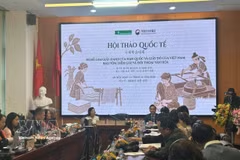
According to information released by the ThangLong-Hanoi Heritage Conservation Centre and the Institute of Archaeologyat a seminar in Hanoi on December 16, recent archaeological excavationsin the section uncovered major architectural vestiges of the Ly Dynasty(the 11th century) and dynasties afterwards, including wall foundation,brick-paved yard, especially a big water supply and drainage system.

Besides,excavators unearthed parts of the Palace, overlapped by cultural layersof the Le So (1428-1528) and Le Trung Hung (1533-1789) dynasties.Architectural traces from the Tran Dynasty (the 13th century) were alsofound, but they were damaged seriously.

Most of archaeologicalfindings are various kinds of architectural material, especially greenand yellow glaze roofing tiles of the Le So period.

Phan Huy Le,Chairman of the Vietnam Association of Historical Sciences said theresults of the excavations do not only help specify cultural layers butalso show where the centre of the Citadel is, and provide acomprehensive view on the architecture of the Citadel.

At theseminar, representatives from the Centre and the Institute suggestedfurther archeological excavations towards the relic site’s East todiscover more architectural vestiges in the time ahead.

The ThangLong Imperial Citadel was built in the 11th century by the Ly dynasty,marking the independence of the Dai Viet. The Royal Citadel’s centralsection was listed in UNESCO's World Heritage Site on July 31, 2010.-VNA
See more

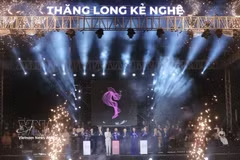
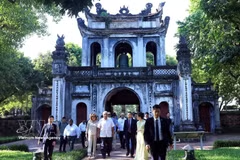
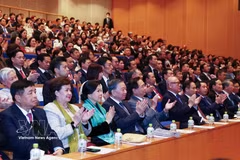
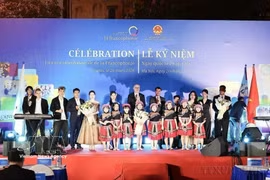
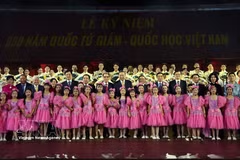
Leaders pose with artists and performers at the ceremony marking 950 years of Quoc Tu Giam (Imperial Academy) on November 13 (Photo: VNA)

Top leader attends ceremony marking Quoc Tu Giam’s 950th anniversary

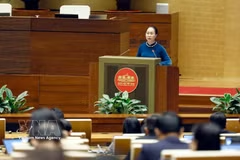
General Secretary of the CPV Central Committee and President To Lam called for preserving the Van Mieu – Quoc Tu Giam heritage and putting its spirit into daily school life. He asked Hanoi to work closely with culture, education and research agencies to complete open digitised materials on the relic soon.

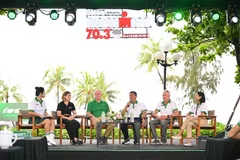
The opening ceremony for the 2026 Hanoi Creative Design Festival on November 13 (Photo: VNA)

Hanoi Creative Design Festival 2026 opens, targets creative economy

Running from November 13-28, the festival features 150 activities across five cultural, heritage and creative clusters and draws nearly 1,000 domestic and foreign artisans, artists, designers and experts, including nearly 100 foreign artists and overseas Vietnamese from 21 countries.

950 years on, Quoc Tu Giam continues to inspire Vietnam’s pursuit of knowledge ​

950 years on, Quoc Tu Giam continues to inspire Vietnam’s pursuit of knowledge ​

The 950th founding anniversary of Quoc Tu Giam (Imperial Academy), Vietnam’s first national university, is an occasion to reaffirm the enduring values of the country's tradition of learning, respect for teachers, and promotion of talent, which have shaped the nation’s intellectual foundations and continue to support its development in a new era.

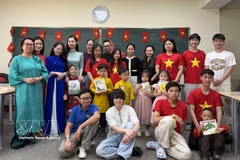
Chair of the Canada-Vietnam Cultural & Educational Council (CVCEC) Phan Thi Quynh Trang (first from left) (Photo: VNA)

Vietnam’s learning tradition gets Canadian reboot

The Canada-Vietnam Cultural & Educational Council (CVCEC) is building culture lessons on Vietnamese landmarks, with the Temple of Literature as a core module. Kids will hear stories about teacher Chu Van An, and practice greetings, gratitude to teachers and respect for elders.

Panamanian President José Raúl Mulino and his spouse visit the Temple of Literature (Photo: VNA)

Quoc Tu Giam at 950: A meeting point for Vietnam’s cultural diplomacy

Van Mieu - Quoc Tu Giam is a symbol of Vietnam's culture and education and a regular pick for high-ranking leaders and politicians. That lifts it from national heritage to a valuable platform for promoting cultural diplomacy and showcasing Vietnam's cultural soft power, helping to convey the country's image and cultural identity to the international community.

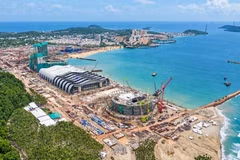
Construction on APEC Phu Quoc Multi-purpose Performance Hall (Photo published by VNA)

APEC 2027: Inside the making of Asia’s landmark theatre

One year in, Sun Group’s APEC Phu Quoc Multi-purpose Performance Hall is taking shape as one of Asia’s largest theatres. It boasts 54,680 sq.m of floor area, 17,250 sq.m of roof, six above-ground floors plus a basement, and 4,030 seats, larger than Hollywood’s Dolby Theatre, the Oscars venue.

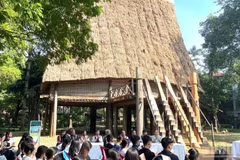
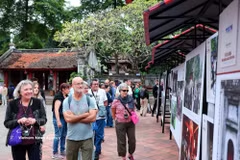
Visitors will enjoy free admission to the Vietnam Museum of Ethnology on Vietnam Culture Day (November 24). (Photo: nhandan.vn)

Free admission to museums, historical sites, national parks on Vietnam Culture Day

Organisations and individuals will be entitled to free admission every year on November 24 to eight museums: the Museum of Oceanography, the Vietnam Museum of Ethnology, the Museum of the Cultures of Vietnam’s Ethnic Groups, the Vietnam National Museum of History, the Vietnam National Fine Arts Museum, the Yersin Museum, the Vietnamese Women's Museum and the Vietnam Military History Museum, as well as the Independence Palace historical site.

Vietnamese Consul General in Perth Pham Hai Anh (Photo published by VNA)

Vietnamese community in Australia seen as bridge for bilateral ties

Vietnamese identity and life in Australia are complementary rather than separate. The more successful overseas Vietnamese became in Australia, the greater their ability to contribute to their homeland and bilateral ties, said Vietnamese Consul General in Perth Pham Hai Anh.

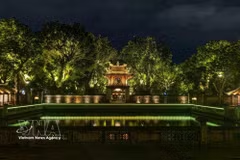
Van Lake within the Temple of Literature (Photo: VNA)

UNESCO Representative: Quoc Tu Giam offers inspiration for new approaches to education

UNESCO Representative to Vietnam Jonathan Wallace Baker said one of the things that stands out in Vietnam is the deep and enduring respect for education, learning and scholarship. Van Mieu –Quoc Tu Giam is a remarkable expression of that tradition, reminding that knowledge, talent and ethical responsibility have long been closely connected in Vietnamese society.

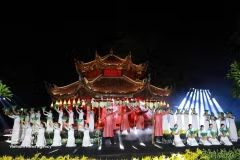
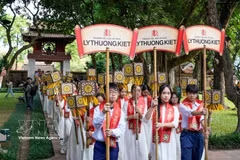
A highlight of the programme is the participation of 950 students in performances staged within the Temple of Literature complex (Photo: VNA)

950 years of Quoc Tu Giam: Continuing Vietnam’s enduring tradition of learning

Through evocative images of students of the Quoc Tu Giam, alongside performances by students and artists, the programme vividly recreated the journey of Vietnam’s scholarly tradition, from the era of the imperial examinations to the spirit of learning in contemporary society. It also helped bring the cultural values of Thang Long-Hanoi to life today.

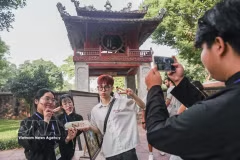
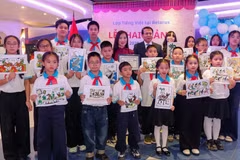
Students pose for a photo at the ceremony (Photo published by VNA)

Mother tongue connects Vietnamese community in Belarus

Vietnamese language education in Belarus not only helps younger generations take pride in their heritage and better understand and appreciate traditional culture, but also serves as a bridge for promoting Vietnamese culture among international friends.

General Secretary of the Communist Party of Vietnam Central Committee and President To Lam (fourth from left, first row) and his spouse, Ngo Phuong Ly, attend the Vietnam-Japan Friendship Concert in Kanagawa Prefecture on November 10 evening. (Photo: VNA)

Vietnam-Japan Friendship Concert fosters cultural cooperation

In his welcoming remarks, Vietnamese Ambassador to Japan Pham Quang Hieu said the concert brought together talented musicians from the Vietnam National Symphony Orchestra and artists who are current or former members of renowned Japanese orchestras, including the NHK Symphony Orchestra, Tokyo Metropolitan Symphony Orchestra, New Japan Philharmonic and Kanagawa Philharmonic.

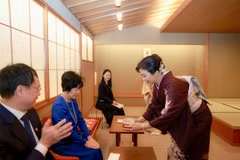
Madame Ngo Phuong Ly offers the first bowl of tea to Akiko Santo, former President of the House of Councillors of Japan. (Photo published by VNA)

Top Vietnamese leader’s spouse experiences traditional Japanese culture

After learning about the history of the tea ceremony, Madame Ly was invited to enjoy traditional sweets and tea, and then to try preparing tea herself. She respectfully offered the first bowl of tea to Akiko Santo, former President of the House of Councillors of Japan and the oldest guest present.