Chairman of the Government Office Minister Mai Tien Dung speaks at the Government’s press conference on November 22 (Photo: VNA)
Hanoi (VNA) – The National Assembly has adopted a resolution on stopping to implement the Ninh Thuan nuclear power plant project, reasoning the country’s current economic situation, Chairman of the Government Office Minister Mai Tien Dung said at the Government’s press conference on November 22.
The Ninh Thuan nuclear power plant project was approved by the National Assembly at Resolution No. 41/2009/QH12 dated November 25, 2009. It was designed to have Ninh Thuan 1 and Ninh Thuan 2 plants with each capable of generating about 2000 MW to the national grid. And, preparations for the construction of the plants were carefully instructed by the Government in line with law, Dung said.
However, the Government found the country’s current economic situation is not favourable for the project to continue.
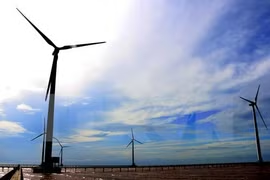
The macro-economy experienced a lot of changes since the project was approved, while the purchase of power from neighbouring countries would be increased and usage of renewable energy, such as solar and wind power, is promising and feasible as production cost is reduced significantly, Dung said.
At present, the country needs huge capital to develop modern infrastructure synchronously in service of socio-economic development, as well as to tackle climate change-caused issues.
Therefore, the Government’s report on the issue led to the National Assembly’s issuance of the resolution on the halt to the construction of the two Ninh Thuan nuclear power plants, he said.
He stated that technology is not the reason behind the halt and affirmed that the technologies from Russia and Japan planned for use are the most cutting-edge with high safety.
He affirmed that the decision on the halt was thoroughly considered and discussed with the high sense of responsibility of the Party Central Committee, the Government and the National Assembly with a view to ensuring the country’s sustainable development.
He expressed his hope that the decision will be strongly supported by people and deeply understood by Russia and Japan.
The project was previously expected to contribute about 3.6 percent in capacity and 5.7 percent in electricity output to the national power system once it is completed.
The halt to this project won’t affect power supplies since Vietnam can use other electricity sources such as thermal power, renewable energy, power produced by using liquefied natural gas (LNG), or purchase electricity from neighbouring countries, especially Laos, Dung said.
From now to 2030, Vietnam will consider replacing the Ninh Thuan nuclear power plants with thermal power factories using advanced and environmentally friendly technologies, and plants with turbines fuelled by LNG. After that, it will accelerate the development of renewable energy like wind and solar power, the implementation of energy efficiency measures, and the purchase of electricity from neighbouring countries.
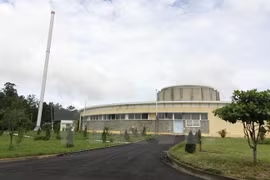
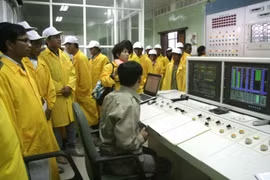
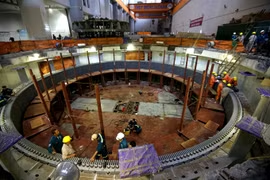
Minister Dung said the Government will work to capitalise on the facilities already built under the project to serve local socio-economic development. Meanwhile, people who are under training in Russia and Japan for the project will continue their study so as to work for peaceful application of atomic energy, along with in thermal power plants.
Although the Russian and Japanese partners expressed their regret at the stop of the project, they also sympathised with Vietnam and respected its decision. The Russian and Japanese Governments also want to increase cooperation with and support to Vietnam in some infrastructure development aspects to replace the cooperation in the Ninh Thuan power plant project.
The Vietnamese Government highly values and acknowledges the goodwill and assistance of the two countries’ governments during the preparations for the project and the effective cooperation of the direct partners such as ROSATOM of Russia and JINED of Japan, Dung said, adding that Russia and Japan remain prioritised partners in case Vietnam builds nuclear power plants in the future.
The halt to the project does not influence Vietnam’s comprehensive strategic partnership with Russia and the extensive strategic partnership with Japan, the official reiterated.
And, the Government will continue giving its attention to Ninh Thuan’s socio-economic development, he pledged.-VNA