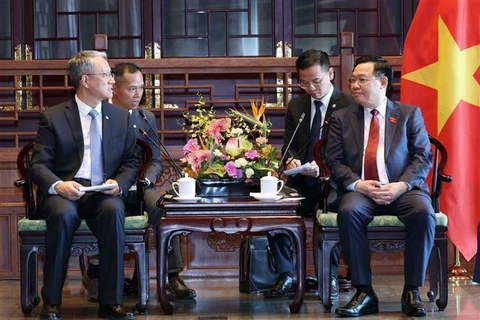
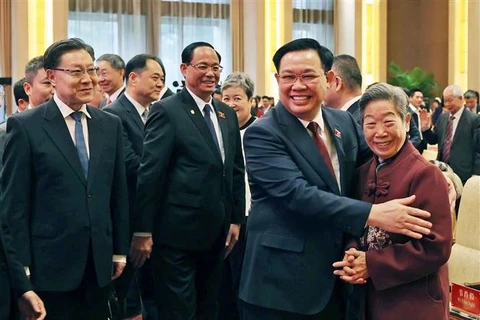
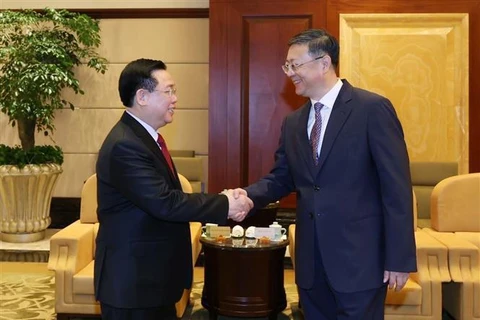
Nhập mNA Chairman Vuong Dinh Hue (sixth, from right) meets with Hong Tianzhu, Chairman of Texhong Group on April 10 in Shanghai. (Photo: VNA)
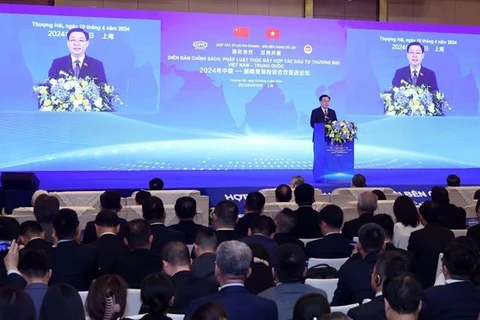
 Shanghai (VNA) – National Assembly (NA) Chairman Vuong Dinh Hue on April 10 received leaders of major Chinese corporations and businesses in Shanghai city within the framework of his official visit to China.
Meeting with Wang Cheng - Director and Chief Operating Officer of TCL Technology Group Corp, Hue appreciated the group’s investment results in Vietnam, especially its idea of establishing TCL's supply chain in Vietnam. Regarding the group’s proposal on facilitating visa issuance, the Vietnamese leader said he will pay attention to the issue and informed about Vietnam's new visa policy from August 2023 that allows visitors from some countries to enjoy visa exemption from 15 days to 45 days and extend the e-visa from 30 days to 90 days, valid for multiple entries.
Meanwhile, Wang said that TCL is a large multinational corporation operating mainly in the field of manufacturing components, electronic equipment and products. In Vietnam, the firm has invested in three factories in Binh Duong and Quang Ninh provinces with a total investment capital of more than 100 million USD and a combined annual capacity of 6 million products, mainly television products, television screens and audio and video equipment. In the coming time, the group will expand existing projects, build new factories, and introduce suppliers to Vietnam to complete the supply system.
 NA Chairman Vuong Dinh Hue (right) receives Zhang Tianren - Secretary of the Party Committee and Chairman of Tianneng Group in Shanghai. (Photo: VNA)
 When receiving Zhang Tianren - Secretary of the Party Committee and Chairman of Tianneng Group, Hue appreciated the group's activities in new energy battery production such as battery manufacturing, resource recycling and technical services.
Electric vehicle production is in line with the world's trend of greening the economy, and Vietnam is no exception, Hue noted.
The Vietnamese top legislator welcomed the group's choosing Vietnam as an investment destination as he learned that Tianneng Group plans to invest in a project to produce high-performance dynamic batteries and industrial energy storage batteries and develop a recycling cycle. He hoped that the project will soon come into operation, contributing to the development of the locality where it is located and Vietnam as a whole, as well as to strengthening the trade and investment ties between Vietnam and China.
On April 10 afternoon, Hue received Hong Tianzhu, Chairman of Texhong Group that specialises in manufacturing and distributing cotton thread, fabric, and woven fabric products. The group plans to continue expanding investment in industrial parks and developing production.
The NA Chairman welcomed the group's investment expansion in many new industries and fields, in accordance with Vietnam's policies and orientations.
Regarding the group’s recommendations on mechanisms relating to the use and exploitation of land funds and energy use, Hue said that NA, Government and localities in Vietnam are reviewing relevant regulations to make adjustments if needed.
He said that the NA and the Government continue to pay attention to promoting administrative reforms, strengthening decentralisation, and regularly listening to domestic and foreign investors and business communities, including Chinese ones.
Vietnam will continue to have mechanisms to facilitate the synchronous, rational development and diversification of energy types prioritise the effective exploitation and use of renewable energy sources and new energies, Hue said.
Meeting Li Zixue, Chairman and Executive Director of ZTE Corporation, a global leading integrated communication information solution provider, NA Chairman Hue said with more than 20 years of operation in Vietnam, the corporation should promote its long-term, effective cooperation with local firms.
He also suggested ZTE help Vietnam perfect its digital economic ecosystem, train high-quality personnel, and improve service quality.
Vietnam is committed to supporting and creating favourable conditions for businesses, including those from China, to operate effectively in the country, especially in digital economy and technical infrastructure development, he pledged.
The top legislator also met with Yan Jiehe, the founder of China Pacific Construction Group (CPCG) and President of the Zhuang Yan Think Tank, during which he praised construction and investment initiatives by the group, which is implementing transport infrastructure projects in Vietnam./.