National Assembly - Highest organ of State power, highest representative body of people

National Assembly - Highest organ of State power, highest representative body of the people

Within the State apparatus of Vietnam, the National Assembly (NA) is the highest representative body of the people and the highest organ of State power of the Socialist Republic of Vietnam.
National Assembly - Highest organ of State power, highest representative body of the people
Hanoi (VNA)- Within the State apparatus of Vietnam, the National Assembly (NA) is thehighest representative body of the people and the highest organ of State power ofthe Socialist Republic of Vietnam.

It exercises constitutionaland legislative rights, decides on key matters of the country and performs supremesupervision over the State’s activities.

Highest organ of State power

The legislatureis the highest organ of State power, as the Constitution stipulates that allpower belongs to the people and the people are the subject of State power. TheNA is elected by the people, serving as the highest State agency realising the people’spower.

Under the Constitution, the legislature has the right to make and adjust theConstitution and laws. It stipulates the most basic and important mattersregarding the format and nature of the State; acknowledges, respects, protects,and ensures the fundamental rights and obligations of citizens; and prescribes thebasic contents on economic, social, cultural, educational, scientific,technological, environmental, and national defence mechanisms, and the Stateapparatus.
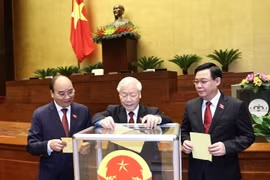
National Assembly - Highest organ of State power, highest representative body of the people ảnh 1Then NA Chairwoman Nguyen Thi Kim Ngan, who is also Chairwoman of the National Election Council, casts ballots to elect deputies to the 14th legislature and all-level People's Councils for 2016-2021 at a constituency in Vinh Phuc ward, Ba Dinh district, Hanoi. (Photo: VNA)
Through law makingand revision, the NA adjusts social relations in each sector. It also decides onthe country’s important matters, including major policies, national plans andpeople’s livelihoods, and basic policies on internal and external affairs, alongwith socio-economic and national defence and security tasks.

It exercises theright to supreme supervision over all activities of the State and reviews theimplementation of the Constitution and laws. Agencies set up by the NA andofficials who hold positions elected and ratified by the legislature must beresponsible for reporting their performance to the NA, and are subject to supervision.

People’s highest representative body

The NA is the people’shighest representative body, as reflected through its formation. It is electedby voters nationwide in universal, equal, and secret ballots.

The legislativebody represents the will and aspirations of the people and is empowered by the peopleto decide on the country’s major matters. It takes responsibility before the people.
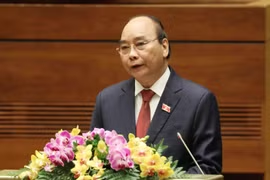
National Assembly - Highest organ of State power, highest representative body of the people ảnh 2Party General Secretary Nguyen Phu Trong casts ballot at a constituency in Nguyen Du ward, Hai Ba Trung district, Hanoi, on May 22, 2016. (Photo: VNA)
NA deputies formthe most basic and important factor in the legislature. They must be eminentcitizens in all State and social activities, representing people from allsocial strata and ethnic groups nationwide.

The legislatureis the image of the great national unity bloc, and a symbol of the power ofbrainpower of the whole nation.

The functionsand tasks of the NA have been reflected in areas such as constitution-making, legislation,supreme supervision, and decision-making on the country’s important matters, inorder to serve the shared interests of the people.

Over the past 75years, the NA has been dedicated to working for the national interests, raised thepeople’s voice, and acted on behalf of the will and aspirations of the people.
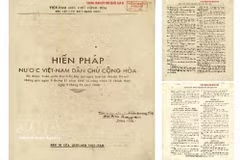
National Assembly - Highest organ of State power, highest representative body of the people ảnh 3Source: VNA
Functions, tasks, rights and power of the NA

According to theConstitution and the Law on the NA Organisation, the legislature performs threemain functions: exercising the constitutional and legislative rights, deciding onimportant issues of the country, and performing supreme supervision over theState’s operations.

Article 70 ofthe 2013 Constitution states that the NA is tasked with making and adjustingthe Constitution and laws.

It performssupreme supervision over the observance of the Constitution, laws, and resolutionsfrom the NA, and scrutinises working reports from the President, the NAStanding Committee, the Government, the Supreme People’s Court, the SupremePeople’s Procuracy, the National Election Council, the State Audit of Vietnam,and other agencies established by the legislature.

It determines fundamentaltargets, policies, and tasks for national socio-economic development, alongwith basic financial and monetary policies; the issuance, amendment and cancelationof taxes; the allocation of proceeds and the use of central and local budgets; safetylimits on national, public, and government debts; and State budget estimatesand central budget allocation, while ratifying the State budget balance.

It also makesdecisions on the ethnic and religious policies of the State, and setsregulations on the organisation and operation of the legislature, thePresident, the Government, the Supreme People’s Court, the Supreme People’s Procuracy,the National Election Council, the State Audit of Vietnam, local governments,and other agencies set up by the NA.
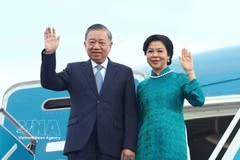
National Assembly - Highest organ of State power, highest representative body of the people ảnh 4Source: VNA
The NA decides onthe election and dismissal of the President, the Vice President, the NAChairperson, NA Vice Chairpersons, members of the NA Standing Committee, headsof the Council for Ethnic Affairs and committees of the legislature, the PrimeMinister, the Chief Justice of the Supreme People’s Court, the ProsecutorGeneral of the Supreme People’s Procuracy, the head of the National ElectionCouncil, the State Auditor General, and heads of other agencies established bythe NA. 

It ratifiesproposals to appoint or dismiss Deputy Prime Ministers, ministers, and otherGovernment members, and judges of the Supreme People’s Court, and the lists ofmembers of the Council for National Defence and Security and the NationalElection Council.

NA deputies castvotes of confidence on officials holding positions elected or approved by thelegislature.
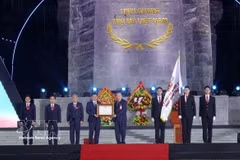
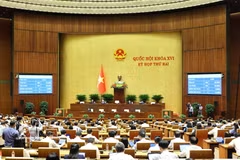
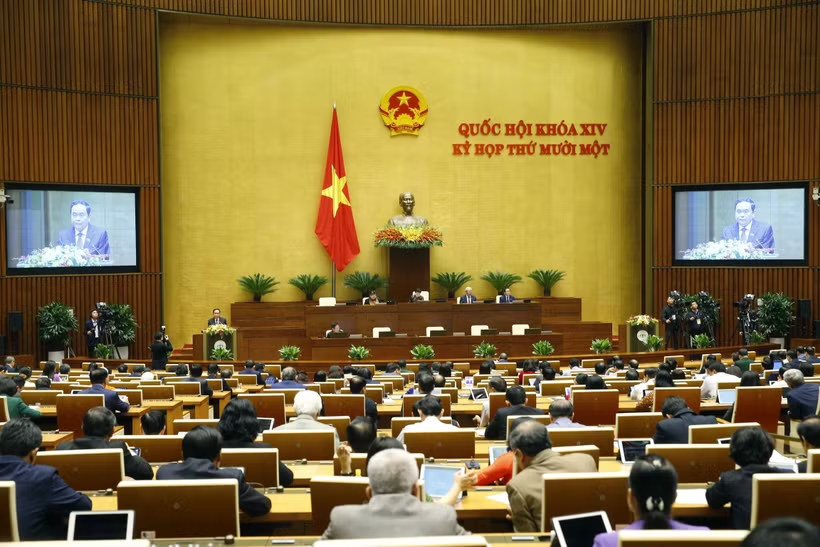
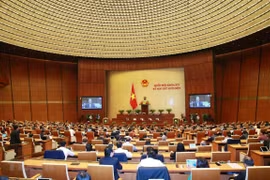
National Assembly - Highest organ of State power, highest representative body of the people ảnh 5At a meeting of the NA on March 26, 2021 (Photo: VNA)
The body alsodecides on the establishment and dissolution of ministries and ministerial-levelagencies of the Government; the establishment, dissolution, division, merger,and adjustment of administrative boundaries of centrally-run cities andprovinces and special administrative-economic units; and the establishment and abolitionof other agencies in line with the Constitution and laws.

It has the rightto scrap documents from the President, the NA Standing Committee, theGovernment, the Prime Minister, the Supreme People’s Court, and the SupremePeople’s Procuracy that run counter to the Constitution, laws, and NAresolutions.

The legislature willissue decisions on amnesty; military, diplomatic and State ranks; and orders,medals, and other noble titles of the State.

Apart frommaking decisions relating to war and peace, the NA also puts forth regulationson state of emergency and other special measures to ensure national defence andsecurity.

Other functionsinclude deciding on basic policies for external relations; ratifying anddeciding on the engagement in or invalidation of international treatiesrelating to war, peace, national sovereignty, Vietnam’s membership of importantinternational and regional organisations, international treaties on humanrights and citizens’ fundamental rights and obligations, and otherinternational treaties that run counter to laws and NA resolutions.

The NA also decideson organising referendums./.
VNA
See more

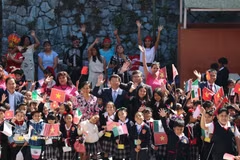
The Vietnamese delegation takes photo with students at the primary school named after the Socialist Republic of Vietnam (Photo: VNA)

CPV values traditional friendship with Mexican Labour Party

Deputy head of the CPV Central Committee’s Commission for Publicity Tran Thanh Lam proposed deeper theoretical exchanges and sharing of experience in Party building and national development; stronger cooperation in education, science, culture, external information, press, publishing and traditional medicine.

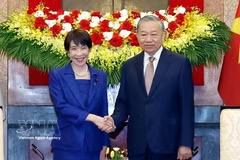
General Secretary of the Communist Party of Vietnam (CPV) Central Committee and President To Lam and Japanese Prime Minister Sanae Takaichi during her official visit to Vietnam in May, 2026. (Photo: VNA)

Top Vietnamese leader’s Japan visit to open up new space for bilateral cooperation

The visit is expected to further deepen ties through Party, State, parliamentary and people-to-people channels, while creating breakthroughs in economic, financial, scientific and technological cooperation, innovation, education and training, digital and green transformation, and supply chain diversification, thereby contributing to a peaceful and stable environment for development in both countries.

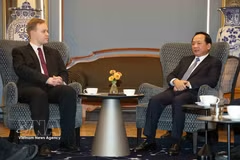
Politburo Member and Head of the Party Central Committee’s Commission for Publicity Trinh Van Quyet (R) meets with Jiri Mäntysalo, Vice Chairman of the Communist Party of Finland. (Photo: VNA)

Vietnam, Finland move to strengthen political trust, expand cooperation

Politburo Member and Head of the Party Central Committee’s Commission for Publicity Trinh Van suggested that Finland further promote its role as a bridge between Vietnam and the European Union (EU), while Vietnam could serve as a bridge between Finland and the Association of Southeast Asian Nations (ASEAN). He called for effective utilisation of the EU-Vietnam Free Trade Agreement (EVFTA) and urged Finland to encourage the remaining EU member states to ratify the EU-Vietnam Investment Protection Agreement (EVIPA) at an early date.

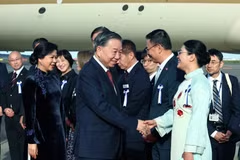
Representatives of the Japanese State and the Embassy of Vietnam in Japan welcome General Secretary of the Communist Party of Vietnam Central Committee and President To Lam and his spouse at Haneda International Airport in Tokyo. (Photo: VNA)

Top Vietnamese leader begins official visit to Japan

The visit is expected to further translate the potential and achievements of bilateral cooperation into concrete outcomes, strengthen the longstanding bonds between the two countries and ensure that the friendship nurtured across generations continues to deliver lasting benefits to both peoples.

General Secretary of the Communist Party of Vietnam Central Committee and President To Lam, his spouse Ngo Phuong Ly and a high-ranking Vietnamese delegation leave Hanoi on November 8 for a four-day official visit to Japan at the invitation of the Japanese State. (Photo: VNA)

Top leader and spouse depart for official visit to Japan

General Secretary of the Communist Party of Vietnam Central Committee and President To Lam, his spouse Ngo Phuong Ly and a high-ranking Vietnamese delegation left Hanoi on November 8 for a four-day official visit to Japan at the invitation of the Japanese State.

Toshiro Nishizawa, a Senior Fellow at Graduate School of Public Policy under the University of Tokyo in an interview with the Vietnam News Agency (VNA)'s correspondent in Japan (Photo: VNA)

Top leader’s visit to deepen Vietnam-Japan strategic cooperation: expert

The upcoming visit to Japan by General Secretary of the Communist Party of Vietnam Central Committee and President To Lam is expected to give fresh impetus to the Vietnam-Japan Comprehensive Strategic Partnership, reflecting the strategic priorities of both countries, according to a Japanese expert.

WTO Director-General Ngozi Okonjo-Iweala speaks at the event (Photo: VNA)

WTO hails Vietnam’s 20-year journey since accession

Joining the WTO was a strategic choice for Vietnam, closely associated with its Doi Moi (Renewal) process, opening-up policy and international economic integration. Over the past two decades, international economic integration has become a driving force for institutional reforms, trade expansion, foreign investment attraction and enhancement of the country's international standing.

Vietnamese Deputy Minister of Foreign Affairs Le Thi Thu Hang (third, left) and other delegates at the political consultation (Photo: The Ministry of Foreign Affairs)

Vietnam, Spain seek to deepen Strategic Partnership

Vietnam asked Spain to continue voicing its support for and urging the European Commission (EC) to swiftly lift the IUU “yellow card” imposed on Vietnamese seafood, while actively encouraging EU member states to ratify the EU-Vietnam Investment Protection Agreement (EVIPA) at an early date.

Standing Deputy Minister of Foreign Affairs Nguyen Minh Vu (Photo: Ministry of Foreign Affairs)

Top leader's official visit to Japan carries three major strategic implications: Deputy FM

The visit, the first to Japan by the leader in his new capacity and the first visit to Japan by a General Secretary of the Communist Party of Vietnam in 11 years, will first set the overall strategic direction for bilateral relations in the new period, enabling leaders of the two countries to identify long-term cooperation orientations and priority areas that meet the development needs of both sides.