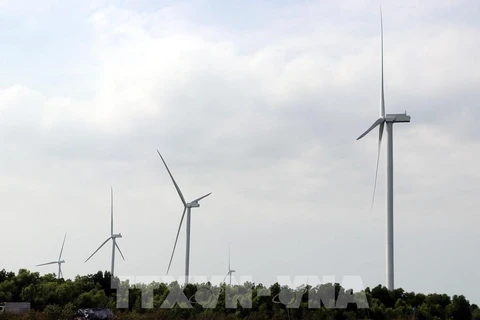
Illustrative image (Source: baochinhphu.vn)
 Hanoi (VNA) - Deputy Prime Minister Le Van Thanh has signed a decision approving the National Strategy on Climate Change for 2050.
The overall objective of the strategy, set out in Decision 896/QD-TTg, is to proactively and effectively adapt to climate change, reduce greenhouse gas emissions to net zero, and deal with vulnerabilities and risks caused by climate change.
The strategy also aims to make active and responsible contributions to the international community in protecting the Earth's climate, take advantage of opportunities from climate change response to transform growth models, as well as improve the competitiveness of the economy.
 Between now and 2030, Vietnam will develop and implement an action plan to reduce methane emissions by 30% compared to 2020. (Photo: VNA)
 The strategy expects that by 2050, Vietnam will effectively manage water and land resources, improve environmental quality and prevent natural disasters affecting socio-economic development, firmly ensuring the security of national water resources.
It includes maintaining stable forest cover at 43%; 100% of the population is provided with clean water, 100% of households in disaster-prone areas have safe houses and disaster risk insurance for production and business activities of enterprises.
To achieve the above objectives, the strategy has set out specific tasks and solutions.
According to the strategy, Vietnam needs to enhance the resilience and adaptive capacity of natural, economic and social systems, ensuring sustainable livelihoods, including preventing deterioration, and restoring resources; building a smart, modern agriculture sector that can effectively adapt to climate change and has high economic value; strictly managing and protecting existing natural forests; and developing infrastructure that adapts to climate change.
Solutions to reduce damage caused by natural disasters and increased climate extremes are to increase investment and modernise the weather monitoring system, and upgrade technology related to forecasts.
Between now and 2030, Vietnam will develop and implement an action plan to reduce methane emissions by 30% compared to 2020, as well as manage and eliminate substances that cause greenhouse gas effects./.