New guidelines on COVID-19 diagnosis, treatment issued

Deputy Health Minister Nguyen Truong Son signed a decision issuing diagnosis and treatment guidelines for the acute respiratory disease caused by the novel coronavirus SARS-CoV-2 (COVID-19), the Health Ministry reported on March 26.
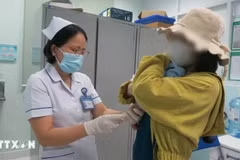
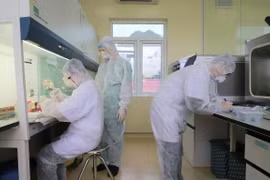
 New guidelines on COVID-19 diagnosis, treatment issued ảnh 1Taking samples for COVID-19 test at concentrated quarantine area (Source: VNA)

Hanoi (VNA) – Deputy Health Minister Nguyen Truong Son signed adecision issuing diagnosis and treatment guidelines for the acute respiratorydisease caused by the novel coronavirus SARS-CoV-2 (COVID-19), the Health Ministryreported on March 26.

The new guidelines will replace of the old ones issued onFebruary 20.

Most COVID-19 fatalities are among the elderly, and people withimmunodeficiency or chronic diseases. The incubation period is between 2 to 14days (5-7 days on average). Common symptoms are a fever, dry cough, fatigue andmuscle aches. Some cases include a sore throat, stuffy nose, runny nose orheadache, cough with phlegm, vomiting and diarrhea. The average time from theinitial symptoms to the severe course of the illness is usually about 7-8 days.

Most people (about 80 percent) only have a mild fever,cough, fatigue, and no pneumonia, and recover on their own in about a week. About14 percent of cases with severe developments such as pneumonia needhospitalization. About 5 percent of cases need to be treated in intensive careunits with symptoms of acute respiratory failure, septic shock, and organfailure, including kidney and heart muscle damage that lead to death.

In children, the clinical manifestations are much milderthan adults. Their common symptoms are fever and a cough or pneumoniamanifestations. The rate of serious illnesses in children is less thanin adults.

Patients after treatment will be discharged from hospital ifthe fever goes away for at least three days, clinical symptoms improve well,survival signs are stable, blood tests are normal, and chest X-rays improve.Especially, they must test negative for SARS-CoV-2 at least twice within 24hours. After leaving hospital, the patients will continue to be quarantinedat home for 14 days and take their body temperature twice a day.

The new guidelines have many new points. The definition of asuspected case has been altered because the epidemiological situation haschanged, and there are many epidemic areas and outbreaks in Vietnam. Thedefinition of a possible case has been removed as testing capacity in thecountry is higher than before.

In terms of treatment, the main focus is on respiratoryfailure with updates on the latest recommendations from the World Health Organizationon oxygen therapy and blood oxygen targets.

The guidelines stress the importance of the close monitoringof patients, especially on the 7th to 10th day of the disease, to promptly detectand handle serious progression.

For patients with severe respiratory distress, incubationand mechanical ventilation should be used early. Non-invasive respiratorysupport measures should be considered for each specific case.

Regarding specific antiviral drugs such as Lopinavir/Ritonavir, Chloroquine, Hydroxychloroquine and Remdesivir, the Health Ministrydoes not recommend using them as there is insufficient evidence on theireffectiveness and safety. The ministry will issue additional recommendationsbased on the results of studies in the world and in Vietnam./.
VNA

See more

The Son Tra regional medical centre (Photo: benhviensontra.com.vn)

Da Nang: Satellite hospitals prove effective at grassroots level

The model is an important component of the roadmap to turn Da Nang into a specialised medical centre for the central and Central Highlands regions, with a number of key specialties, in line with the spirit of Politburo Resolution No. 72-NQ/TW dated September 9, 2025, on breakthrough solutions to strengthen the protection, care and improvement of people's health.

Illustrative image (Photo: daibieunhandan.vn)

Ho Chi Minh City digitises 99.4% of hospital records

As of July 2026, 163 of the city's 164 hospitals, or 99.4%, adopted electronic medical records, the report said. About 64% of public hospitals and 65% of private hospitals now run the technology across their entire operations

Yersin International Clinic in Ho Chi Minh City. (Photo: VNA)

Ho Chi Minh City eyes more foreign medical tourists

Director of the municipal Department of Health Tang Chi Thuong said a key prerequisite for attracting foreign patients is a strategy to develop centres of medical excellence. He proposed selecting hospitals and specialties with strong expertise for investment towards international standards, particularly in competitive fields such as cardiology, oncology, robotic surgery, assisted reproduction, paediatrics, dentistry, cosmetic medicine, specialised health check-ups, traditional medicine and rehabilitation.

A nurse from Children's Hospital No. 1, Ho Chi Minh City, collects a blood sample for HIV testing from an infant. (Illustrative photo: VNA)

Health cooperation adds fresh momentum to Vietnam-US relations

Through this MOU, the US Department of State, working with Congress, plans to provide 98.75 million USD in life-saving global health assistance over the next five years, including 21.385 million USD in dedicated Global Health Security funding, to support Vietnam’s transition to full country ownership of its HIV/AIDS and tuberculosis programmes while strengthening its capacity to detect and respond to emerging and re-emerging infectious disease threats.

Minister of Health Dao Hong Lan and US Ambassador to Vietnam Jennifer McNamara Wick sign the memorandum of understanding on health cooperation. (Photo: US Embassy in Vietnam)

Vietnam, US launch five-year health cooperation

The cooperation will also support Vietnam in strengthening its healthcare capacity and gradually enhancing self-reliance in HIV/AIDS and tuberculosis prevention and control programmes, as well as in responding to emerging and re-emerging infectious diseases.

Director of the Ho Chi Minh City Department of Health Tang Chi Thuong (third, right) presents flowers to congratulate six young doctors who have volunteered to work at grassroots-level health stations (Photo: VNA)

Ho Chi Minh City strengthens grassroots healthcare workforce

Ho Chi Minh City's Department of Health on September 10 reviewed a pilot programme combining hospital-based practice with work at grassroots health stations and organised the fourth healthcare job fair, attracting nearly 1,000 candidates and 94 recruiters offering 806 positions.

Children undergo health screening. (Photo: Dong Da General Hospital in Hanoi)

Vietnam to screen students nationwide for five health risks from 2028

Vietnam will launch nationwide screening for five groups of school-related diseases and health conditions among students from preschool through high school from 2028, including overweight and obesity, refractive errors, spinal curvature, oral diseases and mental health disorders.

A doctor provides dental checkup for a student. (Photo: VNA)

Free health checkups for children ahead of new school year

According to the Hanoi Department of Health, the city has 4,776 educational institutions with more than 2.2 million preschool and school students. The health campaign will run from August 18 to September 4, targeting 100% coverage before the new school year begins.