New possible solutions to Vietnam’s waste problems

Closed-loop organic waste processing technology and de-centralised waste processing are possible solutions for Vietnam’s organic waste problems, experts said at a discussion panel earlier this week.
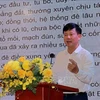
New possible solutions to Vietnam’s waste problems ảnh 1Experts in HCM City discuss the use of a Japanese organic waste-processing technology that is being transferred to Vietnamese partners (Photo: VNA)

HCM City (VNS/VNA)
-Closed-loop organic waste processing technology and de-centralised wasteprocessing are possible solutions for Vietnam’s organic waste problems, expertssaid at a discussion panel earlier this week.

Huynh Kim Tuoc, Director of theSaigon Innovation Hub (SIHUB), said that de-centralised waste processing, inwhich waste would be processed on a smaller scale spread out over the city,would be less polluting than centralised facilities, which exist in fewer areaswith larger volumes of waste.

Ichiro Hatayama, Chairman of theMILAI Group, a Japanese technology research and development company, said thecity currently has two waste burial sites where waste is transported, and thevehicles used to transport the waste produce a large amount of carbon dioxide(CO2).

SIHUB is working with MILAI Groupto transfer the group’s 6R-MOT, an organic waste processing technology, toVietnamese partners.

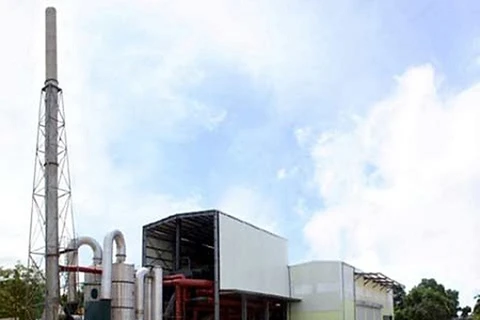
The technology can turn waste toenergy more efficiently than traditional power generation from burning waste(which is high in moisture and requires oil for burning).

With 6R-MOT technology, electricvehicles would be used to transport waste. The waste would then be dried,carbonised and gasified to be used by gas engines to generate power, Hatayamasaid.

The electricity would be used tocharge the vehicles, forming a closed loop with no CO2 emissions, he said,adding that fertilisers can also be created through the process.

The technology also offersgreater flexibility by allowing a wide range of productivity ranges (from 100kilos to 25 tonnes per machine every day), and can be used in a wide variety oflocations in rural or urban areas.

According to SIHUB, waste fromfood accounts for 83 percent to 88.9 percent of solid waste in the city.

The city has 26 waste collectionfacilities where waste is transported for pre-processing before being taken totreatment facilities.

Vietnam spends around 2 trillionVND (86 million USD) for waste transporting and processing annually.

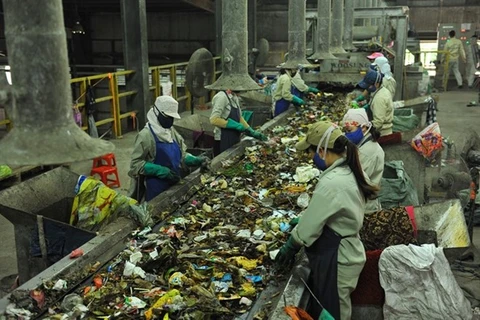
More than 8,000 tonnes of wasteare treated per day in HCM City. Much of it is buried, which takes a long timeto process and causes pollution.

Organic waste is also processedinto compost fertilisers and biogas, which also takes up a lot of space and along time to process.

The city is offering favourablepolicies such as lower land rentals and subsidised interest to encourage firmsto invest in waste-to-energy treatment facilities.-VNS/VNA
VNA
See more

A view of Phong Nha - Ke Bang National Park in Da Nang city (Photo: VNA)

Phong Nha – Ke Bang: untapped biological treasure in Truong Son mountains

Unlike ecosystems where species inventories are largely complete, Phong Nha–Ke Bang National Park remains scientifically “open,” with each survey revealing new findings. Recent studies - from local research projects to international collaborations - have recorded additional bird species and identified the rare parasitic plant Sapria himalayana, which only survives in intact primary forests.

The interface of Vietnam Weather KTTV mobile application (Photo: baochinhphu,vn)

Application of dangerous weather warning introduced

All unusual weather events, from widespread thunderstorms, lightning strikes, landslides, flash floods, tropical depressions to strong winds at sea, are continuously updated from official data sources of the NCMHF and meteorological stations and prominently displayed on the main interface.

An overview of the kick-off meeting for the “Sustainable Management of Substances Controlled by the Montreal Protocol” project (Photo: VNA)

Vietnam launches 13 mln USD project to phase out ozone-depleting substances

Funded by the Multilateral Fund for the Implementation of the Montreal Protocol and implemented through the World Bank (WB) and the United Nations Environment Programme (UNEP), the project aims to help Vietnam meet its international commitments in managing and phasing out controlled substances. It will run from 2026 to 2031 with a total budget of over 13 million USD.

Tram Chim National Park and the Mekong Conservancy Foundation (MCF) organise the workshop on sustainable restoration of wetland ecosystems in the Mekong Delta on March 24. (Photo: VNA)

Solutions sought to restore Mekong Delta wetland ecosystems

Experts at the workshop described wetlands as the “ecological heart” of the Mekong Delta, playing a vital role in water storage and regulation, climate moderation, carbon sequestration, biodiversity conservation, and livelihoods for millions of people through aquaculture, agriculture, and ecotourism. These ecosystems also help reduce disaster risks and enhance climate resilience.

Deputy Minister of Agriculture and Environment Le Cong Thanh speaks at the ceremony to launch major environmental campaign. (Photo: VNA)

Vietnam calls for collective action on water, air, climate and sustainable future

Deputy Minister of Agriculture and Environment Le Cong Thanh underscored that water, climate, and energy are fundamental pillars of sustainable development. In Vietnam, water resources and weather patterns influence every aspect of life, from food and water security to livelihoods, ecosystem stability, and economic growth.

The population of trac (Dalbergia cochinchinensis) trees is strictly protected in the Dak Uy special-use forest. (Photo: VNA)

Vietnam highlights forests’ role in sustainable growth on International Day of Forests

According to Director of the Forestry and Forest Protection Department Tran Quang Bao, forests hold a strategic position in Vietnam’s development. They provide livelihoods for millions of people, particularly ethnic minorities and communities living in mountainous and forested areas, while contributing to environmental protection and disaster prevention.