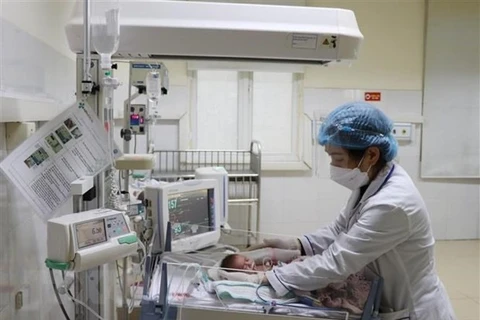
New resolution introduced to address medical equipment and drug shortage. (Photo: VNA)
 Hanoi (VNS/VNA) - Experts have welcomed new plans to address challenges in the procurement and bidding for drugs and medical equipment.
The move comes as the country is facing a number of issues over shortages of crucial medical supplies.
Resolution No. 30/2023/NQ-CP aims to immediately mitigate the bottlenecks in supply and demand, ensuring better, faster and quality services at medical facilities.
It will also help identify the responsibilities and obligations of stakeholders in healthcare.
One of the solutions it will ensure is that health insurance will continue to cover medical treatment and examination expenses, applying to services using equipment provided by bid-winning contractors.
This will run until the end of the contract term for those signed before November 5, 2022, including direct purchases. Contracts signed from this date onwards will have expenses covered until the new regulation is introduced.
In the case where contracts have expired, expenses will continue to be covered until the materials and chemicals bought are exhausted.
The resolution stated that bid-winning contractors are responsible to provide medical equipment according to the demand of the investor, as well as the technical services performed with these machines which are covered by health insurance.
The document also allows the use of equipment that is donated, gifted or provided as aid from individuals and organisations at home or abroad, or is part of joint programmes of which the contract expired, but has not finished the process of becoming public assets.
The expenses for services performed on these devices are covered by the health insurance fund.
Medical facilities are responsible for the service quality and will use their own budget for maintenance and repair of the machinery during usage.
The document also allows piloting the guideline on building the bid package pricing this year.
Depending on the needs of the medical facility, its scientific council will draft the required functions and technical specifications of the equipment. This will then be used for invitation for quotation, in order to determine the bid package pricing.
The reference for the market price is based on the quotation of suppliers, which can be obtained by publishing the invitation for bid, for a minimum 10 days, to either the e-portal of the health ministry, the public service portal on medical equipment management at https://dmec.moh.gov.vn, or others according to the regulations on bidding.
The bid package pricing is then built based on the quotations received.
The investor is also allowed to take a quote directly from the supplier, in the case when there is only one supplier who can ensure technical compatibility and copyright that cannot be obtained by others.
The pricing is then identified based on the technical features of the device, usage needs and financial capacity of the facility.
Price appraisals will be conducted by authorised businesses or State agencies, as per the Law on Prices.
Director of Bach Mai Hospital Dao Xuan Co said that the resolution has promptly resolved the key urgent issues in the shortage of medical supplies recently.
Sharing the same perspectives, Director of Viet Duc (Vietnam - Germany) Friendship Hospital Tran Binh Giang praised the decision to put to use donated equipment and devices from expired joint contracts, with expenses covered by health insurance.
He said: “This has basically resolved the lack of medical equipment and devices to respond to people’s needs in healthcare.”
Giang added that according to the new resolution, there are only one to two quotations required to build the bid package pricing, instead of three in the past.
In the case where there are multiple types of the same device, a scientific council will select the one with the most suitable attributes, instead of the lowest priced, he said.
“In the near future, new legal documents are introduced so that stakeholders can act upon this resolution,” he added.
“Hopefully then the regulations can be even more practical.”/.
Resolution No. 30/2023/NQ-CP aims to immediately mitigate the bottlenecks in supply and demand, ensuring better, faster and quality services at medical facilities.
It will also help identify the responsibilities and obligations of stakeholders in healthcare.
One of the solutions it will ensure is that health insurance will continue to cover medical treatment and examination expenses, applying to services using equipment provided by bid-winning contractors.
This will run until the end of the contract term for those signed before November 5, 2022, including direct purchases. Contracts signed from this date onwards will have expenses covered until the new regulation is introduced.
In the case where contracts have expired, expenses will continue to be covered until the materials and chemicals bought are exhausted.
The resolution stated that bid-winning contractors are responsible to provide medical equipment according to the demand of the investor, as well as the technical services performed with these machines which are covered by health insurance.
The document also allows the use of equipment that is donated, gifted or provided as aid from individuals and organisations at home or abroad, or is part of joint programmes of which the contract expired, but has not finished the process of becoming public assets.
The expenses for services performed on these devices are covered by the health insurance fund.
Medical facilities are responsible for the service quality and will use their own budget for maintenance and repair of the machinery during usage.
The document also allows piloting the guideline on building the bid package pricing this year.
Depending on the needs of the medical facility, its scientific council will draft the required functions and technical specifications of the equipment. This will then be used for invitation for quotation, in order to determine the bid package pricing.
The reference for the market price is based on the quotation of suppliers, which can be obtained by publishing the invitation for bid, for a minimum 10 days, to either the e-portal of the health ministry, the public service portal on medical equipment management at https://dmec.moh.gov.vn, or others according to the regulations on bidding.
The bid package pricing is then built based on the quotations received.
The investor is also allowed to take a quote directly from the supplier, in the case when there is only one supplier who can ensure technical compatibility and copyright that cannot be obtained by others.
The pricing is then identified based on the technical features of the device, usage needs and financial capacity of the facility.
Price appraisals will be conducted by authorised businesses or State agencies, as per the Law on Prices.
Director of Bach Mai Hospital Dao Xuan Co said that the resolution has promptly resolved the key urgent issues in the shortage of medical supplies recently.
Sharing the same perspectives, Director of Viet Duc (Vietnam - Germany) Friendship Hospital Tran Binh Giang praised the decision to put to use donated equipment and devices from expired joint contracts, with expenses covered by health insurance.
He said: “This has basically resolved the lack of medical equipment and devices to respond to people’s needs in healthcare.”
Giang added that according to the new resolution, there are only one to two quotations required to build the bid package pricing, instead of three in the past.
In the case where there are multiple types of the same device, a scientific council will select the one with the most suitable attributes, instead of the lowest priced, he said.
“In the near future, new legal documents are introduced so that stakeholders can act upon this resolution,” he added.
“Hopefully then the regulations can be even more practical.”/.
VNA