Students at a classroom of Vo Thi Sau Primary School in Hai Chau district, Da Nang city (Photo: VNA)
 The Ministries of Health, and Education and Training have decided that only close contacts of any positive cases found must self-isolate; the rest of the school can continue as normal, after testing.
Under the document, there are four steps that schools have to follow if COVID is found in the school.
The first step is to immediately notify the school’s Principal, the Steering Committee and the Safety Team for COVID-19 Pandemic Prevention and Control.
The school's medical officer has to immediately transfer the COVID-19 student to the school's temporary quarantined room, along a separate route that has been set up.
The second step is that the school’s Principal, the Steering Committee, the Safety Team for COVID-19 Pandemic Prevention and Control have to inform the commune-level health station, or the local health facility that has been assigned to support the school in the pandemic prevention and control to co-deal with it.
The third step is that the teacher in charge of the class must instruct other students to stay at the class until the school’s Steering Committee for COVID-19 Pandemic Prevention and Control finish the identification of the list of students, who have direct contact with the positive case, following the health ministry’s instructions.
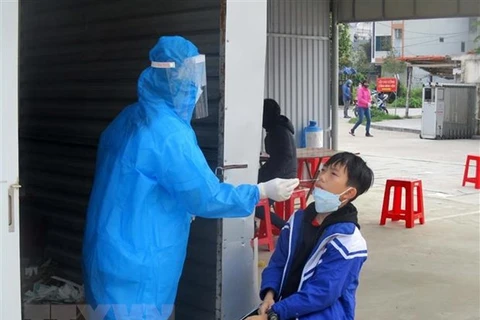
The committee must work with the commune-level health station of the local health facility to provide rapid tests for all students in the class. If any other cases of COVID-19 are found, they should be dealt with following the health ministry’s instructions.
Students who have not been in direct contact with the COVID-19 student, and provide a negative rapid test result, will be allowed to continue school as normal.
Those who had direct contact with the positive COVID-19 case will have to self-monitor at home, regardless of if their rapid test result is negative.
Those who have received two doses of vaccine, or have recovered from COVID-19 within the past three months, are required to take a real-time polymerase chain reaction (RT-PCR) test on the fifth day.
If the test result is negative, the student can return to school as normal though the school and students' parents have to continue monitoring the students' health for the next five days. They must also ensure that everyone follows the ministry’s 5K message: Khau trang (facemask) – Khu khuan (disinfection) – Khoang cach (distance) – Khong tu tap (no gathering) – Khai bao y te (health declaration).
The students, who have direct contact with the positive case but have yet to be given enough doses of the COVID-19 vaccine, are required to self-quarantine at home for seven days and take a RT-PCR test on the seventh day. If the test result shows negative, the students can return to school.
The school and students' parents have to continue monitoring the students' health for the next three days and guide the students to obey the health ministry’s 5K message.
The fourth step is to disinfect the classroom after moving all students, who have not had direct contact with the COVID-19 patient, to another classroom.
The document also said that if a student is found to be infected with COVID at home, the parents have to immediately inform the school and the commune-level health station. The school will make a list of students, who have had direct contact with the COVID-19 student and handle following the health ministry’s instructions.
For preschool students, if a case is discovered, all other students must self-quarantine at home for seven days. The students are required to take RT-PCR test on the seventh day. If the test is negative, the students can return to school.
The health ministry also recommends schools organise meals in the classroom for semi-boarding students, instead of eating at the canteen./.
VNA