Hanoi (VNA) – The consistent policy of the Vietnamese Party and State in ensuring people's right to freedom of belief has been enshrined in the country's Constitutions issued in 1946, 1959, 1980, 1992 and 2013, creating favourable conditions for all religions in the country.
However, hostile forces have never given up "peaceful evolution" plots, and have, in the guise of freedom of belief and religion, hooked up with those who hold a grudge against the regime to distort the real situation and slander the Vietnamese Party and State about religious freedom in the country.

Nguyen Van Long, Chief of the Office of the Government Committee for Religious Affairs, has provided a comprehensive insight into the issue in an article, in which he affirmed that Vietnam is a religiously diverse country with all religions forming part of the great national unity bloc and staying equal before the law.
As of 2021, Vietnam recognised 43 religious organisations with some 27 million followers, making up 27% of the national population.
Since it began to lead the revolution in Vietnam, the Party has persistently pursued the policy on freedom of religion and belief. During each revolutionary period, the Party has issued guidelines, policies and laws that match and satisfy people’s legitimate religious and belief needs, and worked to strengthen the great national unity bloc and unite religions for national construction and development.
Right after gaining national independence, during the first meeting of the Government on September 3, 1945, President Ho Chi Minh urged the Government to affirm the freedom of religion and the unity between religious and secular communities. The view has been institutionalised by the Party and the State in legal documents, ensuring that the right to freedom of religion and belief is protected both under the law and in reality.
Decree No. 234/SL dated June 14, 1955 with five chapters and 16 articles stipulates the Government’s responsibility in ensuring the public’s freedom of religion as well as the responsibility and obligations of religious dignitaries and followers in religious activities in Vietnam.
It said “the Government guarantees people’s right to freedom of religion and belief, and worship. Nobody may infringe on the freedom. Everyone has the right to follow or not follow any religion.
Religious dignitaries are free to preach at religious institutions such as churches, pagodas, sanctuaries and religious schools. When popularising religions, they should educate followers about patriotism and obligations of citizens, and respect for the people’s administration and laws of the Democratic Republic of Vietnam.”
Throughout the national revolutionary process, the consistent policy and efforts of the Party and the State of Vietnam in ensuring people's right to freedom of belief and religion are enshrined in Constitutions adopted in 1946, 1959, 1980, 1992 and 2013. Notably, the 2013 Constitution and legal documents relating to belief and religion were completed towards matching international law and the 1966 International Convention on Civil and Political Rights (ICCPR) to which Vietnam is a member. The move aims to ensure that everyone better exercises the right to freedom of belief and religion in reality, which is guaranteed in legal documents such as Ordinance No. 21/2004/PL-UBTVQH11 regulating belief and religious activities, Decree No. 22/2005/ND-CP guiding the implementation of a number of articles of the Ordinance on Beliefs and Religions, and Directive No.1940/CT-TTg on religion-related housing.
The 2013 Constitution affirms that "everyone has the right to freedom of belief and religion, and has the right to follow any religion or to follow no religion.” The 14th National Assembly adopted the Law on Belief and Religion and the Government issued Decree No. 162/2017/ND-CP and other legal documents guaranteeing people's right to freedom of belief and religion.
Statistics show that in 2003, Vietnam was home to six religions and 15 organisations, with 17 million followers, about 20,000 worship establishments, 34,000 dignitaries and 78,000 assistants. In 2022, the government recognised 43 organisations belonging to 16 different religions, with over 27.2 million followers, more than 53,000 dignitaries, some 148,000 assistants, and 29,718 worship places.
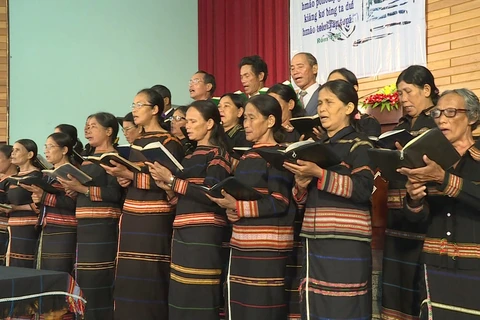
Each year, there are more than 8,000 festivals of beliefs and religions with the participation of tens of thousands of followers in Vietnam.
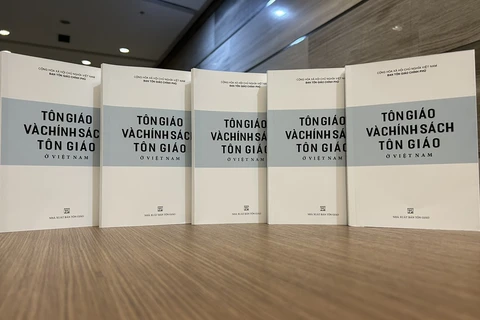
Religious organisations and individuals are encouraged and facilitated to participate in social welfare, charity and community health care activities. Religious organisations are running more than 500 medical facilities, over 800 social establishments, and 300 preschools. Between 2018 and 2021, they licensed the release of 2,027 publications with over 7 million copies, many of which had been translated into English, French and ethnic languages. As many as 25 newspapers and magazines of different religions are in circulation.
During the 10 years of implementing policies and laws on beliefs and religions, competent state agencies have granted hundreds of hectares of land to build worship facilities. Ho Chi Minh City, for example, has allocated 7,500 sq.m of land to the General Confederation of the Evangelical Church of Vietnam (South) to build the Alliance Evangelical Divinity School. The Central Highlands province of Dak Lak has also given more than 11,000 sq.m to the Buon Ma Thuot Bishop's Palace. The central city of Da Nang allocated some 9,000 sq.m to the Da Nang Bishop's Palace, and the central province of Quang Tri handed over 15 hectares to the La Vang Parish.

Last year, all-level authorities licensed the construction, repair and renovation of 486 worship establishments, up 60 from the previous year; the registration for concentrated religious practices of 183 groups; and the issuance of 140 publications, with over 684,200 copies. The ordination, promotion, appointment and transfer of dignitaries and assistants; the establishment of affiliated religious organisations; the amendment of charters and regulations; and the registration for annual programmes were carried out in accordance with legal regulations.
In the year, 646 people were approved to be ordained and nominated as dignitaries; 3,238 were appointed, elected and nominated as assistants; and 424 assistants were transferred in accordance with regulations.
It can be said that religions have never had such favourable operational conditions as today. International relations have been expanded. The numbers of dignitaries, assistants and followers are increasing. Worship facilities are getting more spacious. Religious activities of foreigners in Vietnam are publicised in line with the law, creating conditions for religious organisations at home and abroad to step up exchanges.
Since 2011 to now, about 2,000 religious followers have attended training courses abroad, and international conferences and seminars on religions. At the same time, nearly 500 foreign delegations, with more than 3,000 members, have participated in exchange programmes held at worship facilities in Vietnam as well as events held by local religious organisations, such as the three Vesak Festivals hosted by the Vietnam Buddhist Sangha, which brought together over 1,000 international delegates from 120 countries and territories, and tens of thousands of people; along with the General Assembly of the Bishops' Conference of Asia, and the celebration of 100 years of Protestantism in Vietnam.
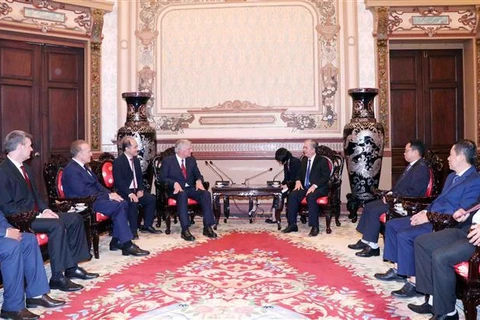
The Government Committee for Religious Affairs in collaboration with the European Union (EU) organised a seminar on Vietnamese religions in the context of international integration and shared international experience, and the 6th Asia-Europe Meeting (ASEM) Interfaith Dialogue. It also welcomed and had working sessions with many religious organisations and dignitaries who came to learn about Vietnam’s religious laws, such as the Institute for Global Engagement (IGE) of the US, and Germany’s Media Group WAZ.
The committee and competent agencies have proactively provided information about the religious situation and relevant policies and laws of the Party and the State, and discussed issues of international concern to affirm the diverse religious life in Vietnam. The policies and laws have created conditions for religions to participate in various fields of social life, from the state apparatus and people-elected bodies (the National Assembly and People’s Councils at all levels) to socio-political organisations, health care, education, vocational training, charity, patriotic emulation movements and new-style rural area building, thus ensuring the legitimate right to freedom of religion of the Vietnamese people.
However, hostile forces have never given up "peaceful evolution" plots, and have hooked up with those who hold a grudge against the regime to distort the real situation and slander the Vietnamese Party and State about religious freedom in the country.
They have also taken the advantage of social issues such as environmental pollution, personnel work and corruption to distort Vietnam's viewpoints, guidelines, policies and laws, with the aim of causing unrest among the public, religious dignitaries and followers, stirring skepticism and eroding the confidence of religious dignitaries and followers in the Party and the State.
The Party and the State have always affirmed that national unity and the solidarity between religions are the main driving force for national development. The Party and the State advocate eradicating inferiority complex and prejudice; promote non-discrimination on the basis of class, ethnicity and religion; respect different opinions that do not run counter to national interests; and uphold the tradition of humanity and tolerance, for stability and development of the country.
Whenever the Party issues new guidelines and views on religions, the State has promptly institutionalised them through legal documents to put them into place. The Party and the State have also promptly made adjustments so that religious work goes into order and in the right direction, raising trust among religious dignitaries and followers.
Party General Secretary Nguyen Phu Trong has repeatedly affirmed: “Our country has never enjoyed such fortune, power, international standing and prestige as it does today", and this achievement is attributable to the strength of the great national unity bloc under the sound Party leadership, including the solidarity of religious organisations, dignitaries and followers./.