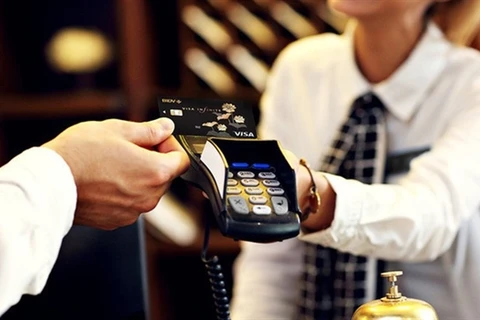
A customer makes a payment using a card at a Co.opmart supermarket. (Photo: VNA)
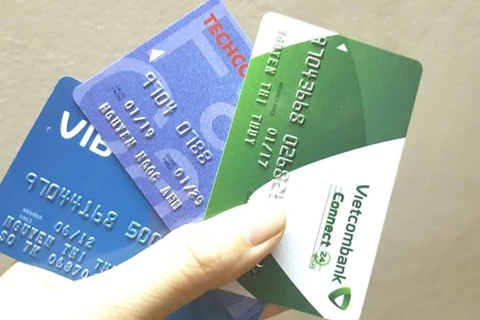
 HCM City (VNS/VNA) - Banks have embarked on the conversion of magnetic payment cards into chip cards for greater security, but the COVID-19 pandemic has significantly slowed down their efforts, making it difficult for them to meet the deadline.
Last year the State Bank of Vietnam (SBV) had unveiled a plan to convert at least 30 percent of all cards to chip cards by the end of 2019 and make 35 percent of ATMs and 50 percent of point of sale terminals machines compatible with contact and contactless chip technologies.
All ATMs and POS machines in the market were supposed to comply with Vietnam Chip Card Specifications (VCCS) by December 31 this year, and all domestic cards with basic standards for chip cards by the end of 2021.
Nguyen Minh Tam, deputy CEO of Sacombank, said his bank was among the first to issue domestic cards using EMV chip technology, which optimises the security of card information and enables contactless payment.
Currently some 50 percent of cards issued by his bank have chips and all new issues are chip cards, he said.
"However, a large number of ATM cards issued in the past to meet the demand for payment of salaries and cash withdrawals through ATMs are still in circulation. It takes time to convert them (into chip cards).”
Le Thanh Trung, deputy CEO of HDBank, said his bank has completed the system upgrade and has been issuing chip cards, both contact and non-contact, since April this year.
According to a Vietcombank spokesperson, all new cards have chips. The bank has around 14 million cards currently in use and it needs to convert 9.8 million cards of them.
Tam said the cost of conversion would be huge since chip cards cost six times the price of magnetic cards.
Besides, banks have to contact each customer to ask them to switch to chip cards, which is difficult to do quickly, he said.
"And, due to the COVID-19 pandemic, many countries have closed their borders, and so the import of equipment for the conversion has been delayed. Therefore, the State Bank of Vietnam should consider extending the deadline for the conversion by another year."
Trung said: “The number of ATM cards issued is quite large, so it needs time and meticulous planning for the conversion to ensure there is no inconvenience to cardholders. Banks also have to prepare funds for the switch.”
According to the Vietnam Bank Card Association, only 10 percent of cards were converted into chip cards last year, which was slower than prescribed by the SBV. The central bank ordered banks to speed up the progress.
But the pandemic has posed challenges to carrying out the task, and the association plans to ask the central bank to delay the deadline by three to six months.
Nguyen Dang Hung, deputy general director of the National Payment Corporation of Vietnam (Napas), said Napas is working closely with banks to carry out the conversion in accordance with the schedule set by SBV.
By the end of the first quarter of this year 26 banks including Vietcombank, Vietinbank, Agribank, Sacombank, and TPBank have completed the system authentication required for the conversion.
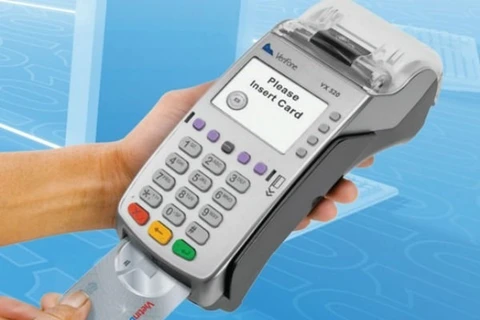
Besides reducing the risk of theft and fraud, chip cards can also store large amounts of information, have an outstanding feature, the one-touch payment technology, and can be used to pay for transport and public services.
Napas said it is working with public transport operators to test the use of contactless chip cards on buses, metro trains and others similar to their use in the UK and Singapore./.
VNA