Phu Quoc – from “Hell on Earth” to nation’s first island city

Once branded “Hell on Earth” for the notorious jail which witnessed the most terrifying scenes of oppression during war time before 1975, Phu Quoc island in the Mekong Delta province of Kien Giang has now become the country’s first island city with tremendous economic and social development.

Kien Giang (VNA) – Once branded “Hell on Earth” for the notorious jail which witnessed the most terrifying scenes of oppression during war time before 1975, Phu Quoc island in the Mekong Delta province of Kien Giang has now become the country’s first island city with tremendous economic and social development.

Before the liberation of the southern region on April 30, 1975, the US and its puppet administration in the South built Phu Quoc prison to confine Vietnamese revolutionary soldiers, who were subjected to barbaric forms of tortures such as nailing on hands, feet and even head, stabbing the burned copper wires into the skin, drilling teeth, and burning and burying alive.

Phu Quoc – from “Hell on Earth” to nation’s first island city ảnh 1Wire tiger cages in Phu Quoc jail (Photo: VNA)


The prison was used for six years between July 1967 and January 1973. During that time, 4,000 people died in the jails and thousands of those who survived were handicapped for the rest of their lives.

However, the island has risen above the pain of war, and shot to stardom as a dynamic economic zone in recent years, with local production value grew average more than 13 percent during 2015-2020.

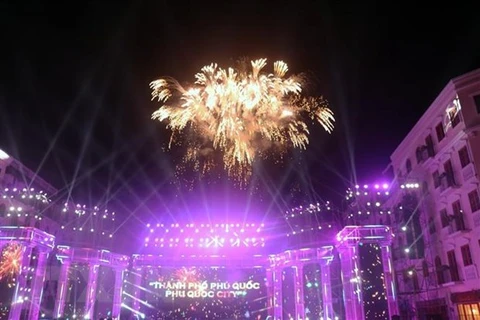
Phu Quoc Island officially became the country’s first island city on January 1, 2021. The establishment of Phu Quoc city plays an important role in the province’s socio-economic development and in asserting the country’s sovereignty over its waters and islands.

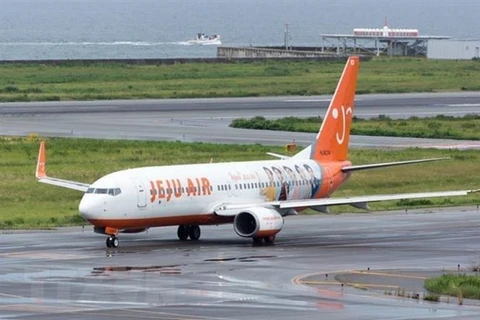
The island has an international airport, with many foreign airlines operate both commercial and charter flights to the island.

The Government has identified Phu Quoc as one of the destinations in the country that will help revive international tourism after the COVID-19 pandemic is contained.

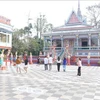
Blessed with white sand, turquoise beaches and balmy weather nearly year-round, with two-thirds of the island covered in tropical forests, Phu Quoc is truly a tourism paradise.

Phu Quoc – from “Hell on Earth” to nation’s first island city ảnh 2Phu Quoc is truly a tourism paradise. (Photo: VNA)


It is the largest island in the country at 590,000sq.km, almost the same size as the city-state Singapore, and is known for white-sand beaches and resorts, mostly located along its palm-lined southwestern coast.

The Phu Quoc National Park, with mountains, dense tropical jungle, hiking trails and wildlife, covers more than half of the island.

Apart from the natural beauty, tourists are also attracted by the island’s luxury resorts, golf courses, animal safari, and casinos.

The island is geographically close to other parts of Southeast Asia and near several international freight routes, and can be reached in less than two hours by air from major cities in the region.

The island has worked to facilitate economic development, and called strategic investors such as VinGroup, SunGroup, BIMgroup and CEOgroup, among others.

Chairman of the city People’s Committee Huynh Quang Hung said that investors have registered some 16 billion USD in 328 projects in the city, stressing tourism projects have cast a new look to the “pearl” island.

The city has focus resources to develop socio-economic infrastructure, several of works were completed and put into completion such as An Thoi international port, Duong Dong port and south-north highway.

According to Secretary of the island city’s Party Committee Tong Phuoc Truong, Phu Quoc envisages to become a high-end tourism and service hub, as well as a sci-tech centre of the nation and region.

The island city is working towards sustainable development in tandem with historical and cultural preservation, and national security protection, he added./.
VNA

See more

Secretary of the Party Central Committee and Deputy Prime Minister Pham Thi Thanh Tra speaks at the conference. (Photo: VNA)

Vietnam moves to make tourism a true new growth driver

Resolution No. 26-NQ/TW, issued on August 22, sets out a new vision, with a focus on fundamentally renewing the mindset, methods and approaches to tourism development and governance, shifting from quantity to quality and increasing the sector’s contribution to the national economy.

Tourists visit Golden Bridge in Da Nang city in the rainy season. (Photo: hanoimoi.vn)

Turning rainy season into tourism opportunity

Seasonality has long been a challenge for Vietnam’s tourism industry. In many localities, tourism peaks in summer but visitor numbers fall during the rainy months. Destinations are now seeking to restructure their tourism ecosystems and develop products that can operate year-round.

A pot of Mi Quang (Quang noodles). (Photo: VNA)

Da Nang promotes distinctive cuisine as key tourism attraction

As travellers increasingly seek authentic local experiences, the central coastal city of Da Nang is stepping up efforts to integrate cuisine into tourism itineraries, linking culinary promotion with destination branding and cultural preservation.

Flower vendors form a distinctive feature of Hanoi’s autumn. (Photo: VNA)

Hanoi builds four-season tourism appeal

Hanoi’s tourism events are increasingly designed to inspire exploration beyond individual festivals. At the Hanoi Tourism Gift Festival, for instance, visitors can make handicrafts with artisans, explore destinations through virtual reality and discover new tours and tourism stimulus programmes.

A view of the Lo Lo Chai community tourism village in Tuyen Quang province (Photo: VNA)

Vietnam taps community tourism potential for sustainable development

The tourism market is shifting from sightseeing towards living and connecting with destinations. Visitors increasingly seek authentic and locally rooted experiences, interaction with local people, culture and nature, as well as small-group and personalised trips with limited environmental impact and clear benefits for communities.

Delegates press the button to launch the “Phong Nha – Hue Ancient Capital: World Heritage Journey” tourist train. (Photo: VNA)

Tourist train linking Phong Nha and Hue heritage sites launched

The 190-km route runs between Hue, Dong Ha, My Trach, Dong Hoi and Tho Loc stations, giving travellers access to destinations including the Complex of Hue Monuments, Quang Tri Ancient Citadel, Vinh Moc Tunnels, Hien Luong–Ben Hai historical site and Phong Nha-Ke Bang National Park.

International tourists visit Hoi An Ancient Town in Da Nang city. (Photo: VNA)

Tourism ready for National Day holiday, eyes year-end acceleration

A range of cultural and artistic activities will be held during the holiday. In Da Nang, the “Hoi An Memories” show will present its “Flag Hat” version from August 26 to September 2. Phu Quoc will host the “The Memory of Flowers” exhibition, while Thanh Hoa will organise the Sam Son Kite Festival 2026 from August 30 to September 1.

Businesses introduce their tourism products at the 20th International Travel Expo Ho Chi Minh City. (Photo: VNA)

Vietnam ready to create new momentum for regional, global MICE tourism

Vietnam has consistently identified tourism as a spearhead economic sector, Deputy PM Pham Thi Thanh Tra stressed, adding that in the new development era, with the need for rapid and sustainable growth and a stronger national position, MICE should be positioned as a strategic tourism product, targeting high-quality visitors while generating additional momentum for trade and investment and enhancing national competitiveness.

Officials at the 7th ACMECS Tourism Ministers’ Meeting in Ho Chi Minh City on August 27 (Photo: VNA)

ACMECS strengthens tourism ties, promotes “Five Countries, One Destination”

The newly adopted joint action plan on ACMECS tourism cooperation for 2026–2028 focuses on five key pillars: improving connectivity and facilitating travel; promoting digital transformation and smart tourism; developing ecotourism, community-based and cultural tourism; enhancing tourism security and safety; and developing human resources.

A stall at the 20th International Travel Expo Ho Chi Minh City (Photo: VNA)

International Travel Expo 2026 opens in Ho Chi Minh City

ITE HCMC 2026 features one of its largest and most diverse tourism networks to date, with tourism promotion agencies and businesses from the Republic of Korea, Japan, Malaysia, Thailand, Laos, Cambodia, Bhutan, Russia’s St. Petersburg and Nicaragua.