Phu Tho saves ancient singing from oblivion

A massive effort by villagers in the northern province of Phu Tho has not only rescued the ancient form of dinh (community hall) singing, but also guided the way for similar efforts to save other parts of Vietnamese culture.
A massive effort by villagers in the northern province of Phu Tho hasnot only rescued the ancient form of dinh (community hall) singing, butalso guided the way for similar efforts to save other parts ofVietnamese culture.

Efforts will now be made to remove xoansinging from the UNESCO list of heritage in need of urgent protection,according to Ha Ke San, Vice-Chairman of the People's Committee of thenorthern province of Phu Tho.

At present, the art form is on theshorter List of Intangible Cultural Heritage in Need of UrgentSafeguarding – in other words, in danger of dying out.

It ishoped to move it to the list of Intangible Cultural Heritage, a listconsisting of world culture that is endangered, but not on the brink ofextinction.

San said it was preferable to place the ancient formof singing into the second list because it was now being promoted andbroadcast widely throughout Phu Tho.

The province hasfinancially supported training classes and activities, in addition tohelping xoan singers directly helping to revive the ancient song form.

Theprovince is backing the study, collection of xoan singing and intendsto publish a book titled Hat Xoan Phu Tho (Phu Tho Xoan Singing).

Xoan is also being introduced to the school curriculum, along with projects to preserve and restore relics related to the art.

Theprovince will soon submit a document to UNESCO proposing xoan singingbe removed from the list of heritages in need of urgent protection.

Accordingto Nguyen Ngoc An, head of the local department of Culture, Sports andTourism, the preservation and training of xoan singing is beingpopularised widely within the province.

At present, 13 districtshave developed a total of 115 xoan clubs with nearly 1,300 members. Thebulk of the members are from Kim Duc and Phuong Lau Communes where thereare 23 clubs with nearly 1,148 members.

The department ofCulture, Sports and Tourism has organised hundreds of performances topromote xoan singing. Using the mass media, these shows have beenbroadcast to domestic and international audiences.

The departmenthas also collaborated with experts, musicians and researchers tocollect, edit and publish thousands of CDs and more than 5,000 booksabout xoan singing. These are used as aids for teachers and students.

PhuTho Department of Education has introduced xoan singing into all localschools to help following generations of children from the regionunderstand their heritage and their obligation to preserve it.

Additionally, the province is working on giving the title of Distinguished Artisans title to 17 xoan singers.

Xoansinging is said to have appeared about 4,000 years ago, during the timeof the Hung Kings. It usually took place at spring festivals in frontof communal houses. For this reason, it is also called hat cua dinh(singing in front of the communal house).

Xoan singing wasorganised not only to entertain villagers and honour the founding HungKings of Vietnam, but also to pray for good weather and harvests, praiselandscapes and depict daily life in rural areas.

Despite annualperformances at the festival at the Hung Kings' Temple, xoan singing wasonce at risk of dying out because members of the younger generationshad never heard it.

The UNESCO listed xoan singing as part of the world's Intangible Cultural Heritage in need of urgent protection in 2011.

This was good news for the people of Phu Tho province, the birthplace of a unique type of singing.

In2013, Phu Tho People's Committee built a 165 billion VND (7.85 millionUSD) project, entitled Maintaining and Developing Intangible CulturalHeritage of Humanity – Xoan Singing in Phu Tho in 2013-2020 funded bythe Government.-VNA
See more

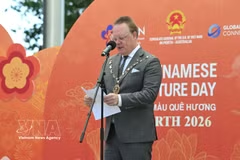
Lord Mayor of Perth Bruce Reynolds speaks at the event (Photo: VNA)

Vietnamese culture shines at festival in Australia

Vietnamese Consul General in Perth Pham Hai Anh called on the Vietnamese community there to preserve the language, family traditions and national values, actively promote Vietnamese culture internationally and encourage creativity to bring national culture closer to the world while harmonising tradition with modernity.

Lidia Brito, UNESCO Assistant Director-General for Priority Africa and External Relations (Photo courtesy of UNESCO)

UNESCO expects Vietnam to lead cultural cooperation initiatives

Lidia Brito, UNESCO Assistant Director-General for Priority Africa and External Relations, praised Vietnam’s contributions to education, science, culture and information, describing the 50-year partnership between Vietnam and UNESCO as a sustained and increasingly substantive journey.

Pho Hien Stone Steles in Hung Yen province (Photo: Department of Cultural Heritage)

Two new UNESCO heritage listings bring preservation challenges to Vietnam

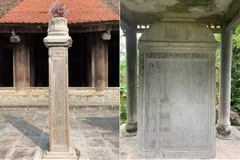
Dr Vu Thi Minh Huong, Vice Chair of the UNESCO Memory of the World Committee for Asia and the Pacific, said with the “Pho Hien Stone Steles” and the “Cliff-based inscriptions on Non Nuoc Mountain” recognised, Hung Yen and Ninh Binh provinces must continue studies and roll out conservation and restoration plans in line with cultural heritage law and UNESCO guidance.

Visitors experience the lacquer-making process firsthand. (Illustrative photo: VNA)

Craft villages need mentors to keep traditions alive

Trinh Quoc Dat, Chairman of the Vietnam Craft Village Association, said craft hubs with strong production, market access and decent incomes tend to attract young workers. Bat Trang commune draws labour from nearby areas, and some families send children to study ceramics before they return to develop the craft and study new designs and glaze lines.

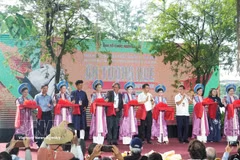
The opening ceremony of the Hue International Sculpture Camp 2026 on November 5 (Photo: VNA)

Hue International Sculpture Camp opens

Running until November 15, the event is a meaningful cultural and artistic activity celebrating Vietnam Culture Day (November 24), contributing to the promotion of national cultural values and inspiring creativity in contemporary art.

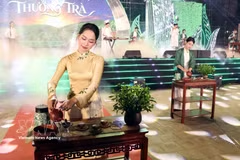
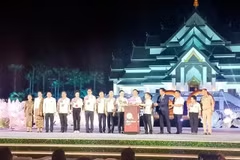
Tea-making performance at the tea appreciation night in Thai Nguyen province on November 4, 2026.(Photo: VNA)

Vietnamese, international tea cultures shine at cultural night

The programme was elaborately staged, combining music, dance, traditional art performances and modern stage technology to offer participants an insight into the cultural values of Vietnamese tea and the tea appreciation traditions of several East Asian countries.

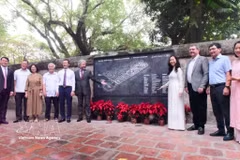
Delegates at the launch of the new visitor map and guide leaflet at the Van Mieu – Quoc Tu Giam Special National Relic Site (Photo: VNA)

950th anniversary of Quoc Tu Giam marked with new visitor guides

The new overall map presents the Van Mieu-Quoc Tu Giam Special National Relic Site's spatial layout, the locations of its structures and key attractions, enabling visitors to plan their own routes. The leaflet provides an overview of the site's history, architecture, historical figures and outstanding cultural and educational values.

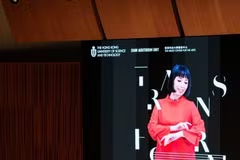
Pianist Bich Tra performs at a concert in Hong Kong, China. (Photo published by VNA)

Pianist Bich Tra brings Vietnamese music to the world

Ahead of Great National Unity Day (November 18) and Vietnam Cultural Day (November 24), pianist Bich Tra, who is now living in Hong Kong (China), shared her artistic journey and aspirations for Vietnam's cultural development.