Prime Minister Nguyen Xuan Phuc and his spouse are welcomed at Kansai International Airport, Osaka, by Japanese officials. (Photo: VNA)
 Tokyo (VNA) – Prime Minister Nguyen Xuan Phuc has granted an interview to Japanese media on the occasion of his Japan visit and participation in the 14th G20 Summit at the invitation of Japanese Prime Minister Shinzo Abe from June 27 to July 1.
The interview runs as follow:
Leaders of G20 countries and guest countries will meet in Osaka, Japan at the end of June. Would you elaborate on opinions Vietnam will contribute to this Summit?
This is the fourth time in more than 10 years Vietnam has attended the G20 summit (the latest attendance was in July, 2017 in Germany), an important multilateral forum in the world economic governance system.
It asserts the world community’s recognition of the prestige and position of Vietnam of renovation and integration, a reliable partner for regional peace, security and growth in the region, and delivers an expectation that the country will continue making responsible contributions to the world’s economic matters. It also constitutes the growing intensive strategic partnership as well as sharing and mutual support at many regional and international issues between Vietnam and Japan.
As a responsible member of the international community, Vietnam has made positive and practical contributions to the agenda of the G20, especially in reinforcing the multilateral trade system, economic connectivity, high-quality infrastructure development, renovation promotion, digital economy, as well as the implementation of UN Agenda 2030 on Sustainable Development, climate change response, maritime environmental protection, plastic waste prevention, and women empowerment… These matters are significant to the sustainable and inclusive development in all countries.
At the upcoming 14th G20 Summit, Vietnam, with development reality stemming from its intensive international economic integration, will share visions, cooperation ideas and efforts to deal with the above-said issues in the hope of joining hands with the world community for a green earth and a peaceful world growing and thriving together where no one is left behind.
What do you think about Vietnam-Japan relations in the recent past, and what do you expect from this relationship in the future and the fields Vietnam wishes to further enhance cooperation in with Japan?
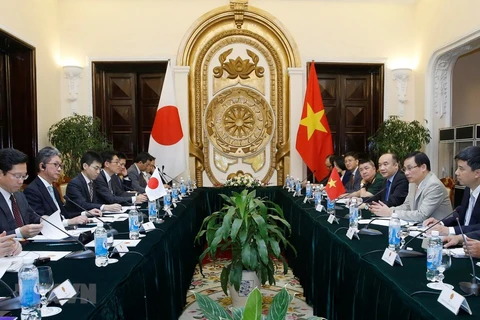
The Vietnam-Japan extensive strategic partnership is developing strongly, substantively and comprehensively, thus meeting the aspirations of the two people and bringing about practical benefits to them, and actively contributing to peace, stability, prosperity, cooperation and development in the region and the world.
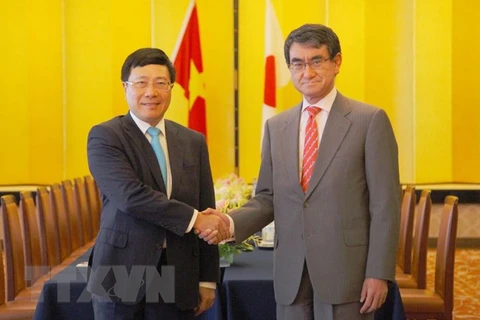
In terms of politics, the two sides have maintained frequent mutual visits and meetings at different levels, especially high levels, helping to enhance the political trust between the two countries. In the Japanese side, the Japanese Emperor and Empress paid the first historic visit to Vietnam in 2017, and Japanese Prime Minister Shinzo Abe visited Vietnam twice in 2017. In the Vietnamese side, senior leaders of Vietnam visit Japan every year. For me, this is my fourth trip to Japan as Prime Minister.
Cooperation in security-defence between the two sides has also attained substantive strides. The Japanese Government has assisted Vietnam in war consequences settlement through the assistance for unexploded ordnance clearance, support for Agent Orange victims, and cooperation in training in defence, search and rescue and participation in United Nations peacekeeping missions. Naval vessels of Japan have regularly made friendship visits to Vietnamese ports.
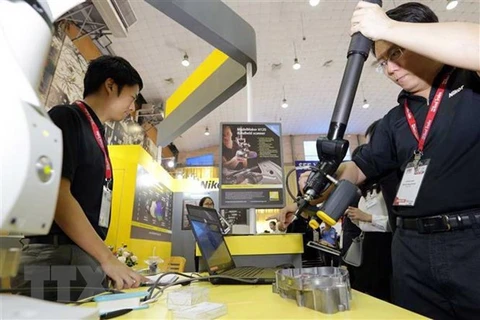
Regarding economy, Japan is the leading partner of Vietnam in terms of investment, trade and tourism, and also the biggest ODA supplier for Vietnam. Facilities built with the support of Japanese ODA loans and investment projects of Japan are present in almost all provinces and cities of Vietnam and in many different fields, greatly helping Vietnam to realize the three strategic breakthroughs and promote socio-economic development, economic restructuring and sustainable development. Japan was the No. 1 investor of Vietnam in 2017 and 2018.
Cooperation between the two countries’ localities has also been increasingly vibrant and people-to-people exchange has unceasingly been expanded and diversified. The Vietnamese community forms the third largest community of foreign residents in Japan with more than 300,000 people, most of whom are students and apprentices. Those young people are an important source of manpower for Vietnam in the future, and they are also contributing to Japan’s socio-economic development and serving as a friendship bridge and an important foundation to develop the sustainable Vietnam-Japan relationship.
Aside from bilateral cooperation, the two sides have also actively cooperated with each other at international and regional multilateral forums like the United Nations, the Association of Southeast Asian Nations (ASEAN), the Asia-Pacific Economic Cooperation (APEC), the Asia-Europe Meeting (ASEM)…, thereby contributing to peace, stability, cooperation and development. The two sides have also coordinated closely to promote the signing and ratification of the Comprehensive and Progressive Agreement for Trans-Pacific Partnership (CPTPP) and are working together to effectively implement the deal.
As the country coordinator of ASEAN-Japan relations for 2018-2021, a non-permanent member of the UN Security Council for 2020-2021 and the ASEAN Chair in 2020, Vietnam is bringing into play its role to further promote the cooperation between ASEAN and the Mekong region and Japan, including the Greater Mekong Subregion (GMS) cooperation, and coordinate closely with Japan at international and regional forums. We hope that Japan will consider Vietnam a priority partner in the “Partnership for Quality Infrastructure” programme and the “Japan-Mekong Connectivity Initiative”.
In the coming time, with efforts, unanimity and righteous policies of both sides, I believe that the “extensive strategic partnership for peace and prosperity in Asia” between Vietnam and Japan will enter a new good stage of development. This is a good chance for Japanese businesses to apprehend and expand cooperation and investment in Vietnam, especially in manufacturing, energy, information technology, smart city, services, infrastructure, modern agriculture, finance, banking and equitisation of State-owned enterprises …, effectively helping Vietnam to deal with its great demand for developing modern and synchronous infrastructure and energy systems, and an advanced educational system…, thereby building it into a modern industrialised country.
The cooperation and friendship between Vietnam and Japan are having new and promising development opportunities. I’m convinced that the bond between the two nations will be increasingly tightened and deepened for the sake of the two peoples, actively contributing to peace, stability, cooperation and development in the regions and the world.
Would you elaborate on the current East Sea issue, and measures adopted by Vietnam to maintain peace and stability in the East Sea? Would you mind sharing Vietnam’s expectations about Japan’s role in the settlement of the East Sea and regional security issues?
Vietnam will continue joining hands with the international community, including Japan, to promote maritime cooperation by various means in line with international law, including the 1982 United Nations Convention on the Law of the Sea, towards ensuring security, maritime and overflight safety and freedom, search and rescue, crime prevention at sea, marine science research, and marine environment protection.
Vietnam will, together with countries concerned, continue talks, carry out delineation, satisfactorily tackle arising issues, well control disagreements, and not to further complicate situation in the East Sea. The country will also work with relevant parties to seriously and fully implement the Declaration on the Conduct of Parties in the East Sea (DOC), and soon finalise a practical and effective Code of Conduct in the East Sea in line with international law.
Vietnam highly values Japan’s role and contributions to maintaining peace, stability, maritime and aviation safety and freedom in the East Sea, and believes that as a powerful country in the region and the world and with interests in goods circulation via the East Sea, Japan will continue demonstrating its role in safeguarding security, maritime and aviation safety and freedom, making more active contributions to peace, security, safety and prosperity in the region and the world.
As the country coordinator of ASEAN – Japan ties from August 2018 – August 2021, Vietnam wants to enhance joint work with Japan at regional and international forums, especially within the framework of ASEAN – Japan cooperation. On bilateral terms, Vietnam suggests Japan continue launching projects and a programme on improving the capacity of legal enforcement at sea, and assisting the country in the effective implementation of the marine-based economy development strategy till 2030 with a vision to 2045.
Japan has approved a policy on opening its door to foreign workers in order to tackle ageing population and expects Vietnam would cooperate in the field. Would you tell about policies Vietnam will take to respond to Japan’s needs? Would you give some comments on issues that are needed to be improved in Japan’s labourer import policy?
The Vietnamese community in Japan exceeds 300,000, being the third largest community of foreign residents there, mostly students and interns. They are the important human resources of Vietnam and an important “bridge” for cooperation between Vietnam and Japan and have actively contributed to the two countries’ socio-economic development. The rapid growth of the Vietnamese community in Japan is a vivid reflection of the extensive relations of the two countries and an important foundation for deepening bilateral trust and mutual understanding, thus boosting friendship and cooperation in a sustainable manner.
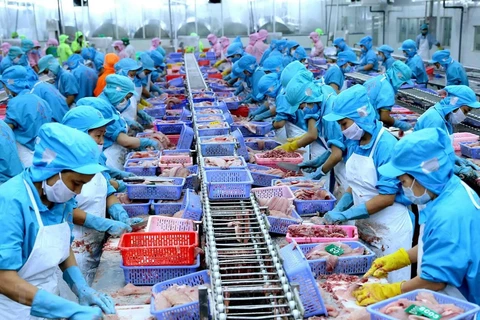
Vietnam welcomes Japan’s establishment of a new status of residence, called ‘specified skilled workers’, to receive more foreign labourers, including those from Vietnam. The Vietnamese Government is always keen and willing to prioritise collaboration with Japan in the field for mutual benefits. We want both sides to continue working closely together to propel cooperation in this potential area, particularly via increasing information exchange and inspection of agencies providing and receiving guest workers of both sides, ensuring legitimate rights and interests of Vietnamese workers in Japan, and strictly punishing violators of related regulations. We hope the Japanese Government continues supporting and creating favourable conditions for Vietnamese workers to quickly integrate into the local living and working environment.-VNA
VNA