PM urges strict concentrated quarantine to prevent COVID-19

Prime Minister Nguyen Xuan Phuc has ordered the drastic implementation of concentrated quarantine in the fight against the acute respiratory disease caused by the novel coronavirus SARS-CoV-2 (COVID-19).
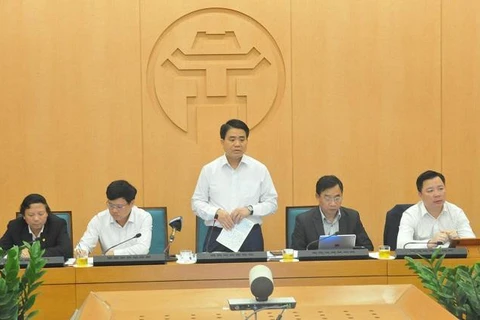
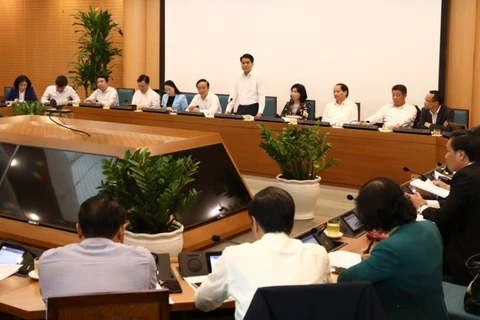
PM urges strict concentrated quarantine to prevent COVID-19 ảnh 1Prime Minister Nguyen Xuan Phuc chairs a working session between permanent cabinet members and the national steering committee for COVID-19 prevention and control (Source: VNA)

Hanoi (VNA) – Prime Minister Nguyen Xuan Phuc has ordered thedrastic implementation of concentrated quarantine in the fight against theacute respiratory disease caused by the novel coronavirus SARS-CoV-2 (COVID-19).

Chairing a workingsession between permanent cabinet members and the national steering committeefor COVID-19 prevention and control on February 27, PM Phuc stressed thenecessity to carry out compulsory quarantine for those who come fromcoronavirus-hit regions.

Vietnam does not closeborder gates and airports, or bans travelling, but all people coming fromdisease-hit areas must be quarantined to prevent the spread of the disease, heemphasised.

The Ministry ofForeign Affairs and relevant agencies are responsible for explaining thequarantine policy for these cases, while advising Vietnamese citizens to followtheir host countries’ guidance, the PM said.

The Government leaderalso asked for the postponement of big festivals and conferences across thecountry to avoid mass gatherings.

Regarding students’schooling which has been suspended since February, he assigned the Minister ofEducation and Training to work with the People’s Committees of provinces andcities to decide what suitable time they can come back to school to ensureeffective study and absolute safety.

The PM cited forecastsas saying that COVID-19 will be well controlled in the second quarter of 2020and the world economy will get better in the next few months.

Therefore, PM Phucrequired ministries, sectors and localities to take actions to fulfill allsocio-economic development targets assigned by the Party and the NationalAssembly, and prepare for breakthrough growth in the second quarter.

He suggested reducinginterest rates, taxes and logistics fees, and rescheduling debts as concretemeasures to support the national economy.

The leader alsocongratulated the country’s doctors and medical staff on the occasion of the 65th Vietnamese Doctors’ Day (February 27), and lauded their efforts in the fightagainst COVID-19.

Deputy Minister of HealthDo Xuan Tuyen said that as of 9am on February 27, all 16 SARS-CoV-2-infectedpatients in Vietnam were successfully treated and discharged from hospitals.

Ninety-two suspectedcases are being quarantined while 5,474 others who entered Vietnam fromaffected areas and had close contact with the infected patients are undermedical supervision, he said.

Since February 13, nomore new infection cases have been recorded in the country, Tuyen said./.
VNA
See more

The number of foreign tourists coming to Ho Chi Minh City for travel combined with medical check-ups is increasing. (Photo: VNA)

Vietnam looks to unlock medical tourism potential with national strategy

The draft strategy aims to position Vietnam as a trusted healthcare destination in Southeast Asia by 2030 and eventually among Asia's leading medical tourism hubs. The plan marks a shift from viewing medical tourism as an untapped opportunity to making it a national development priority.

Delegates at the conference. (Photo: VNA)

Vietnam to produce first homegrown next-generation vaccines from 2028

Under the agreement, Sanofi will transfer technology to VNVC to manufacture selected high-demand vaccines for children and adults at VNVC Vaccine and Bioproduct Plant. The first next-generation vaccines produced in Vietnam are expected to roll off production lines in 2028.

Eric and Alysha joyfully welcome their baby through Mini IVF after more than 10 years of waiting. (Photo: Hong Ngoc Phuc Truong Minh General Hospital)

Vietnam - a destination for journeys to parenthood

An increasing number of international families are choosing Vietnam for infertility treatment, embarking on journeys to parenthood that transcend geographical distance and differences in nationality.

Prime Minister Le Minh Hung delivers remarks at the inauguration ceremony for Viet Duc University Hospital's second campus in Ninh Binh province. (Photo: VNA)

PM urges modern restructuring of healthcare network

The PM stressed that throughout the country’s development process, people have consistently been regarded as the centre, the driving force, the objective and the most important resource for national development. Sustainable and rapid development requires not only a healthy, knowledgeable and skilled population but also a modern, equitable, efficient, sustainable and accessible healthcare system.

Thu Duc General Hospital, with a capacity of 1,000 beds, was inaugurated and put into operation in April 2025 (Photo: VNA)

Ho Chi Minh City moves to expand robotic surgery to gateway hospitals

According to the municipal Department of Health, developing gateway hospitals is a key pillar of the city's strategy to establish a regional specialised healthcare system. The network is designed to permanently relieve overcrowding at major downtown hospitals while strengthening strong inter-regional emergency care and treatment network.

Doctors conduct health screenings for children in Tru Van Tho commune, Ho Chi Minh City. (Photo :VNA)

Ho Chi Minh City moves closer to universal health check-ups

Achieving universal health check-ups in 2026 will lay the foundation for a new healthcare model in which every resident has an electronic health record, receives regular screenings, benefits from lifelong health management and gains access to early intervention through primary healthcare services.

Illustrative photo: Internet

Dengue cases rise, outbreaks become more unpredictable

Vo Hai Son, Deputy Director of the ministry's Administration of Disease Prevention, said dengue fever is no longer following previous epidemiological trends. In 2025, infections remained elevated through November and December rather than declining at the end of the year as had traditionally been the case, indicating a shortening outbreak cycle.