Ample opportunities await Vietnamese exporters in South Asia: Workshop

Although South Asia is an enormous market with substantial consumer demand well-suited for Vietnam's key export staples, trade potential with the region remains fully untapped, experts revealed at a workshop in Ho Chi Minh City on November 13.

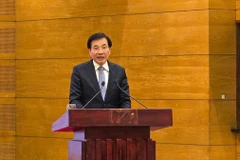
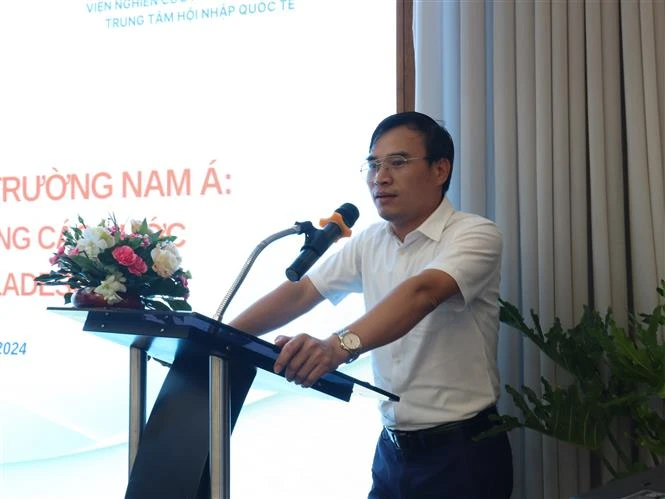
Vietnamese Trade Counsellor in India Bui Trung Thuong speaks at the workshop. (Photo: VNA)

HCM City (VNA) – Although South Asia is an enormous market with substantial consumer demand well-suited for Vietnam's key export staples, trade potential with the region remains fully untapped, experts revealed at a workshop in Ho Chi Minh City on November 13.

The workshop, jointly held by Ho Chi Minh City's Centre for International Integration Support (CIIS) and the Ministry of Industry and Trade's Asia – Africa Market Department, highlighted the significant opportunities in the region.

According to Director of the Asia – Africa Market Department Do Quoc Hung, the region, with eight countries and a population of more than 2 billion people, boasts strong purchasing power and is a promising market for Vietnam.

South Asia offer significant opportunities for Vietnamese exports, including machinery, electronics, chemicals, building materials, garments and textiles and agricultural products, yet trade volumes remain below potential, reaching only 16.3 billion USD last year, or less than 4% of the country’s total exports to Asia – Africa.

Statistics from the General Department of Vietnam Customs showed that trade revenue between the two sides in the January – October period was 14.4 billion USD, a year-on-year increase of more than 6%. Vietnam’s shipments grew by 12% to 9.3 billion USD, with key exports maintaining robust growth like telephones, steel, metal, garments and textiles, and rubber.

He held that Vietnamese firms have not tapped into the market to the fullest extent due to limitations in experience, knowledge of the market, stringent technical barriers for exports, and increasing protection measures in the market.

In the same vein, CIIS Deputy Director Huynh Minh Vu said Vietnamese enterprises have been hesitating to explore the market due to obstacles regarding insufficient market information, complicated business environment, and differences in culture and business practices.

He pointed out emerging opportunities beyond traditional industries like garment and textile and agriculture as South Asian countries are diversifying their markets with IT, renewable energy and medical equipment production sectors, saying their economic shifting creates big opportunities for Vietnamese firms, particularly small and medium-sized enterprises which are able to provide high value-added goods and services.

For his part, Vietnamese Trade Counsellor in India Bui Trung Thuong underscored the need for businesses to take the initiative in seeking market information, building specific strategies, establishing partnerships with local firms and renewing their products for successful market access to South Asia.

In the long term, Vietnam should develop its logistics system and transport corridors to reduce shipping costs, thus enhancing Vietnamese products’ competitive edge in this market, he added./.

VNA
See more

Ahmad Haikal Hasan, Head of the Halal Product Assurance Organising Agency (BPJPH) of Indonesia, speaks at the seminar (Photo: VNA)

Indonesia ready to cooperate with Vietnam in halal sector

Ahmad Haikal Hasan, Head of the Halal Product Assurance Organising Agency (BPJPH) of Indonesia, described Vietnam as a “potential supplier” of halal products with the capacity to play a larger role in the market, particularly in the fast-moving consumer goods (FMCG) sector. He revealed a plan to visit Vietnam next week to discuss the country’s progress in the global halal industry.

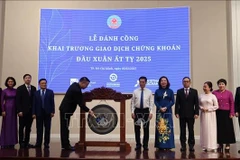
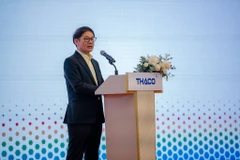
Delegates perform the opening ceremony. (Photo: VNA)

Thailand Week 2026 opens in Hanoi

The event brings together more than 100 companies, including Thai enterprises and Vietnamese importers, across about 120 booths. It features a wide range of Thai products aligned with consumer trends in Vietnam, including food and beverages, health and beauty, mother-and-baby and pet products, fashion and jewellery, household goods and tourism services.

Illustrative image (Photo: VNA)

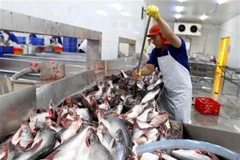
Vietnam remains Singapore’s third-largest seafood supplier in 2025

Data released by the Accounting and Corporate Regulatory Authority of Singapore (ACRA) show that Singapore spent 125.5 million SGD (97.7 million USD) importing seafood from Vietnam last year, up 10.7% year on year, accounting for 10.3% of the city-state’s total seafood import market.

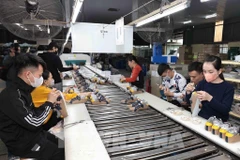
Workers assemble mobile phone components at Diem Thuy Industrial Park in the northern province of Thai Nguyen. (Photo: VNA)

Electronics exports surpass 107 billion USD in 2025

With an export turnover of 107.75 billion USD in 2025, computers, electronic products and components not only maintained their position as Vietnam’s largest export by value, but also contributed more than half of the overall increase in the country’s export turnover in 2025.

Experts said that Vietnam’s economic outlook continues to be underpinned by stable foreign direct investment inflows and public investment, which is playing an important role in driving growth. (Photo: thoibaotaichinh.vn)

Foreign investors maintain strong confidence in Vietnam’s market

Looking ahead to 2026, prospects remain bright as manufacturing, economic growth and foreign investment in Vietnam are expected to stay robust, with the country forecast to post the highest growth rate in the region this year, according to Adam Sitkoff, Executive Director of the American Chamber of Commerce (AmCham) in Vietnam.

Toy production at a Hong Kong-invested factory (Photo: VNA)

Vietnam targets deeper market penetration in Hong Kong in 2026

Vietnam-Hong Kong trade hit 62.3 billion USD in the first 11 months of 2025, soaring 73.1% annually. Vietnamese exports to Hong Kong amounted to 36.8 billion USD, a 90.6% hike, ranking fourth among Hong Kong’s import sources, while imports from Hong Kong stood at 25.5 billion USD, up 52.9% and ranking third.

Vietnam’s start-up market enters restructuring phase

Vietnam’s start-up market enters restructuring phase

In 2026, venture capital inflows into Vietnam’s start-up ecosystem are expected to recover gradually, though in a more selective manner. VinVentures forecasts that capital will focus on start-ups that have survived the rigorous screening of 2024–2025, possess clear business models, strong commercialisation capacity, and the ability to generate real cash flows.