Post-pandemic opening allows aviation, tourism to take off

Representatives from airlines and the Vietnam Aviation Business Association (VABA) shared the view that the aviation sector will quickly recover after Vietnam reopens doors and eases COVID-19 restrictions.
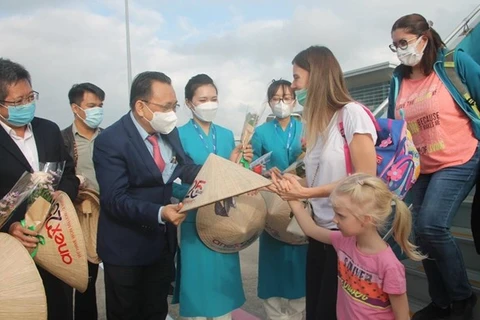
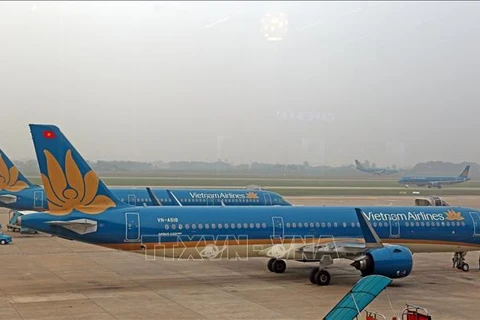
Post-pandemic opening allows aviation, tourism to take off ảnh 1The Government has decided to restore international routes from February 15. (Photo: VNA)

Hanoi (VNA) – Representatives from airlines and the Vietnam Aviation Business Association (VABA) shared the view that the aviation sector will quickly recover after Vietnam reopens doors and eases COVID-19 restrictions.

International aviation to boom

The Government has decided to restore international routes from February 15 and fully open doors to international tourists from May 15, 2022. The move is seen as the first step for the domestic aviation sector to normalize its activities in an effort to catch up to regional and international airlines that have been operating flights to and from Vietnam.

The Ministry of Health (MoH) is proposing that people can enter Vietnam without certificates of COVID-19 vaccination or recovery but need to follow anti-pandemic measures.

The proposal has been sent to ministries, ministry-level and governmental agencies, and provincial-level administrations for recommendations.

Bui Minh Dang, deputy head of the Air Transport Division under the Civil Aviation Administration of Vietnam, said with such moves, the restoration of aviation and tourism is possible this year.

Vietnam has so far reopened flights to 20 countries and territories, with around 30 routes and 30 carriers, Dang noted, adding that the country expects to welcome 8 million foreign passengers this year, including 6 million tourists.

Bui Doan Ne, Vice President of VABA, said the International Air Transport Association (IATA) forecast that international aviation will boom this year. However, the international demand is expected to reach only 44% of pre-crisis (2019) levels.

Pointing out the fierce competition between airlines, IATA suggested that governments should support carriers despite reopening to new travel.

A representative from Bamboo Airways said the Vietnamese Government has taken measures to assist carriers like resuming international flights since early 2022, and adjusting and synchronising testing and isolation measures.

Bamboo Airways will continue with the target of operating 80 domestic routes and 40 international ones, and making up 30% of the domestic aviation market share.

Optimising opportunities to soon regain growth momentum  

Post-pandemic opening allows aviation, tourism to take off ảnh 2Many countries worldwide have also gradually lifted restrictions on foreign citizens to boost recovery in aviation. (Photo: VNA)

Many countries worldwide have also gradually lifted restrictions on foreign citizens to boost recovery in aviation, tourism and international trade, the representative said. They also stressed that the health ministry’s proposal will create a good opportunity for Vietnam to soon regain its pre-pandemic growth momentum.

For airlines, the proposal will help them implement plans on expanding operations to promising markets, and building programmes on accessing and attracting international passengers to Vietnam.

The opening is a golden opportunity for domestic tourism to recover and create breakthroughs, contributing to promoting investment and trade ties between Vietnam and other countries, the representative said.

Airline representatives said to resume aviation and tourism, it requires the support of all relevant ministries and agencies, as well as efforts by aviation and travel firms.

Prior to COVID-19, promotional efforts and policies directed toward international tourism helped Vietnam to draw some 18 million visitors.

To welcome back foreign arrivals, apart from visa policies, it is necessary to ensure safety of passengers, and product quality, a representative said./.

Box: Vietnam has reopened international routes to and from 20 countries and territories so far, out of 28 that were running in the 2019 winter flight schedule before the COVID-19 broke out.

The resumed routes include Cambodia, Hong Kong (China), Japan, the Republic of Korea, Malaysia, Philippines, Qatar, Singapore, Taiwan (China), Thailand, and Turkey, United Arab Emirates, Laos, mainland China, France, Germany, the United Kingdom, Australia, Russia and the United States.

The eight destinations to which air routes have yet to resume are Brunei, India, Indonesia, Myanmar, Macau, Finland, Italy and Switzerland.

Some 14 countries and territories have so far recognised Vietnam’s COVID-19 vaccine certificates, while Vietnam has accepted those of 79 countries and territories.

The 14 countries are Japan, the US, the UK, Australia, Belarus, India, Cambodia, the Philippines, Palestine, Maldives, New Zealand, Egypt, Turkey and Sri Lanka./.
VNA

See more

Traditional dragon procession held on the river in Ninh Binh. (Photo: VNA)

Cultural heritage drives sustainable tourism growth in Ninh Binh

In the first two months of 2026, Ninh Binh welcomed over 5.4 million visitors, up 9.9% year-on-year, generating nearly 5.84 trillion VND (221 million USD) in tourism revenue, up 15.9%. During the 2026 Lunar New Year holiday alone, the province received 2.38 million visitors, an 81.4% increase from the previous year, ranking second nationwide.

Outstanding individuals and firms honoured at VITM 2026 (Photo: VNA)

Outstanding individuals, firms honoured at Vietnam International Travel Mart 2026

In 2025, Vietnam’s tourism sector recorded its highest-ever number of visitors, welcoming more than 21.5 million international arrivals, up more than 20% from 2024, and serving over 135.5 million domestic travellers. Tourism revenue also surpassed 1 quadrillion VND (nearly 38 billion USD). The sector has become a bright spot of the economy, with Vietnam ranking among the world’s fastest-growing tourism destinations.

The Ba Trieu Temple in Thanh Hoa province (Photo: VNA)

Thanh Hoa taps digital transformation to boost heritage tourism

With 28 nationally-recognised intangible cultural heritage elements, Thanh Hoa province has prioritised integrating conservation with tourism development. Digital transformation, in particular, is seen as a crucial bridge connecting tradition with innovation, helping heritage sites become more accessible and engaging.

Pristine white-sand beach on Cu Lao Cham Island, Da Nang city, is a magnet for visitors. (Photo: VNA)

Vietnam – a safe destination amid global uncertainties

Despite global tourism headwinds linked to geopolitical conflicts, transport disruptions and surging travel expenses, Vietnam’s tourism sector has sustained strong growth, underscoring the destination’s resilience and rising international profile.

A border guard at the Mong Cai International Border Gate processes exit procedures for passengers at the Bac Luan 1 border gate in Quang Ninh province. (Photo: VNA)

Vietnam, China promote AI application in cross-border tourism cooperation

During the programme, participants will attend intensive courses delivered by AI technology experts, China–ASEAN policy researchers, and tourism specialists. The curriculum focuses on the application of big data in tourism policy planning, the development of cross-border tourism products, and the building of joint tourism brands.

The sea area off the southern coast of Phu Quoc Island. (Photo: VNA)

UK newspaper praises Phu Quoc’s unspoilt charm amid tourism boom

Phu Quoc is positioned as a compelling alternative – even a potential rival to Phuket – for travellers seeking authenticity in Southeast Asia. Its appeal lies not only in scenic beauty and fresh seafood, but also in the harmonious coexistence of modern tourism and enduring local culture.

At an elevation of 1,700 metres above sea level, the summit of Pu Luong is increasingly emerging as an ideal destination for trekking - a form of adventure tourism that combines hiking with nature exploration and physical as well as mental endurance. (Photo: VNA)

Vietnam eyes becoming region’s leading tourism destination

Vietnam has in recent years undergone a notable transformation in its tourism development strategy, placing a strong emphasis on nature-based and eco-tourism. This shift is not merely aligned with global trends, but represents a necessary step towards safeguarding valuable natural resources, while appealing to a growing segment of environmentally conscious travellers.

Foreign tourists in a photo with local residents. (Photo: VNA)

Vietnam serves 6.76 million foreign arrivals in Q1

China and the Republic of Korea (RoK) continued to lead as Vietnam’s largest source markets in the quarter, with 1.4 million and 1.3 million visitors respectively, accounting for around 40% of total arrivals.

Cua Viet beach is a magnet for both locals and visitors during holidays. (Photo: VNA)

Quang Tri seeks to unlock potential of marine tourism’s “golden triangle”

Cua Tung, Cua Viet and Con Co special zone are identified as three key destinations of marine tourism, and to transform this “tourism triangle” into premium and peaceful resorts, a new strategy is needed to enhance attractiveness to high-end travellers seeking private spaces as the strength of these places lies in their pristine and tranquil beauty.

A corner of the Phu Quy special zone in Lam Dong province (Photo: VNA)

Phu Quy moves to unlock potential as premier marine tourism hotspot

Under a resolution of the provincial Party Congress for the 2025–2030 term, the locality prioritises spatial planning of the marine economy, focusing on emerging sea-based industries linked with environmental protection and national defence. Located 56 nautical miles offshore, Phu Quy is a central pillar of this vision.