PPP regulations to be changed to serve development

More than per 76 percent of current investment projects following public-private partnerships (PPP) are in the field of transport infrastructure, but investors still feel insecure.
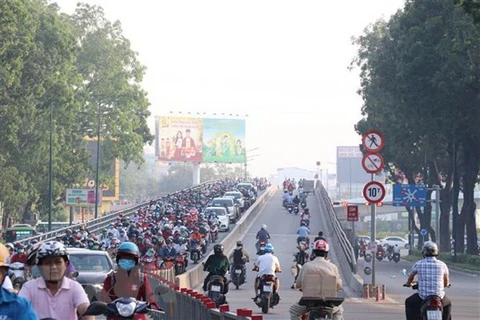
PPP regulations to be changed to serve development ảnh 1Part of Ring Road 2 in Hanoi, built under a public private partnership. (Source: VNA)

Hanoi (VNS/VNA) - More than per 76 percent of current investmentprojects following public-private partnerships (PPP) are in the field oftransport infrastructure, but investors still feel insecure.

Of the 289 PPP investment projects, there are 220 involved in transportinfrastructure, said Deputy Minister of Transport Nguyen Nhat attending aconference themed "Solutions to promote investment in the development oftransport system structure under PPP" in the capital last week.

Nhat told Viet Nam News: “The total investment capital of PPP projects in theform of construction-business-transfer or BOT is worth about 210 trillion VND (morethan 9 billion USD), and this was significantly supporting the limited budgetin the field.”

“The legal framework for PPPs is not strong enough to encourage more privateinvestors, especially in the context that an infrastructure project usuallylasts between 15 and 20 years, and has high risks,” he said.

The Ministry of Transport sent 125 delegations and inspectors to PPP projectsbetween 2018-19, and the Vietnam Association of Road Traffic Investors (Varsi)surveyed 12 road projects. The results showed investors faced many obstaclesand problems carrying out PPP projects in Vietnam.

Tran Chung, chairman of Varsi, said regulations for PPP capital managementremained lax as State capital in PPP projects was mainly allocated from theannual public investment plan.

In more detail, Can Van Luc, chief expert at the Vietnam Development Bank(BIDV), said PPP capital came from four sources: 20 percent from owner'sequity, 40-50 percent from credit institutions, 20 percent from capital marketssuch as corporate and project bonds, and 20 percent from the fund.

Luc said BIDV specialised in medium and long-term capital, but it was in arestructuring period and could not meet the capital demands of all projects. Atthe same time, other credit institutions in the market preferred short-termloans as long-term loans could lead to bad debt.

Saying that PPP was an effective method to attract investment, Nguyen Mai, vicechairman of the Vietnam Association of Foreign Invested Enterprises, said: “Thebiggest roadblocks for PPP in Vietnam is that local investors have encountereda series of difficulties when implementing projects, and foreign investors arewary of getting involved in road projects.”

Mai told Viet Nam News the lack of guarantees or a risk-sharing mechanism wasthe biggest obstruction for investors. For example, the Government should comeup with effective methods to ensure the toll collection roadmap. Conflictsbetween investors and local people caused losses for investors.

Nguyen Van Khang, deputy general director of the Cuong Thuan Investment andDevelopment Joint Stock Company (IDICO) recalled a case in 2017 when somepeople opposed paying a toll at BOT stations. Without regulations clarifyingthe responsibilities and rights of stakeholders, corporates faced losses.

Capital was another matter, according to BIDV’s Can Van Luc, who said the minimumcapital of 200 billion VND (8.6 million USD) for a PPP mentioned in the draftlaw was lower than the international level which ranges from 50-100 million USD.

Luc said slow investment would take its toll on projects, reducing investmentefficiency and putting off big investors.

The conference was held last week to get more ideas for the draft law on PPPswith 11 chapters and 112 articles. Composed by the Ministry of Planning andInvestment, the draft is about to be submitted to the National Assembly for considerationand is expected to be approved in May 2020./.
VNA
See more

Cai Mep - Thi Vai Port complex in Ho Chi Minh City (Photo: VNA)

Ho Chi Minh City seeks to make seaports new growth driver

To maximise its seaport advantages, Ho Chi Minh City is developing smart and green ports while promoting clean energy, lower emissions and sustainable supply chains. It aims to establish an integrated ecosystem linking seaports with industrial parks, logistics centres, free trade zones, multimodal transport networks and an international financial centre.

Farmers visit the off-season durian orchard of Cao Chi Dai in Vinh Hanh commune, An Giang province (Photo: VNA)

Vietnam promotes finance for green agriculture

Over the past five years, Vietnam has developed and gradually implemented a green finance system to support low-emission and environmentally friendly production, including agriculture. Based on the State Bank of Vietnam's Directive No. 03/CT-NHNN dated March 24, 2015, banks including BIDV, VCB, HDBank and Agribank have introduced green credit packages for waste treatment, high-tech agriculture, digital transformation, regional linkages and emission reduction across production chains.

An overview of the meeting between representatives from Polish businesses and the Agency for Domestic Market Surveillance and Development. (Photo: Agency for Domestic Market Surveillance and Development)

Polish businesses seek suppliers, partners in Vietnam

MAJAMI, a confectionery manufacturer and trader under Sweet House, is seeking distributors for Polish confectionery products in the Vietnamese market. Meanwhile, GABONA, a distributor and wholesaler of professional cosmetics, hair care and make-up products and beauty accessories, is looking for Vietnamese manufacturers of vegan and natural cosmetics.

Kendra Rinas, Chief of Mission for IOM Vietnam speaks at the event. (Photo: VNA)

Vietnam advances in building, using migrant labour data system: workshop

Data presented in the report reflects effective migration governance in recent years. The average recruitment cost paid by migrant workers dropped by 23.8%, from 164.9 million VND (6,400 USD) in 2021 to 125.7 million VND in 2025. Conversely, average first-month earnings abroad rose by 25.4%, increasing from 22.4 million VND to 28.1 million VND.

Workers produce leather shoes for export at Lefaso Tra Vinh Investment and Production Joint Stock Company in Tra Cu commune, Vinh Long province. (Photo: VNA)

Vietnamese exporters pivot to ease pressure from US tariffs

Pressure from the new US tariff policy is prompting Vietnamese exporters to reassess their strategies. Rather than pursuing volume-driven growth, many are shifting towards higher-value orders, tighter cost control, greater productivity and a more balanced allocation of markets to reduce reliance on a single destination.

A worker handles and stacks goods. Nearly 138,100 businesses were newly founded from January to August, up 7.7% over the same period last year, while more than 40,800 businesses completed dissolution procedures, a jump of 125.5%. (Photo: VNA)

Firm entry and exits point to continued restructuring pressure

Updates from the National Statistics Office last week showed that nearly 138,100 businesses were newly founded from January to August, up 7.7% over the same period last year, while more than 40,800 businesses completed dissolution procedures, a jump of 125.5%.

A Vietnamese business introduces durian cakes to Chinese visitors at the 22nd China-ASEAN Expo (CAEXPO) in 2025. (Photo: VNA)

Vietnam steps up trade, investment promotion at China-ASEAN Expo

According to the CAEXPO Secretariat, Vietnam will once again lease an entire exhibition area of about 3,000sq.m, featuring 170 booths, making it one of the ASEAN countries with the largest exhibition spaces at this year’s event. Nearly 100 Vietnamese businesses have confirmed their participation, including major brands such as Trung Nguyen Group, TH Group, Saigon Coffee and Biti’s.

An overview of the VIFC's Executive Council meeting on September 7 (Photo: VNA)

Six groups of products, services proposed at Vietnam International Financial Centre

Deputy Minister of Finance Nguyen Thi Bich Ngoc said the products and services include investment funds and asset management, asset-backed digital assets, international carbon credits, commodity trading and derivatives infrastructure linked to trade and supply-chain financing, financial technology, and bonds issued at the centre. As these groups are at different stages of readiness, they will be rolled out in phases rather than simultaneously.

The meeting between the Quang Ninh delegation and Siemens Mobility (Photo published by VNA)

Quang Ninh seeks cooperation, investment opportunities in Germany

A Quang Ninh official praised the collaboration between Siemens Mobility and VinSpeed in developing the Hanoi–Quang Ninh high-speed railway and expressed his hope that the project will pave the way for future cooperation between Siemens Mobility and Quang Ninh in modern railway development and workforce training.

At the 10th intersessional meeting of UNCITRAL Working Group III in Ninh Binh province on September 7, 2026. (Photo: VNA)

Vietnam hosts UNCITRAL Working Group III intersessional meeting for first time

By hosting the 10th UNCITRAL Working Group III intersessional meeting, Vietnam wishes to continue playing an active and proactive role in UNCITRAL in general and Working Group III in particular, working alongside the international community to strengthen cooperation, share experience and contribute to the development of the international legal framework.