Priority given to vaccination in disadvantaged areas

Vietnam is prioritising vaccinations in remote, mountainous and disadvantaged areas in order to equalise the immunisation rate among regions across the nation.
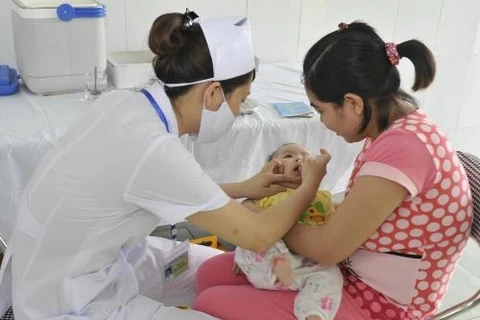
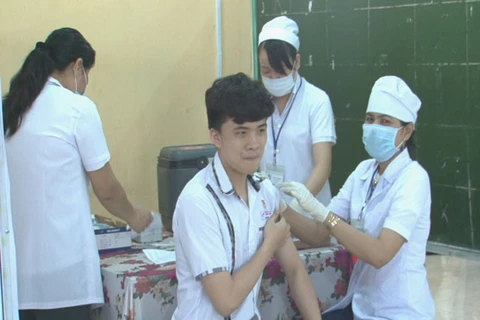
Priority given to vaccination in disadvantaged areas ảnh 1NIllustrative image (Source: VNA)

Hanoi (VNA) – Vietnam is prioritising vaccinations in remote, mountainous and disadvantaged areas in order to equalise the immunisation rate among regions across the nation, stated Dang Duc Anh, head of the National Institute of Hygiene and Epidemiology.

According to Anh, the National Expanded Programme on Immunisation (NEPI) has been implemented for children and women in Vietnam for more than 30 years with an average national rate of over 90 percent.

However, around 5-10 percent of districts nationwide still have rates of below 90 percent, mainly in far-flung, mountainous and ethnic-inhabited areas.

To increase the proportion and quality of immunisation in these areas, regular vaccinations are being carried out in replace of periodical ones.

The birth of the Circular 117/TTLT-BTC-BYT in 2015 on the management and use of expenses for the national target programme on health marked an important step in prioritising investment in vaccination in disadvantageous areas.

Specifically, for each child in far-flung areas receiving sufficient vaccine injections, the heath worker is provided with 24,000 VND (1.08 USD), double the previous regulation.

Moreover, the NEPI has also called on international organisations to expand their assistance to help disadvantageous and mountainous regions in Gia Lai, Lai Chau, Yen Bai, Son La, Thanh Hoa and Ha Tinh provinces organise vaccinations outside of medical clinics to approach more women and children, Anh said.

He added that international organisations have also been proposed to help implement activities to increase the immunisation rate synchronously during 2017-2019.

He went on to say that the rate of hepatitis B vaccination for new-born babies within 24 hours in several localities remained below 50 percent in 2015, while the national average rate reached 69.8 percent.

About a half of children aged 2-4 months catching whooping cough are those who have yet to be vaccinated or vaccinated fully.

Therefore, in 2016, the health sector will continue efforts to maintain the country’s achievements in controlling the spread of polio, eliminate neonatal tetanus, and raise the rate of hepatitis B vaccination for new-born babies within 24 hours in order to successfully control the disease in 2017.

It will also provide additional injections against measles-rubella for juveniles aged 16-17 nationwide.-VNA

VNA

See more

At the launch of the 14th national red journey blood donation campaign in Ho Chi Minh City on June 11. (Photo: VNA)

National Red Journey blood donation campaign 2026 launched

Addressing the opening ceremony, Associate Professor, Dr. Nguyen Ha Thanh, Director of the NIHBT and head of the campaign’s organising committee, said the Red Journey is a symbol of dedication, compassion and social responsibility, and the campaign carries the hopes of millions of voluntary blood donors and helps bring life-saving opportunities to patients in urgent need of blood transfusions.

Da Nang will roll out a citywide health screening and periodic health check-up programme for all residents on July 1. (Illustrative photo: VNA)

Da Nang to launch citywide health screening programme on July 1

Director of the municipal Department of Health Tran Thanh Thuy said the city has developed a comprehensive plan for conducting free periodic health examinations and screening services throughout 2026, and prepared the necessary human resources, facilities and digital infrastructure to ensure effective implementation.

Students play football during a break atthe Hai Xuan Secondary School in Ninh Binh province . (Photo: VNA)

Vietnam targets annual health screening for all students by 2030

By 2030, all educational institutions are expected to have separate medical rooms equipped with essential medicines and healthcare equipment, adequate access to safe drinking water and sanitation facilities, and school meal services that comply with food safety regulations.

Staff from the Ho Chi Minh City First Aid Centre demonstrate first aid skills. (Photo: VNA)

Vietnam, France cooperate to build community first-aid network

The agreement focuses on establishing hundreds of first-aid stations across Long Chau’s pharmacy and vaccination network, standardising first-aid training for medical and pharmaceutical students, and expanding community health education activities nationwide.

In Hanoi, the temperature recorded in Lang Ha at 1 pm on May 26 reached 40 degrees Celsius. (Photo: VNA)

Proactive response needed to cope with extreme weather: Experts

Health experts warned that prolonged heat exposure could cause heatstroke, heat exhaustion and other serious health conditions. High-risk groups include the elderly, children, pregnant women, people working or exercising outdoors for long periods, and those suffering from chronic illnesses such as hypertension, chronic obstructive pulmonary disease, asthma and diabetes.

Ho Chi Minh City plans over 95 million USD for universal health screenings in 2026. (Illustrative photo: VNA)

Ho Chi Minh City earmarks over 95 million USD for universal health screenings in 2026

Ho Chi Minh City's free health examination programme, set to begin on May 25, is carried out at qualified healthcare facilities, mobile clinics at schools, factories and businesses, community-based screening sites arranged by local authorities, as well as through home visits to elderly residents, people living alone and those with limited mobility.

Healthcare workers are employed in an isolation and treatment area for patients infected with the Ebola virus in Entebbe, Uganda. (Photo: Xinhua/VNA)

Health Ministry calls for stronger preparedness against Ebola

Medical facilities were instructed to strengthen surveillance, especially for individuals who have travelled to or returned from outbreak-hit countries or areas within the previous 21 days. They were also asked to strictly enforce infection control measures, including protective procedures, screening, triage and isolation protocols for suspected or confirmed Ebola cases.

Party General Secretary and State President To Lam speaks at a working session Party Committee of the Ministry of Health on Vietnamese traditional medicine in Hanoi on May 20 (Photo: VNA)

Top leader calls for historic transformation of traditional medicine

Highlighting strategic orientations for the sector, Party General Secretary and State President To Lam requested that traditional medicine be incorporated into the country’s overall development strategy in the new era. He called for the building of a national traditional medicine ecosystem linked to the development of the health economy and national soft power.

Deputy Prime Minister Pham Thi Thanh Tra speaks at the programme “Organ and Tissue Donation Day May 20 – Giving is Forever”. (Photo: VNA)

Deputy PM calls for stronger organ donation movement to save more lives

Vietnam has gradually mastered some of the world’s most complex transplant techniques since the country’s first successful kidney transplant in 1992. As of 2025, Vietnam had conducted 10,878 organ transplants, with 34 licensed hospitals now capable of performing transplant procedures.

The meeting between the delegation from Military Hospital 175 and Mayor of Leipzig Burkhard Jung at Leipzig City Hall (Photo: VNA)

Healthcare cooperation shines in Vietnam – Germany ties

The partnership between Military Hospital 175 and medical institutions in Leipzig has been recognised as a highlight of Vietnam – Germany healthcare cooperation, as well as of the sister-city relationship between Ho Chi Minh City and Leipzig.

Dr Truong Thanh Tinh, head of the Department of Neurosurgery under the University Medical Centre Ho Chi Minh City, gives a post-surgery check-up on the 12-year-old patient. (Photo: VNA)

Vietnam performs first awake brain surgery on child patient

The hospital announced on May 19 that the patient, a 12-year-old boy, recovered well after surgery, remained fully conscious and showed no new focal neurological deficits. Post-operative imaging indicated that the tumour had been almost completely removed. Doctors are continuing close monitoring and preparing further treatment plans to support the child’s full recovery.