Private sector remains driving force for economy

The private business sector has been an important driving force of the economy and is expected to raise GDP contribution to 55% by 2025, a top economist told the second Private Economic Forum 2023 in Hanoi on April 2.
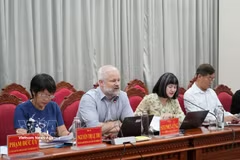
Private sector remains driving force for economy ảnh 1The Private Economic Forum 2023 organised by the Vietnam Private Business Association. (Photo:) laodong.vn
Hanoi (VNS/VNA) - The privatebusiness sector has been an important driving force of the economy and isexpected to raise GDP contribution to 55% by 2025, a top economist told thesecond Private Economic Forum 2023 in Hanoi on April 2.

Can Van Luc, chief economist at BIDV and member of the National Financial andMonetary Policy Advisory Council, told the event, organised by the VietnamPrivate Business Association (VPBA) that after nearly 40 years of renewal, theprivate economic sector has had many strong brands, making an importantcontribution to the country's socio-economic development.

A number of large-scale, multi-industry private economic groups have beenformed, which are capable of competing in the domestic and internationalmarkets.

In terms of quantity, the private sector accounts for about 98% of the totalnumber of over 800,000 operating enterprises; accounting for about 85% of thetotal number of employees in the country, including the individual economicsectors.

In particular, the private sector makes a large contribution to the Statebudget rising from 13.88% in 2016 to 18.5% of total budget revenue in 2021 andaccounts for about 35% of total import turnover and 25% of total exportturnover, nearly seven times higher in terms of import and 10 times in exportcompared to the State-owned enterprise sector.

Capital from the private sector also makes a great contribution tosocio-economic development, increasing the social investment capital from 51.3%in 2016 to 59.5% in 2021.

In addition to highlighting the results and contributions of the privatesector, Luc and other delegates also pointed out shortcomings and limitations.

Although the private sector contributes a large proportion to the GDP, about46.4%, the growth rate of the private sector tended to decrease in recent yearsand failed to reach the target of 50% by 2020 according to Resolution 10-NQ/TW.

In addition, the private economy is mainly small and micro-scale, most of whichare still household businesses, accounting for 94%.

The level of technology, management, financial capacity, product quality andcompetitiveness are still low.

Industry structure is still unreasonable as well as lack of links with eachother and other economic sectors.

The capacity for international economic integration and competition is stilllimited, and the level of deep participation in regional and global valuechains is still low. The private sector, especially private enterprises, alwayslacks capital.

Chairwoman of BRG Group Nguyen Thi Nga said that a business that wants tosucceed not only needed aspirations and passion, but the business itself neededto have the capacity and careful preparation.

In particular, the businesses must always put people at the centre, which wasan important asset for success and development, noted Nga.

They must make efforts to improve the working environment, share information,benefits and responsibilities with employees, and always ensure the interestsof employees at the best level, added Nga.

She also said that the entrepreneurial team and each enterprise must beproperly, fully and deeply aware of the rights, obligations andresponsibilities of their entrepreneurs and businesses in the process ofinnovation and development of the country.

In addition, it was also necessary to pay special attention to promote digitaltransformation, invest wisely in the application of information technology toimprove the efficiency of business administration at enterprises, she added.

Capital for private enterprises was also a big issue attracting many opinionsat the discussion.

Cao Tien Doan, Chairman of the Thanh Hoa Business Association, said thatalthough the issue of access to capital for private enterprises in recent yearshad been regulated quite specifically in many legal documents, in fact, theaccess to capital of enterprises still faced many difficulties and obstacles.

The chairman and a number of businesses suggested that the banking industrypromptly solve outstanding problems, helping businesses easily grasp and accesscapital sources.

Along with that, they asked banks to continue to promote administrative reform,especially improving process, simplifying lending procedures, strengthening theapplication of information technology in management, analysis and prevention ofrisks.

Joint stock commercial banks should regularly organise training courses toimprove professional capacity of staff in charge of credit and loans to adviseand support timely, safely and effectively businesses when in need of loans,said Doan.

In addition, business representatives also recommended strengtheninginspections and reviews of internal processes and regulations, early warning ofpotential risks to have timely preventive and handling solutions, helpingbusinesses limit possible damage.

At the same time, there should be a mechanism to closely monitor and inspectthe implementation and have strict sanctions to avoid taking advantage of orimproperly implementing the loan policy for self-seeking purposes./.
VNA

See more

WB Senior Environmental Specialist and Task Team Leader Stephen Ling speaks at the working session (Photo; VNA)

Ca Mau, WB cooperate in sustainable fisheries development

Scheduled to run from 2026 to 2029, the project aims to develop the local fisheries sector and deepen global integration, while adapting to climate change and protecting the environment through infrastructure upgrades, technological innovation, and better management and production capacity.

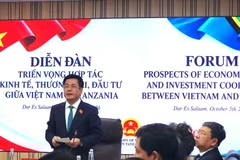
Vice President of the Vietnamese National Assembly Nguyen Hong Dien speaks at the forum. (Photo: Vietnam Trade Promotion Agency)

Tanzanian businesses seek greater cooperation, investment opportunities with Vietnam

Attending the forum during his working visit to Tanzania, Vice President of the National Assembly Nguyen Hong Dien said the two economies were highly complementary. Tanzania has strengths in natural resources, agriculture, energy, its domestic market and its strategic position in East Africa, while Vietnam has advantages in manufacturing and processing, high-tech agriculture, electronics, telecommunications and international trade.

The automatic ticketing system that uses electronic identification, authentication, biometric recognition and cashless payment for passengers on the Cat Linh-Ha Dong railway line in Hanoi. (Photo: VNA)

Cashless payments open gateway to financial inclusion

Cashless payments continued to grow rapidly in the first eight months of 2026. The number and value of cashless transactions rose 34.56% and 13.26% year-on-year, respectively, while online transactions increased 46.57% in number and 21.77% in value.

Ho Chi Minh City attracts more than 17.8 billion USD in FDI in the first nine months of 2026 (Illustrative image. Photo: VNA)

Ho Chi Minh City offers new destinations for FDI flows

The merger of Ho Chi Minh City with Binh Duong and Ba Ria-Vung Tau has opened up a larger development space, enabling the city to reshape its approach to attracting foreign investment. In particular, Resolution No. 10-NQ/TW of the Politburo sets out clear orientations for developing the foreign-invested economic sector, providing a basis for shifting the focus from the amount of investment capital to the quality of investment.

Vietnam exports about 1.4 million tonnes of coffee worth 6.54 billion USD in the first nine months of 2026. (Photo: VNA)

Vietnam seeks to boost value, expand markets for coffee sector

Acording to VICOFA, Vietnam needs to focus on exporting green coffee beans that meet EUDR criteria, particularly as compliance levels among some other producing countries remain low. At the same time, it should develop specialty and organic coffee lines as well as deeply processed products to serve the premium segment in Europe.

Part of Khanh Hoa province in central Vietnam (Photo: VNA)

Malaysian economist upbeat about Vietnam’s growth outlook

Among ASEAN’s “Fabulous Five”, namely Vietnam, Malaysia, Indonesia, Thailand and the Philippines, Vietnam demonstrates how industrial depth and effective investment can underpin rapid growth, Shan Saeed said, noting strong investment momentum.

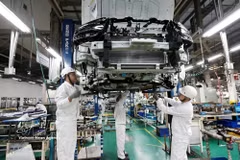
Automobile production at the Honda Vietnam factory in Vinh Phuc ward, Phu Tho (Photo: VNA)

Vietnam’s auto market accelerates amid growing electrification trend

According to data released by PwC in late September, total vehicle sales across the six ASEAN-6 markets, namely Vietnam, Indonesia, Thailand, Malaysia, the Philippines and Singapore, reached about 1.755 million units in the first half of 2026, up 11% year on year. Vietnam recorded the highest sales growth in the group at 31.1%, followed by Indonesia at 15.9% and Thailand at 15.1%.

The headquarters of the Vietnam International Financial Centre in Da Nang (Photo: VNA))

VIFC-DN gradually establishes position on global financial centre map

According to Dang Dinh Duc, Standing Vice Chairman of the VIFC-DN Executive Agency, the ranking marks an important milestone, reflecting the foundations that VIFC-DN and Da Nang authorities are gradually building to connect with international capital flows, institutions and markets.

Quy Nhon Port, located in Quy Nhon Bay of Gia Lai province, offers highly favourable conditions for vessel anchoring and cargo handling throughout the year. (Photo: VNA)

Vietnam Logistics Forum 2026 to be held in early November

The Vietnam Logistics Forum 2026 will take place on November 6-7 in Gia Lai province, bringing together management agencies, local authorities, associations, experts and businesses to identify opportunities and challenges and discuss logistics development solutions suited to the new period.

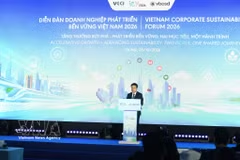
VCCI Chairman Ho Sy Hung speaks at the Vietnam Corporate Sustainability Forum (VCSF) 2026 in Hanoi on October 5, 2026. (Photo: VNA)

Vietnam’s corporate sustainability forum calls for new growth paradigm

Breakthrough growth and sustainable development should be pursued as a shared journey in which the State creates an enabling environment, localities support businesses, enterprises take the pioneering role, science and technology provide momentum, and society as a whole participates.