Public-private partnership needed for sustainable rice farming

Attracting investment and public-private partnership (PPP) plays an important role in implementing the project of sustainable development of 1 million ha of low-emission high-quality rice production in the Mekong Delta to 2030, said insiders.
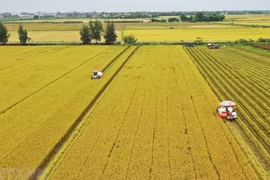
Public-private partnership needed for sustainable rice farming ảnh 1Harvesting the Winter-Spring rice crop in Hau Giang province (Photo: VNA) 

Hanoi (VNA) – Attracting investment and public-private partnership (PPP) plays an important role in implementing the project of sustainable development of 1 million ha of low-emission high-quality rice production in the Mekong Delta to 2030, said insiders.

The project will promote added value throughout the entire rice production chain, raising farmers' incomes, ensuring sustainable development amid worsening climate change, and contributing to green growth.

According to Deputy Minister of Agriculture and Rural Development Tran Thanh Nam, the project will focus on measures to reduce production costs for farmers and expand carbon-certified rice production.

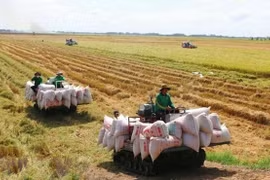
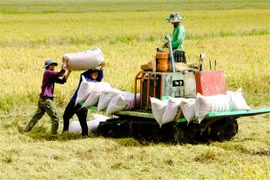
Public-private partnership needed for sustainable rice farming ảnh 2Harvesting the Summer-Autumn rice crop in Can Tho city (Photo: VNA) 

Le Thanh Tung, Deputy Director of the Crop Production Department under the Ministry of Agriculture and Rural Development (MARD), said mobilising components in the value chain through public-private partnership programmes is a top priority in implementing the project.

Promoting the application of technical advances in farming will help solve difficulties for farmers, on the pathway to developing a sustainable rice production chain, he added.

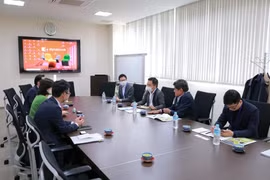
The establishment of the PPP task force on rice aims to boost linkages in sustainable rice production and leverage agricultural technology to support the activities of the rice industry.

Le Quoc Thanh, Director of the National Agricultural Extension Centre, said the project will offer an opportunity to re-position Vietnam’s rice sector. He called for joint engagement of private areas, businesses, and producers in the project.

Head of Sustainable Value Chains of Grow Asia Misha Rabat said Grow Asia wants to connect public and private sector partners and mobilise resources from funds in order to support food system innovation, thus improving the rice industry's adaptation to climate change and increasing incomes for rice farmers.

Many Vietnamese businesses have also expressed their interest and willingness to join in this project.

According to Chairman of Loc Troi Group Huynh Van Thon, the firm has organised chain and cooperative model-based production and applied technologies in production activities.

Vietnam's rice sector has so far ensured food security and created jobs and income for 9.3 million households in rural areas, making it a decisive factor in hunger eradication and poverty reduction.

The nation currently ships rice products to more than 150 countries and territories, accounting for more than 15% of the world’s total rice exports./.
VNA

See more

Speakers at the conference (from left): AVPI Advisory Board Chair Dr Le Thu Huong, Australian Ambassador to Vietnam Gillian Bird, and Vietnamese Consul General in Sydney Nguyen Thanh Tung. (Photo: VNA)

Vietnam, Australia turn momentum into practical cooperation

Vietnam and Australia should focus on promoting two-way investment, expanding cooperation linked to APEC 2027 and making better use of people-to-people connections. Vietnam needs capital, skills, technology, infrastructure, and energy transition expertise - areas where Australia could offer valuable support.

The interface of the National E-Procurement System. (Photo: muasamcong.mpi.gov.vn)

Vietnam to move PPP bidding online from 2027

From January 1, 2027, PPP project proposals must be submitted through the National E-Procurement System. From September 1, 2027, investor selection for PPP projects tendered through open bidding will move fully online.

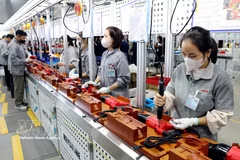
An automated robot-based production line at CAYI Technology Vietnam Co., Ltd. in Yen Phong II-C Industrial Park, Bac Ninh city (Photo: VNA)

EuroCham: Business Confidence Index in Vietnam remains high at 78.3 in Q3

The survey found that 64% of respondents described their current business conditions as good or very good, while 28% maintained a neutral or cautious outlook, reflecting a wait-and-see attitude as international demand remains flat and businesses look for policy momentum to translate into faster procedures and more predictable outcomes.

Workers manufacture handheld power tools at the Keystone Electrical Vietnam factory in Lien Ha Thai Industrial Park, Thai Thuy commune, Hung Yen province (Photo: VNA)

Vietnam seeks to turn FDI inflows into domestic value added

Vietnam is shifting its FDI attraction strategy from expanding investment volumes to prioritising capital inflows that brings technology, knowledge, modern management practices and stronger links with domestic businesses, particularly in semiconductors, artificial intelligence (AI), chips and renewable energy.

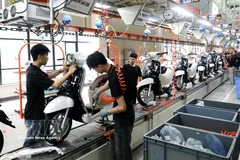
At Yadea Vietnam’s smart manufacturing plant in Tan Hung Industrial Park, Bac Ninh province (Photo: VNA)

Vietnam ties FDI incentives to local supplier commitments

Incentives will increasingly hinge on investors’ performance and commitments, not just on landing projects. Key commitments include transferring technology to Vietnamese firms, training workers, providing technical support and opening FDI supply chains to domestic companies.

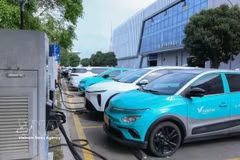
Green SM has launched all-electric taxi service in the US. (Illustrative photo: VNA)

Green SM launches all-electric taxi service in US

The move brings Green SM into one of the world’s most dynamic and demanding markets. It also marks another step in the international expansion of the Vietnamese mobility brand, following its rapid growth across markets in Asia and Europe.

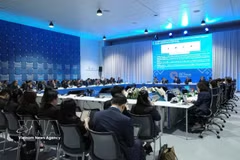
An overview of the meeting between IMF Managing Director Kristalina Georgieva and ASEAN Finance Ministers and Central Bank Governors (Photo: VNA)

Vietnam strengthens financial cooperation at IMF-World Bank annual meetings

The Vietnamese Governor underscored the complementary roles of global and regional financial cooperation mechanisms, including the Chiang Mai Initiative Multilateralisation (CMIM) and the ASEAN+3 Macroeconomic Research Office (AMRO). He also highlighted the importance of technical assistance in fintech, digital transformation, cybersecurity and risk management.

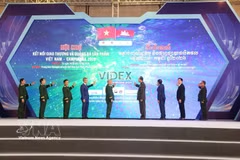
Representatives of the organising committee at the opening ceremony of the fair (Photo: VNA)

Vietnam-Cambodia trade expo promotes bilateral economic cooperation

The Vietnam-Cambodia Business Networking and Product Promotion Exposition has become a key trade promotion event, creating business and investment opportunities while strengthening mutual understanding and trust between the two countries’ armies, people and enterprises.