Quang Binh targets sustainable preservation of Phong Nha-Ke Bang National Park

Domestic and foreign officials, experts and scientists raised proposals to raise the efficiency of management over the UNESCO-recognised Phong Nha-Ke Bang National Park in the central province of Quang Binh at a symposium on June 30.
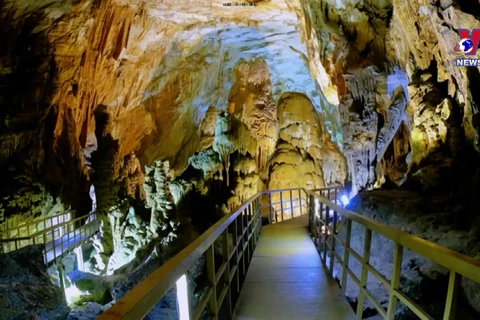
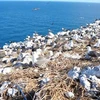
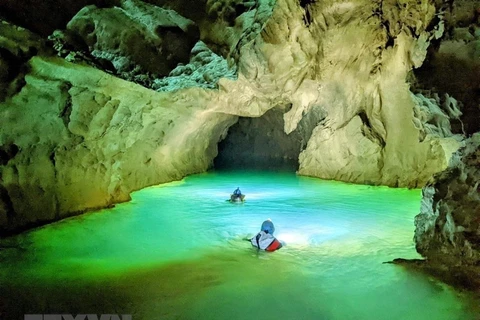
Quang Binh targets sustainable preservation of Phong Nha-Ke Bang National Park ảnh 1The Phong Nha-Ke Bang National Park contains terrestrial and aquatic habitats. (Photo: VNA)
Quang Binh (VNA) – Domestic and foreign officials,experts and scientists raised proposals to raise the efficiency of managementover the UNESCO-recognised Phong Nha-Ke Bang National Park in the centralprovince of Quang Binh at a symposium on June 30.

The event was jointly held by the provincial People’sCommittee, the Vietnam National Commission for UNESCO and the Ministry ofCulture, Sports and Tourism as part of activities celebrating the 20th anniversary of the UNSCO’s recognition of the park as a world natural heritagesite (July 5, 2003).

The participants also looked into achievements inthe heritage preservation as well as obstacles to the work.
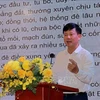
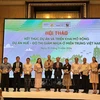
Quang Binh targets sustainable preservation of Phong Nha-Ke Bang National Park ảnh 2At the symposium (Photo: VNA)
In his opening remarks, Chairman of the provincialParty Committee Tran Thang said Quang Binh will do its utmost to preserve andexploit the heritage reasonably, effectively and sustainably in line with law,and relevant international conventions.

The locality will also closely coordinate with themanagement board of the Hin Nam No National Park of Laos, which borders the PhongNha-Ke Bang National Park, to form a unique tourist site of Southeast Asia andthe world as well, he said.

At the event, Quang Binh called on internationalorganisations, scientists and researchers to continue to decode values of theheritage, and work out sustainable preservation solutions.

According to the UNESCO, the Phong Nha-Ke BangNational Park comprises an area of 123,326 ha and contains terrestrial andaquatic habitats, primary and secondary forest, sites of natural regeneration,tropical dense forests and savanna and is rich in large, often spectacular andscientifically significant caves.

The property contains and protects over 104 km ofcaves and underground rivers, making it one of the most outstanding limestonekarst ecosystems in the world. The Son Doong Cave, first explored in 2009, isbelieved to contain the world’s largest cave passage in terms of diameter andcontinuity.

A large number of faunal and floral species occurwithin the property with over 800 vertebrate species recorded comprising 154mammals, 117 reptiles, 58 amphibians, 314 birds and 170 fish. The propertyclearly has impressive levels of biodiversity within its intact forest cover,notwithstanding some gaps in knowledge of the population status of some species.

With its invaluable values, the park has been twice recognisedby UNESCO as a World Natural Heritage Site, with the second in 2015. It hasalso been recognised by the Prime Minister as a special national site./.

VNA
See more

Quang Tri recently received two endangered pangolins from local resident. (Photo published by VNA)

Two pangolins handed over to authorities in Quang Tri

At around 8:30 pm on April 12, Le Thanh Tung, a resident of Thuong Nghia hamlet in Cam Lo commune, and his friend spotted the two pangolins, weighing over 4 kg, while working near the Cam Lo–La Son Expressway.

A view of Phong Nha - Ke Bang National Park in Da Nang city (Photo: VNA)

Phong Nha – Ke Bang: untapped biological treasure in Truong Son mountains

Unlike ecosystems where species inventories are largely complete, Phong Nha–Ke Bang National Park remains scientifically “open,” with each survey revealing new findings. Recent studies - from local research projects to international collaborations - have recorded additional bird species and identified the rare parasitic plant Sapria himalayana, which only survives in intact primary forests.

The interface of Vietnam Weather KTTV mobile application (Photo: baochinhphu,vn)

Application of dangerous weather warning introduced

All unusual weather events, from widespread thunderstorms, lightning strikes, landslides, flash floods, tropical depressions to strong winds at sea, are continuously updated from official data sources of the NCMHF and meteorological stations and prominently displayed on the main interface.

An overview of the kick-off meeting for the “Sustainable Management of Substances Controlled by the Montreal Protocol” project (Photo: VNA)

Vietnam launches 13 mln USD project to phase out ozone-depleting substances

Funded by the Multilateral Fund for the Implementation of the Montreal Protocol and implemented through the World Bank (WB) and the United Nations Environment Programme (UNEP), the project aims to help Vietnam meet its international commitments in managing and phasing out controlled substances. It will run from 2026 to 2031 with a total budget of over 13 million USD.

Tram Chim National Park and the Mekong Conservancy Foundation (MCF) organise the workshop on sustainable restoration of wetland ecosystems in the Mekong Delta on March 24. (Photo: VNA)

Solutions sought to restore Mekong Delta wetland ecosystems

Experts at the workshop described wetlands as the “ecological heart” of the Mekong Delta, playing a vital role in water storage and regulation, climate moderation, carbon sequestration, biodiversity conservation, and livelihoods for millions of people through aquaculture, agriculture, and ecotourism. These ecosystems also help reduce disaster risks and enhance climate resilience.

Deputy Minister of Agriculture and Environment Le Cong Thanh speaks at the ceremony to launch major environmental campaign. (Photo: VNA)

Vietnam calls for collective action on water, air, climate and sustainable future

Deputy Minister of Agriculture and Environment Le Cong Thanh underscored that water, climate, and energy are fundamental pillars of sustainable development. In Vietnam, water resources and weather patterns influence every aspect of life, from food and water security to livelihoods, ecosystem stability, and economic growth.