Railway sector may take four years to recover: VNR Chairman

The railway sector has taken twin blows from the COVID-19 pandemic and the repairs of the Hanoi-HCM City railway.
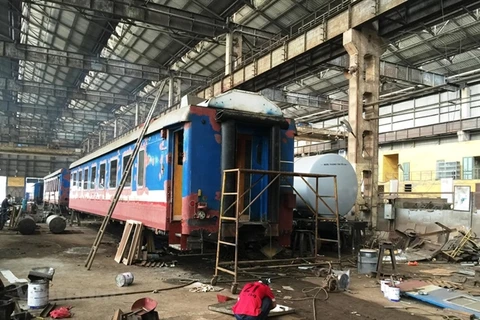
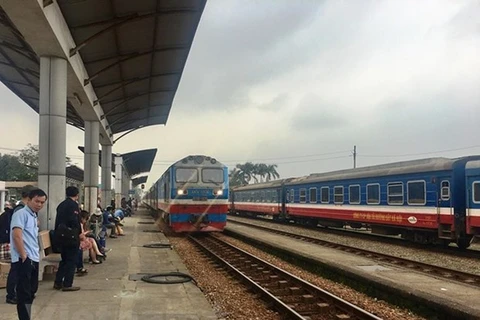
Railway sector may take four years to recover: VNR Chairman ảnh 1The railway sector has taken a blow from COVID-19 (Photo: VietnamPlus)

Hanoi (VNA) – The railway sector has taken twin blows from the COVID-19 pandemic and the repairs of the Hanoi-HCM City railway.

Under the impact of the pandemic, the Vietnam Railway Corporation (VNR) has worked to select suitable passengers and services, increase cargo transport and even put a whole train for rent in a bid to maintain its earnings.

However, the complicated development of COVID-19 has forced the sector to adjust its scenarios many times. It is certain that the sector will be hurt by both the pandemic and the reparation of the Hanoi-HCM City railway line.

Offering new services to offset losses

As the railway sector could not win against aviation, VNR Chairman Vu Anh Minh said the competition between modes of transportation has become fiercer, especially when the aviation sector increase their promotions and flight frequency. At the same time, railway infrastructure has downgraded, resulting in the further decline of passengers.

Compared to other types of transport, VNR still has the upper hand in short - medium routes which have few flights such as Hanoi-Quang Binh, Hanoi-Lao Cai and HCM City-Nha Trang. The sector has chosen suitable departure time, trains and services meeting demand of domestic passengers.

Accordingly, the sector has put the trains for rent, offer ticket discounts of up to 50 percent, and organise events aboard. With that move, it can identify future earnings upon signing rental agreements, without being concerned about empty seats.

The new services are hoped to lure passengers back, he added.

VNR is also planning to reduce the number of long passenger trips due to inefficiency and focus on long cargo trips carrying large amounts of materials such as cement, petrol and oil, iron ore and coal as well as freight to China, along with seeking new customers.

Suffering from dual losses

As the COVID-19 pandemic is brought under control at the moment, the railway sector faces another problem with a project worth 7 trillion VND (301.88 million USD) to repair the Hanoi-HCM City line.

According to VNR estimates, the implementation of the project will reduce its capacity by 30 percent compared to the usual.

The corporation will join hands with investor to carry out the project in the swiftest manner as infrastructure is the core of its business operation. Initially, the project is scheduled to complete at the end of June 2021. The deadline, however, will surely be missed.

About 1 trillion VND in revenue will be lost if it lasts for other six months, and 2 trillion VND for a year, the VNR Chairman noted.

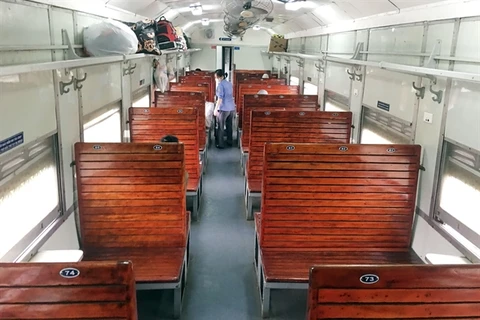
Railway sector may take four years to recover: VNR Chairman ảnh 2Railway workers repair the track (Photo: VNA)

Minh added that it is necessary to set the finish date of the project because its completion will help raise the capacity by about 30 percent and reduce waiting time.

[Vietnam Railways estimates 60 million USD loss due to COVID-19]

On the other hand, improved infrastructure will ease uncomfortable travel experience for passengers.

Only once the project is completed, the sector will be able to attract customers and enhance its capacity, thereby generating profits. It may take three or four years for the sector to fully recover.

The slow recovery of firms will directly link to State budget collection, therefore, support policies and aid in the post pandemic period are needed, Minh suggested.

VNR has proposed the Government reduce transport infrastructure use fees and exempt the corporation from paying 20 percent of railway infrastructure rent revenue in 2020.

It has also asked for a three-year extension for the replacement of old engines and carriages.

Last year, the corporation posted a consolidated revenue of more than 8.3 trillion VND and pre-tax profit of 180 billion VND./.
VNA

See more

Vice Chairman of the Ho Chi Minh City People’s Committee Hoang Nguyen Dinh delivers remarks at the working luncheon themed “Vietnam International Financial Centre in Ho Chi Minh City (VIFC-HCMC) – Vision and Investment Opportunities”. (Photo: VNA)

Ho Chi Minh City strengthens global engagement at WEF Davos 2026

Vice Chairman of the Ho Chi Minh City People’s Committee Hoang Nguyen Dinh presented the city’s strategic vision, policy orientation and development priorities for building a modern, transparent and globally connected finance – technology ecosystem, with science – technology, data, artificial intelligence and fintech identified as core pillars.

The VSS reported that total accumulated reserves across the social, health, and unemployment insurance funds now top 1.5 quadrillion VND. (Illustrative photo: VNA)

VSS pledges tighter fund management, diversified investments

The VSS will also impose stricter financial discipline in fund management, while pursuing broader diversification of investment portfolios, as guided by the principle of “safety, sustainability, and efficiency”. This approach aims to secure strong liquidity for prompt benefit payouts and support growth in Vietnam’s capital markets and overall economy.

The ceremony unveiling AFT Connect portal (Photo: nhandan.vn)

AFT Connect portal links Vietnamese clean food producers

The platform is expected to serve as shared digital backbone enabling stakeholders in the clean food sector to gradually digitise, standardise, and publicly disclose information, ultimately aiding the fight against unsafe products and protecting consumer interests.

A Vietcombank employee guides a client in biometric process (Photo: qdnd.vn)

Vietnam's biometric surge powers digital banking overhaul

As the Party identified breakthroughs in science – technology and innovation as a key driver of national progress, the mastery and adoption of biometric technologies must go hand in hand with safeguarding public trust, data security, and citizens’ interests, all aligned with the people-first philosophy guiding the country's digital agenda.

A spring fair kicks off in the central Da Nang city on January 22, 2026 (Photo: VNA)

Da Nang 2026 spring fair features 200 booths

The fair features a diverse range of products and services, focusing on items for Tet such as food and beverages, regional specialties, OCOP products, and rural and industrial goods; fashion, footwear, cosmetics, and sports equipment; health care products and beauty services; household items, interior and exterior décor, and handicrafts; as well as equipment, technology, and services in sectors like electronics, automobiles, and telecommunications.

The Ministry of Finance is working to establish a mechanism for regular and ongoing dialogue with international credit rating agencies, including Fitch, Moody’s and S&P. (Illustrative image: VNA)

Fitch Ratings upgrades Vietnam’s senior secured long-term debt rating to BBB-

The rating for Vietnam’s secured long-term debt was raised to BBB-, equivalent to investment grade, one notch higher than the country’s long-term foreign-currency rating on unsecured debt, which remains at BB+. The upgrade followed Fitch’s review under its revised Sovereign Rating Criteria issued in last September, said the Ministry of Finance.

A view of the site where the Ninh Thuan 1 Nuclear Power Plant is located in Phuoc Dinh commune, Khanh Hoa province (Photo: VNA)

Nuclear experts urge century-long commitment at 14th Party Congress

VietNuc’s executive board, including Chairman Bui Nguyen Hoang from the Électricité de France SA (EDF) (EDF), Ung Quoc Hung from Setec Nucléaire Group, and Vu Minh Ngoc from French National Radioactive Waste Management Agency Andra, hoped that the Congress would refine mechanisms and policies to better tap OV nuclear talents.

Ahmad Haikal Hasan, Head of the Halal Product Assurance Organising Agency (BPJPH) of Indonesia, speaks at the seminar (Photo: VNA)

Indonesia ready to cooperate with Vietnam in halal sector

Ahmad Haikal Hasan, Head of the Halal Product Assurance Organising Agency (BPJPH) of Indonesia, described Vietnam as a “potential supplier” of halal products with the capacity to play a larger role in the market, particularly in the fast-moving consumer goods (FMCG) sector. He revealed a plan to visit Vietnam next week to discuss the country’s progress in the global halal industry.