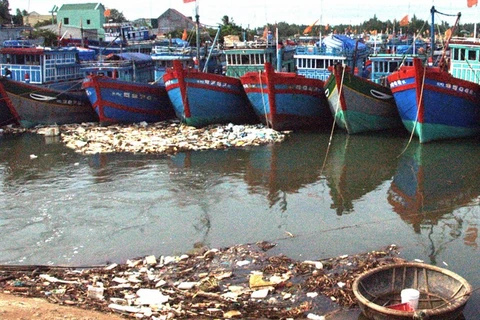
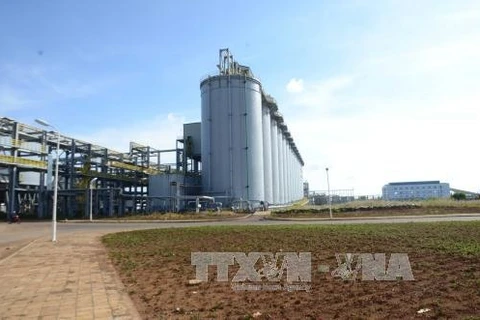
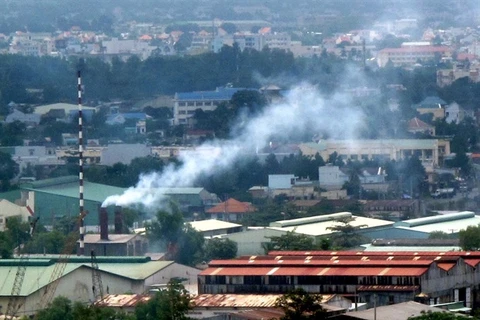
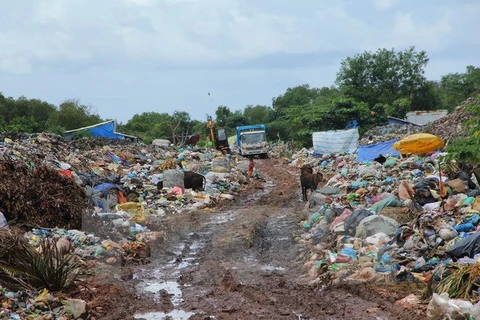
Illustrative photo (Source: tuoitre.vn)
 Hanoi (VNS/VNA) - Big changes have been recorded in socio-economic development in the Vietnamese countryside. One of the leading factors for change is the rapid modernisation of the country’s primary industry - and the rural areas themselves.
The appearance of many industrial zones in the countryside have provided jobs for many rural people, helped them increase their incomes and improved the quality of their livelihood. However, in this process, certain negative impacts have arisen, particularly environmental deterioration.
In its efforts to minimise the negative impacts of environmental pollution, the Ministry of Natural Resources and Environment (MONRE) has launched a week entitled “Waste management for sustainable rural environment from September 23-30”. The campaign is a response to the international campaign to make the world cleaner.
According to Associate Professor Doctor Pham Cong Nhat, from Hanoi National University, a key cause of serious environmental pollution in the countryside is the rapid development of industrialisation and urbanisation. Coupled with that is the rapid increase in population which has led to heavy pressure on water resources and pollution control.
For many years, the water environment in many urban areas, industrial parks and craft villages has been seriously polluted by untreated waste water, air emissions and solid waste.
Nhat said, in many big cities, hundreds of factories have discharged waster water freely into the surrounding environment with little or no proper treatment.
Professor Nhat added that farmers’ abuse of pesticides had caused serious pollution to water in adjacent rivers, lakes and canals. And at the end, the polluted water had seriously affected the health of local people.
Another factor that has added to the problem is the mushrooming of aqua-culture and the reckless use of chemicals in aqua-culture production.
The environmental awareness of communities in the countryside is still poor. Many farmers abuse the use of pesticides in agricultural production. They don’t even realise that environmental pollution has negative impacts on their living conditions and on health.
Adding to these problems is the big shortage of environmental staff. At present, in Vietnam, there are about 30 environmental officers per one million people while in other ASEAN nations there are 70.
Research conducted by Associate Professor Dr. Nguyen Khac Hai from the Vietnamese National Institute of Occupational and Environmental Health on 4,700 men and women using well water contaminated with arsenic, 60 had problems with chronic arsenic contamination.
How to solve the problem
Associate Professor Pham Cong Nhat said there was a need to carry out synchronous measures to protect the environment.
In his opinion, in the long run, more measures must be adopted to check and control the environment while paying more attention to the training of environmental officers and the creating of an environmental map in each locality.
Professor Nhat said there was also a need to have a good planning on the development of industrial parks or clusters as well as traditional villages so that the local authorities could easily monitor their discharged water or solid waste. - VNA
VNA