Russia remains potential market for Vietnamese farm produce

With a wide and diverse retail sector, Russia has been considered a promising market for agro-forestry-fishery products of Vietnam.
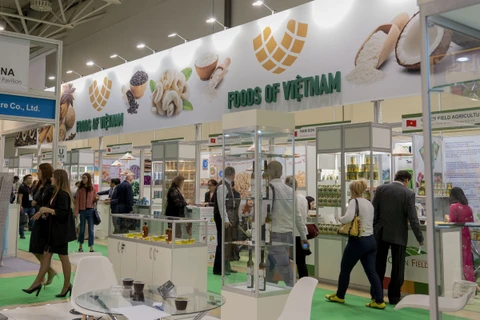
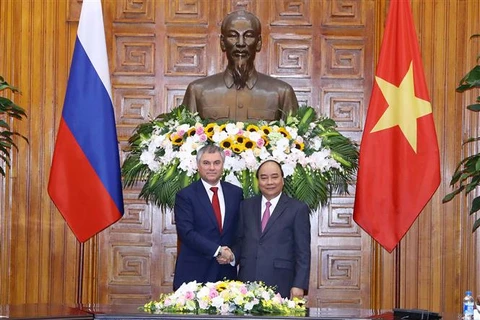
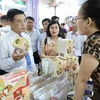
Russia remains potential market for Vietnamese farm produce ảnh 1Illustrative image (Source: VNA)

Hanoi (VNA) – With a wide and diverse retailsector, Russia has been considered a promising market for agro-forestry-fisheryproducts of Vietnam.

Statistics showed that in 2019, Russia spent over 5 billionUSD on importing fresh fruits, along with 1.3-1.5 billion USD on processedvegetable, fruits and nuts, more than 2 billion USD on meat, over 2.4 billionUSD on fisheries products.

Many Vietnamese products are Russians’ favourite, especiallywooden furniture and farm produce. The market also has high demand for tropicalvegetables and fruit.

In the first two months of 2020, Vietnam earned 8.2 millionUSD from exporting vegetables and fruit to Russia, up 246.1 percent year onyear, including 6.7 million USD of processed products, a rise of 293.5 percentover the same period last year.

At the same time, Vietnam is Russia’s top supplier of coffeein 2019, with 154.3 million USD, making up 24.5 percent of the country’s totalspending on the product.

According to the General Department of Vietnam Customs, inthe first two months of 2020, export revenue of Vietnam’s afro-forestry-fisheriesproducts to Russia reached 68.5 million USD, up 0.3 percent year on year, withsharp a rise seen in exports of vegetables, fruit, rice, and peppercorn.

Deputy Minister of Agriculture and Rural Development PhungDuc Tien advised businesses to focus more on the Russian market to make fulluse of the market potential and the sound strategic partnership between the twocountries.

He said that the ministry has directed relevant agencies toguide and support enterprises in administrative procedures in line withrequirements of importers.

However, he pointed out that exports to Russia only accountfor about 1.6 percent of Vietnam’ total exports of agricultural products. Henoted that although many Vietnamese products meet requirements of the Russianmarket, but they face barriers in export procedures.

Specifically, Vietnamese products have been charged with hightax rate in the market, and high logistics cost has also impacted competitivenessof the products. Technical barriers, currency exchange and low level ofproducts’ processing have also been obstacles of Vietnam.

Experts held that in order to increase exports to Russia,Vietnam should promote the processing industry. Meanwhile, State agencies andbusinesses should work more closely together, with more support from the Statein policy.

They advised businesses to stay active in giving proposalsand voicing their needs to State agencies./.
VNA
See more

The meeting between General Secretary of the Communist Party of Vietnam Central Committee and State President To Lam and Chairman and Chief Executive Officer of Hayleys PLC Mohan Pandithage in Colombo on May 8 (Photo: VNA)

Vietnamese leader hopes for stronger ties with Sri Lanka's Hayleys PLC

General Secretary and President To Lam said that given the complementarity of the two economies and their substantial room for growth, Vietnam wishes to enhance cooperation with major Sri Lankan enterprises, especially those with regional market networks and connectivity capabilities such as Hayleys.

The export of 1.1 million doses of vaccine lumpy skin disease (LSD) to the Republic of Korea marks an important milestone for Vietnam’s veterinary vaccine industry. (Photo: nongnghiepmoitruong.vn)

Vietnamese-made LSD vaccine enters demanding RoK market

The successful research and commercialisation of the LSD vaccine, which has been widely used in the domestic market and is gradually expanding internationally, helps affirm the position of Vietnamese veterinary vaccines globally.

General Secretary of the Communist Party of Vietnam (CPV) Central Committee and State President To Lam addresses the Vietnam – Sri Lanka Trade-Investment-Tourism Cooperation Forum in Colombo on May 8. (Photo: VNA)

Top leader urges stronger Vietnam-Sri Lanka economic connectivity

Vietnam – Sri Lanka cooperation should be viewed within the broader context of the Indian Ocean, South Asia and emerging global supply chains, and the key issue now is not potential, but swift, decisive and effective action, said Vietnam's top leader To Lam.

The meeting between Vietnamese Minister of Industry and Trade Le Manh Hung and representatives from Essar Group (Photo: VNA)

Vietnam, India step up cooperation in energy, biofuels

Vietnam encourages capable investors to participate in oil and gas, energy and energy infrastructure projects in line with the national energy development strategy, while ensuring investment efficiency and compliance with Vietnamese law.

In the first four months of 2026, total FDI inflows into Vietnam reaches 18.24 billion USD, up 32% year-on-year. (Illustrative photo: VNA)

Vietnam draws stronger foreign investment inflows despite global headwinds

In the first four months of 2026, total FDI inflows into Vietnam reached 18.24 billion USD, up 32% year-on-year. Disbursed capital was estimated at more than 7.4 billion USD, an increase of 9.8% and the highest four-month disbursement level recorded in the past five years, reflecting effective implementation of many registered projects.

A Boeing 787 aircraft of Vietnam’s national flag carrier, Vietnam Airlines, lands on its first flight at Long Thanh International Airport. (Photo: VNA)

Deputy PM stresses strategic, synchronous planning for airport system

The national airport system planning was approved by the Prime Minister under Decision No. 648/QD-TTg dated June 7, 2023. Under the planning, 30 airports (14 international and 16 domestic) are to be developed during the 2021–2030 period, with a vision to 2050 expanding the network to 33 airports (14 international and 19 domestic).

Modern machinery improves labour productivity. (Photo: VNA)

Upskilling becomes key lever for Vietnamese workforce in digital era

As the economy is pivoting to a growth model fueled by knowledge, technology and innovation, the working class, or the backbone of production, demands better professional qualifications, vocational skills, industrial discipline and work habits. Timely adaptation is the only shield against being undercut by accelerating automation, artificial intelligence and increasingly fiercer global competition.

A circular organic farming model in Khanh Hoa is delivering initial economic efficiency. (Photo: VNA)

New growth potential unlocked for Vietnamese economy

Prime Minister Le Minh Hung once stressed that cutting administrative procedures and business conditions remains one of the fastest and most effective ways to stimulate growth and strengthen confidence among citizens and enterprises. He underscored that the reform process must remain continuous and responsive to practical requirements.