Science, technology cooperation a pillar in Vietnam-Russia relations: official

Cooperation in science and technology between Vietnam and Russia has a long tradition and is an important and inseparable part of the time-tested friendship between the two countries, according to Deputy Minister of Science and Technology Tran Hong Thai.

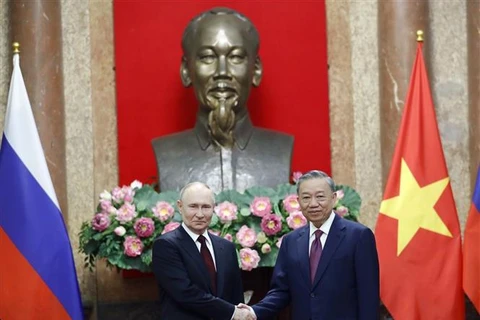
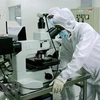
Russian-invested projects have contributed to Vietnam's socio-economic development (Photo: VNA)

Hanoi (VNA) - Cooperation in science and technology between Vietnam and Russia has a long tradition and is an important and inseparable part of the time-tested friendship between the two countries, according to Deputy Minister of Science and Technology Tran Hong Thai.

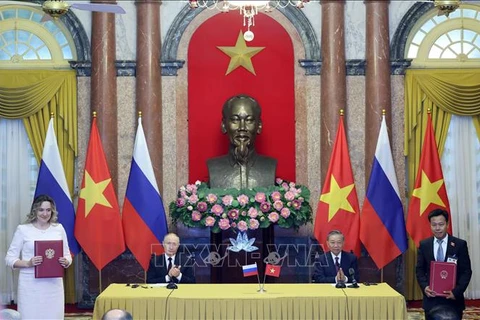
In an interview granted to the Vietnam News Agency on the occasion of the state visit to Vietnam by Russian President Vladimir Putin on June 19-20, Thai said that after their diplomatic relations were established on January 30, 1950, the Democratic Republic of Vietnam (now the Socialist Republic of Vietnam) and the Soviet Union (now Russia) signed of a scientific and technical cooperation agreement between the on March 7, 1959, prioritising bilateral cooperation in the field of science and technology.

Over the past 65 years, the two countries have inked a series of agreements on cooperation in this field. In November 2014, the cooperation was raised to a strategic level when the two nations signed a strategic partnership agreement on education and science and technology on the occasion of the visit to Russia by Party General Secretary Nguyen Phu Trong.

The Vietnamese Ministry of Science and Technology has coordinated with Russian partners to provide funding to carry out nearly 60 joint research collaboration tasks on biotechnology, new materials, electronics, automation, social sciences, humanities, and economics.

On November 21, 2011, the Governments of Vietnam and Russia signed a cooperation agreement on building the Centre of Nuclear Science and Technology (CNST) in Vietnam.

Accordingly, in 2018, the Prime Minister approved the investment policy to build the 10-MW centre in Long Khanh city in the southern province of Dong Nai and assigned the Ministry of Science and Technology to be its investor.

In the coming time, the two sides will continue to promote collaboration in science, technology and innovation through the mechanism of the joint committee on education, science and technology cooperation whose meeting is held annually in a rotational basis in each country.

They will periodically identify priority directions for cooperation in this field, thereby selecting joint research cooperation tasks for being funded.

Notably, Vietnam’s priority directions for cooperation with Russia in the coming time will focus on the fields that Russia has strengths and Vietnam has needs such as new materials, biotechnology, marine research, space technology, energy technology, and rational use of natural resources.

In addition, the two sides will pay attention to implementing the CNST project and intensifying collaboration in training human resources for the project’s implementation, stated Thai./.
VNA

See more

Minister of Science and Technology Nguyen Manh Hung speaks at the Vietnam Open Technology Forum 2025 in Hanoi on November 3. (Photo: VNA)

Vietnam looks to develop, master digital technology through open standards

Vietnam has chosen to pursue this direction — developing open technologies, open-source software, and open data — to enable individuals and enterprises to co-create new values. With this approach, it will become a technology-driven nation that both benefits from and contributes to global knowledge.

The seminar held in London on October 28 between Party General Secretary To Lam and leading strategists on AI and technology in the UK and the world. (Photo: VNA)

Vietnamese Party chief attends seminar on AI, technology in London

With its aspiration to become a pioneer in digital economy, Vietnam seeks to learn from the UK - the cradle of the Industrial Revolution and the homeland of great minds such as Isaac Newton, John Locke, Adam Smith, Alan Turing, William Shakespeare, and Charles Dickens - to build an innovative, human-centred, and sustainable technological ecosystem.

Int'l press conference highlights key outcomes of Hanoi Convention signing

Int'l press conference highlights key outcomes of Hanoi Convention signing

The Ministry of Public Security and the Ministry of Foreign Affairs jointly held an international press conference to announce the outcomes of the Signing Ceremony and High-Level Conference of the United Nations Convention against Cybercrime (also known as Hanoi Convention) in Hanoi on October 26.

Deputy Minister of Public Security Senior Lieutenant General Pham The Tung addresses the policy discussion in Hanoi on October 26. (Photo: VNA)

Hanoi Convention: Fostering global cooperation in combating cybercrime

A policy discussion focusing on promoting international cooperation in combating cybercrime, with national approaches to implementing the United Nations Convention against Cybercrime (the Hanoi Convention), took place in Hanoi on October 26 on the sidelines of the convention's signing ceremony.

Ernst Noorman, Ambassador-at-large for Cyber Affairs of the Netherlands (Photo: VNA)

Dutch cyber affairs official hails Vietnam’s hosting of Hanoi Convention signing

Ernst Noorman, Ambassador-at-large for Cyber Affairs of the Netherlands, spoke highly of Vietnam’s efforts in hosting the signing ceremony of the UN Convention against Cybercrime (Hanoi Convention), as the event demonstrated the country’s strong commitment to tackling global cyber threats and advancing international cooperation.

Deputy Minister of Public Security Pham The Tung speaks at the seminar on international cooperation in combating online fraud in Hanoi on October 25, 2025. (Photo: VNA)

Int’l cooperation holds key to combating cybercrime: Vietnamese officer

Addressing a seminar on international cooperation in combating online fraud, held as part of activities of the signing ceremony of the UN Convention against Cybercrime (the Hanoi Convention) in Hanoi on October 25, the Deputy Minister said Vietnam has strengthened coordination with other countries in fighting transnational online fraud and achieved positive results.