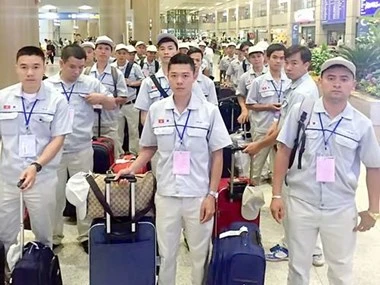
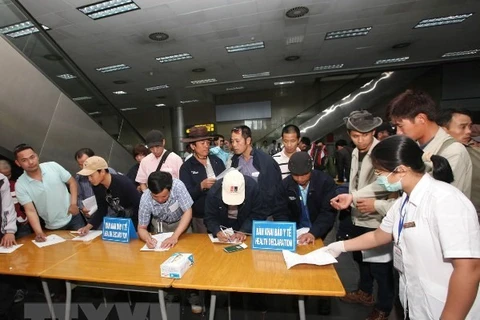
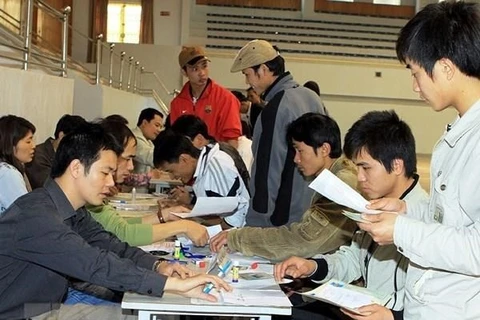
Labourers check information related to the Korean language exam. (Photo: VietnamPlus)
Hanoi (VNA) – The amended and supplemented regulations related to Vietnamese guest workers have created a transparent environment for sending labourers to work abroad under contracts.
A study by the International Labour Organisation (ILO) shows that Vietnamese workers abroad often have to pay higher fees than the ceiling service charge rate prescribed by law.
Some interviewed people said that they had to pay 163 million VND to 372 million VND (7,000-16,000 USD) to work in Japan and Taiwan (China), much higher than the rate regulated by the law.
Therefore, the creation of a transparent environment to send Vietnamese employees to work abroad with contracts will help solve the problem.
These changes have all been legalised in the draft revised law on Vietnamese guest workers with contracts.
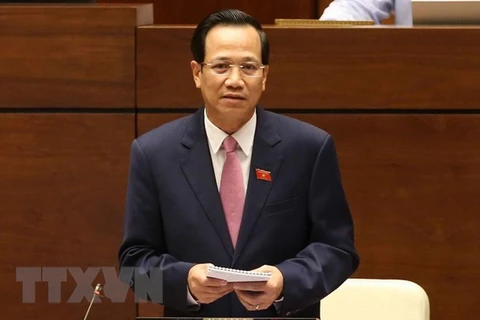
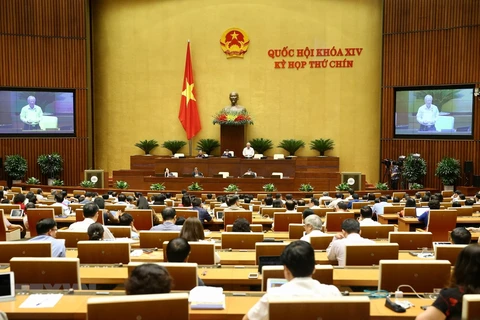
The National Assembly (NA) mulled over the draft revised law during its 9th session. The draft law was planned to be approved in the upcoming 10th session of the NA.
Draft law covers more contents
The draft law amended Article 1 on the scope of regulation. It aims to ensure a broader scope of employment relations for Vietnamese workers abroad, and focuses on regulations on Vietnamese labourers working abroad with contracts.
The draft law also added the form of citizens going to work abroad through non-business organisations under the People's Committees of provinces and centrally-run cities, and specialised agencies under the People's Committees of provinces and centrally-run cities to implement international treaties and agreements. These public non-business units operate for non-profit and only send Vietnamese employees to work abroad in accordance with signed international agreements.
Supplementing new polices
The draft law provides a number of new proposals on policies such as opening high-income markets and markets with jobs that help improve qualifications and skills of workers; creating jobs and supporting start-ups; and policies towards vocational education institutions. It also includes contents on gender equality in the sending of labourers to work abroad.
The State aims to promote international cooperation to expand new overseas labour markets, helping Vietnamese guest workers access high-paid jobs and improve their profession so they can return home and contribute to national economic development.
Promoting transparency and minimising costs
The draft revises provisions on the charge for the service of sending workers abroad. Expenses for sending workers abroad would be shared between workers and foreign employers to heighten businesses’ responsibilities and reduce expenses for guest workers.
Specifically, a Vietnamese guest worker would have to pay the labour export company that sends him abroad an amount equal to the service charge rate registered by the labour export companies with competent agencies. The payment would be made only after the worker officially signs a guest worker contract with the labour export company.
However, if the worker’s foreign employer has paid a service charge amount to the company, the worker would only pay the company an amount equal to the ceiling service charge rate minus the amount paid by the foreign employer.

Workers complete procedures before going to work abroad. (Photo: VietnamPlus)
The draft law supplements the concept of brokerage contract, using the concept of “remuneration under brokerage contracts” instead "brokerage fees", and regulates that both parties agree on remuneration under the brokerage contract but not exceeding the prescribed ceiling rate.
The draft removes the regulation that employees are responsible for paying part of the brokerage fees to the labour export company that sends them abroad.
Strict regulations on deposit
The draft law has a clear provision on the rights and obligations of parties in depositing and guaranteeing guest workers. It also specifies the responsibility of the Government in managing measures to ensure the fulfillment of obligations, in order to ensure social equity and avoid forced labour.
Notably, the draft law also contains regulations prohibiting the application of measures to ensure the performance of obligations in addition to the deposit and guarantee measures. The provisions on the deposit and guarantee are aimed at ensuring the transparency and specificity of the law in accordance with the current situation.
A loosened selection of workers
The draft law allows close cooperation between businesses and training institutions, and promotes international cooperation to expand new overseas labour markets, thus helping Vietnamese guest workers access high-paid jobs and improve their professional skills.
It also allows enterprises that provide the service of sending workers abroad to prepare the labour force before registering for a labour supply contract.
However, to limit situations where enterprises take advantage of regulations to recruit and train rampantly, the draft law also specifies conditions for businesses and management mechanisms for preparation activities of labour force, and legal responsibilities of enterprises./.