Destinations that adopt digitalisation bring about many interesting experiences to visitors with only a smartphone. (Photo: VietnamPlus)
 Hanoi (VNA) – Minister of Culture, Sports and Tourism Nguyen Van Hung has suggested optimizing digital technology to reform tourism management and business in the new context.
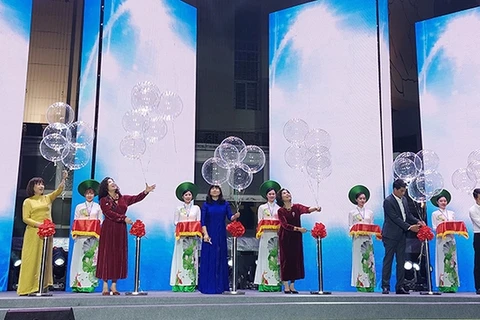
Technological advancements have reshaped the behaviours of travellers. Now they seek information, book services, experience destinations and share emotions and memories mostly in the digital environment, the minister explained at a high-level forum in HCM City on September 7, held within the framework of the 17th International Travel Expo HCM City.
Given the severe impact of the COVID-19 pandemic, the domestic tourism sector needs flexible solutions to respond to similar crises in the future, he stressed.
Many barriers to digital transformation in tourism
Tourism is considered one of the pioneering fields participating in and accelerating the digitalisation of business activities globally, especially product and service promotion and bookings online.
Notably, the Travel & Tourism Competitiveness Report (TTCR) said the world tourism industry is facing the need to push ahead with digital transformation and innovation to create new opportunities, raise competitiveness, and boost sustainable development, especially in light of the pandemic.
 The goal of digital transformation is to bring convenient and unforgettable experiences to holidaymakers. (Photo: VietnamPlus)
 Addressing the event, Deputy Prime Minister Tran Hong Ha stressed that digital transformation will be the driving force in achieving a breakthrough in tourism and making that industry green.
Green transformation and the trend of rapid economic and social digitisation in many countries have become the key driving force in restructuring the economic growth model and changing the competition model globally, he said.
The national strategy for developing the digital economy and society until 2025 sets out several key tasks for the tourism industry. These include building a digital data platform for cultural heritages, landscapes, tourist attractions and services, and a museum network; providing training in smart tourism; and achieving digital transformation of tourism at undergraduate and postgraduate training institutions, he said.
The development of digital infrastructure and applications such as internet of things, artificial intelligence, interactive virtual reality, cloud computing, and big data analytics to adapt to new trends and public investment are the focus of digital transformation in tourism, he added.
Minister Hung also pointed to barriers to digital transformation in tourism such as development gaps between localities, and the shortage of technology and finance resources as well as workforces in this field.
Therefore, digital transformation requires drastic action to change the mindset in the entire sector, as well as efforts by businesses, organisations and local authorities, the official noted.
Once installed with the Tourism Business and Management Application of the smart tourism ecosystem, smart phones will work as a mobile point of sale (POS) solution. (Photo: VietnamPlus)
Vital option
Nguyen Trung Khanh, head of the Vietnam National Authority of Tourism, held that digital transformation is a vital choice for the tourism industry after the world experienced the serious impact of the COVID-19 pandemic.
The World Tourism Organisation, a United Nations specialised agency, selected the theme of “Tourism and Green Investment” for the 2023 World Tourism Day which emphasises the role of innovation and digital transformation in promoting prosperity, the official continued.
 Online travel information provides huge data for tourists to prepare for their upcoming trips. (Photo: VietnamPlus)
 To raise the sector’s competitiveness in the new context, and attract more domestic and foreign tourists, it is a must to develop smart tourism, Hung said. In a green economy, businesses and people are the actors, tourists the centre, products, and infrastructure the foundation, and modern services the momentum, he theorised.
Deputy PM Ha said to make digital transformation in tourism a success, each country and business should come up with their own strategies, solutions, and approaches.
For tourism, it requires a scientific strategy which sets out a focus and priorities, along with reforms in management, operation and administration, the official emphasised./.
 Digital transformation requires drastic action to change the mindset in the entire sector, as well as efforts by businesses, organisations and local authorities. (Photo: VietnamPlus)