South-central region urged to raise capacity in natural disaster response

The south-central coastal region, the most disaster-prone in Vietnam, must focus on improving disaster forecasting so early warnings can be produced to facilitate proactive response, an official told the Vietnam News Agency.
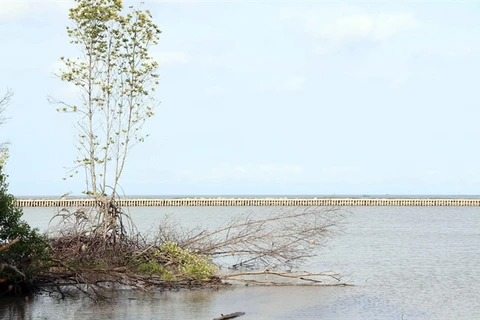
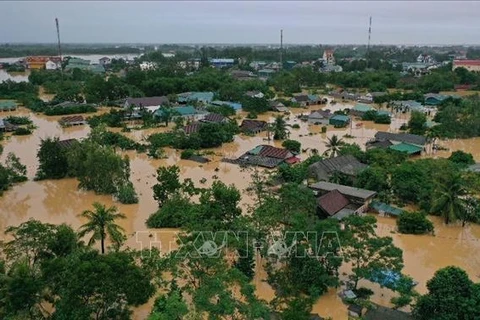
South-central region urged to raise capacity in natural disaster response ảnh 1Illustrative photo. (Source: VNA)

Hanoi (VNA) – The south-central coastal region, the most disaster-prone in Vietnam, must focus on improving disaster forecasting so early warnings can be produced to facilitate proactive response, an official told the Vietnam News Agency.

Last November, the region was severely hit by torrential rains and flooding, leaving dozens of people dead and missing.

The National Strategy on Natural Disaster Prevention and Control for the 2021 – 2030 period, with a vision towards 2045, highlights tasks and solutions to help the region prevent and mitigate impacts of natural disasters, particularly storm, flood, drought, landslide, and coastal and river erosion, said Tang Quoc Chinh, Director of the Department of Disaster Safety Control under the Ministry of Agriculture and Rural Development’s Vietnam Disaster Management Authority. Focus must be placed on improving disaster forecasting to produce early warnings and proactive response, he said.

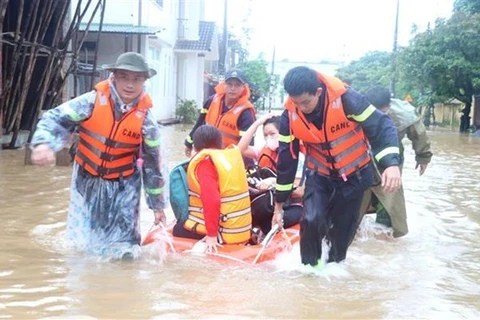
South-central region urged to raise capacity in natural disaster response ảnh 2Rescuers use a boat to move children to safety in Vietnam. Illustrative photo. (Source: VNA)

The region needs to develop a multi-disaster warning system to monitor rainfall, flood, landslide and others, while providing guidelines for building disaster-resilient structures and evacuation shelters and financially supporting disadvantaged households to construct storm- and flood-resistant houses, he noted.

It must enhance the effectiveness of risk zoning, establish a communal-level disaster warning map and tighten control on construction of housing and infrastructure, particularly coastal and riverside tourist sites, he suggested, adding more attention should be paid to forest management, protection and development, preservation of coastal sand dunes and shift to disaster-resilient farming.

In the long run, the region should harmonise disaster response efforts among state management agencies and advisory bodies and build capacity for governmental staff specialised in natural disaster prevention and control, while applying advanced technology and developing database in this matter, the official added./.
VNA

See more

The forum takes place in Hanoi on August 25, 2026. (Photo: VNA)

Vietnam, RoK promote cooperation to deliver on net-zero commitments

Sectors such as semiconductor manufacturing, nuclear power, science and advanced technologies are playing an increasingly important role in national competitiveness and economic development of each country. They also offer considerable room for Vietnam and the RoK to expand professional exchanges, share experience and promote cooperation, particularly among their energy experts.

Storm Narra's projected path as of 7:00 on August 22. (Photo: National Centre for Hydro-Meteorological Forecasting)

Storm brings heavy rains to northern Vietnam

Storm Narra, the fourth to hit the East Sea this year, brought strong winds and heavy rains to northern Vietnam on early August 22, with some areas forecast to receive more than 500mm of rain as the storm moves slowly over the northern waters of the East Sea.

A view of the meeting between Phu Tho authorities and a visiting delegation from Germany's KfW Development Bank in the province on August 20, 2026. (Photo: VNA)

Phu Tho, German bank discuss wastewater treatment plan for Da River's left bank

The project is being implemented in the former Hoa Binh city, now Hoa Binh ward. It has a total investment of 688.7 billion VND (26.38 million USD), including 507.3 billion VND in ODA and 181.4 billion VND in counterpart funding. Major components include a wastewater treatment plant, pumping stations, a collection network, and connection infrastructure.

Construction workers reinforce steel and pour concrete to cover the underground drainage channel, helping collect rainwater and tackle flooding in Da Nang. (Photo: VNA)

A new “shield” against climate change

Smart urban areas are no longer simply about technology; they are becoming a tool that enables authorities to forecast risks, adapt quickly and protect their residents.

Vietnam is exerting efforts to cope with climate change. (Illustrative photo: VNA)

Vietnam approves carbon credit pact with Singapore under Paris Agreement

Signed on September 16, 2025, the Implementation Agreement on carbon credits collaboration under Article 6 of the Paris Agreement on climate change affirms Vietnam and Singapore’s pioneering role and commitment to close cooperation in the international carbon market, making a substantive contribution to global climate response.

A view of Vo Cuong ward, Bac Ninh province (Photo: VNA)

Bac Ninh earmarks over 1.7 billion USD for environmental protection

By 2030, Bac Ninh aims to ensure that all operating industrial clusters and industrial parks have centralised wastewater treatment systems meeting standards, while at least 95% of wastewater in Grade-I urban areas and 70% in Grade-II urban areas is collected and treated to required standards.

Many inland canals in Can Tho city dries up following a prolonged period of extreme heat. (Photo: VNA)

Government adopts action programme on environmental protection, climate resilience

The programme aims to translate the Party's orientations into concrete actions while strengthening environmental governance, enhancing climate resilience, and promoting a green, circular and low-carbon economy. It will serve as the basis for ministries, sectors and localities to formulate implementation plans for the 2026–2030 period, with a vision to 2045.