Illustrative image (Source: VNA)
Hanoi (VNA)– Vietnam’s biggest, most important traditional festival, Tet (LunarNew Year Festival), is a time of renewal, a time to welcome Spring, a time tothank Gods and ancestors and pray for their blessings. Special dishes are madeto offer the Gods before they are shared by family and friends.
In that spirit, Foodwise shares with you some stories about a fewdelicious Tet dishes cooked in the country’s three regions.
There are nine traditional dishes made in the north of the country, but onethat can be considered the very soul of Vietnamese Tet is banhchung (square cake).
This special cake carries the fragrance and sweetness of glutinous rice, thebuttery taste of green bean, the meaty flavour of pork and light hotness ofpeppercorns.
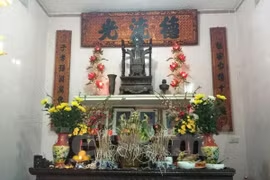
For thousands of years, this cake has always been present on the ancestralaltar of every family in the north.
The legend is that the 6th Hung King, who wanted someone to succeed him, toldprinces that he would abdicate it to whoever brings the most special things toworship Heaven and Earth before the Lunar New Year.
Most of the princes searched high and low, in the mountains and the seas,looking for special offerings, but the 18th prince, Lang Lieu, stayed put. Adeity informed him that there is nothing more valuable than rice, because it isthe food that feeds the people. The deity advised the prince to use glutinousrice to make square and round cakes to represent Heaven and Earth, and wrap itwith a leaf and a dumpling, representing the mother and father giving birth toa child.
When the cakes were offered to the king, he was so pleased that gave up histhrone to Lieu and named the square cake banh chung and theround cake banh day.
Since then, these cakes have been indispensable on the worship tray asgeneration after generations of Vietnamese people offer their thanks to Heavenand Earth. The two cakes are also prominent among the many things on the traywhen worshipping the Hung King’s death anniversary on the 10th day of the thirdlunar month.
Ly Thi Oanh, 80, of Nam Dinh province’s Truc Ninh district, recalled that inthe past, all families, rich and poor, cooked the cake to welcome Tet.
“Though my family was very poor, my mother spent money on buying glutinous riceand green beans to make the cake because the village elders always said we canface hunger all year round, but not on the three days of Tet.”
Oanh said she’s never forgotten the days when her six brothers and sistersjoined their mother in wrapping banh chưng. “I can still remember thedelicious and nutty taste of the cake although it was cooked without a piece ofmeat.”
She said she feels sorry for today’s youth, particularly those in urban areas,because they have very few opportunities these days to wrap and cook banhchung on their own, instead of buying it from markets.
The other eight Tet dishestypical to the north of the country are: dua hanh (pickledwelsh onion), gio lua (lean pork paste), gio thu (pig’shead paste), thit dong (pork meat cut into pieces cooked withfish sauce and peppers until it is well stewed and then let it cool and freezeit on the refrigerator), nem ran (fried spring roll), canhmang (dried bamboo shoots soup), canh bong (pig’s driedskin soup), ga luoc (boiled chicken) and che kho (softgreen bean) cake.
MasterChef judge Pham Tuan Hai, a Hanoi native, said dua hanh wasa dish that adds to the Tet cheer. The light sourness andspiciness of the onion not only adds flavour, it also helps digest a heavymeal, he said.
Nem ran, once only cooked for Tet parties, is now so popular that it canbe had everyday or every weekend.
Hai said he is particularly fund of the fried rolls made by his grandmotherbecause of its aromatic crispy cover, tasty and delicious filling, and lightlysalty, sour, sweet and peppery dipping sauce.
He also said a Tet offering tray should never lack a boiled rooster, because itis believed that offering this dish to Heaven and Earth on the New Year Daywill ensure an auspicious start and bring in an abundance of happiness.
“Dipping a piece of the yellow chicken covered with thin strips of lemon leavesin a sauce of salt, pepper, chili and lemon juice is one of the most enjoyable,characteristic Tet experiences,” Hai said.
The che kho (soft green-bean) cake is another popular Tet dishin the north, particularly among Hanoians, he said.
“The ingredients of che kho are simple, green beans, whitesesame and sugar, but they come together to create an irresistible taste andtexture – cool and so soft that it melts quickly in the mouth.”-VNA
VNA