The need for operating emission trading scheme pilot

As an emission trading system (ETS) will be piloted next year and officially operated in 2028, a training course has been held starting on February 26 in Hanoi to promote understanding of the carbon market and ETS for Vietnamese public and private stakeholders.
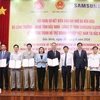
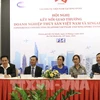
The need for operating emission trading scheme pilot ảnh 1At the training course (Photo: VNA)
Hanoi (VNS/VNA) - As an emission trading system (ETS) will bepiloted next year and officially operated in 2028, a training course has beenheld starting on February 26 in Hanoi to promote understanding of the carbonmarket and ETS for Vietnamese public and private stakeholders.

The two-day conference, which is the first capacity-training in Vietnam and isorganised by the Southeast Asia Energy Transition Partnership (ETP) incooperation with the Department of Climate Change (DCC), Ministry of NaturalResources and Environment (MONRE), targets representatives from ministries,development donors, and financial institutions; with a comprehensive andsystematic training curriculum on ETS and carbon markets using a marketsimulation tool.

The initiative comes at a crucial time as Vietnam is pushing to reduce carbonemissions and making efforts to fulfil its obligations under the ParisAgreement.

“The training programme will contribute to enhancing the understanding ofstakeholders regarding their respective positions and roles in the developmentof Vietnam’s carbon market. In addition, these activities will facilitatecloser collaboration among participants, aiming to establish and effectivelyoperate the market,” said Fritzie Vergel, a representative of ETP.

Mai Kim Lien, deputy director of the Department of Climate Change under theMONRE, emphasised the supportive activities of international organisations inthe development of the Vietnamese carbon market.

"Within the framework of the Memorandum of Understanding between theDepartment of Climate Change and the United Nations Office for Project Services(UNOPS), the ETP programme encompasses various supportive initiatives,” Liensaid.

“One such activity involves the selection and guidance on utilising a systemsimulation tool for greenhouse gas emission allowance trading. This tool aimsto facilitate a deeper understanding among relevant parties regarding thefunctionalities, operational processes, management, and trading of emissionallowances and carbon credits on the trading platform.

“It serves as highly valuable support for stakeholders involved in theestablishment and successful operation of the greenhouse gas emission allowancetrading and carbon credit markets in Vietnam.”

The establishment of a robust ETS plays a pivotal role as stated in the updatednationally determined contribution (NDC) in 2022. By placing a cap on totalemissions and allowing companies to buy and sell credits, ETS introduceseconomic incentives for businesses to reduce their emissions efficiently.

Even though Vietnam is going to pilot an ETS next year, there are manychallenges that remain, said Dang Hong Hanh, co-founder of Energy andEnvironment Consultancy JSC (VNEEC).

“In some countries, they have three to five years of preparation beforepiloting, but we only have one year.”

“There are many new technical and managerial requirements that requiresignificant resources, and numerous legal documents and implementationguidelines need to be issued in 2024.

"This undertaking necessitates strong political commitment and activeengagement from diverse stakeholders. Simultaneous execution of multiple tasksis imperative, alongside the selection of an appropriate scale for the pilotphase."

Moreover, the carbon market is characterised by volatility, necessitatingadaptable policies and ongoing adjustments. However, the policy-making processin Vietnam is time-consuming and involves multiple steps, Hanh added.

The second training course is specifically designed for representatives fromenergy-intensive enterprises, business associations, and media, and will beheld from February 29 to March 1./.
VNA

See more

Vinachem affirms its position as a leading chemical enterprise at the Autumn Fair 2025 (Photo: VNA)

Vietnamese enterprises renew growth model to move up global value chains

The resolution identifies enterprises as the centre of the renewal process, urging them to shift from cost-based competition to productivity, technology, quality and market responsiveness; from operating independently to joining industrial ecosystems; and from participating in value chains to mastering and eventually leading them.

Key export sectors such as textiles – garments, footwear and furniture, along with many signature products of Da Nang, have strong potential to expand their markets through online export channels. (Photo: VNA)

Da Nang seeks to boost online exports

To help businesses go global, Da Nang is shifting from supporting individual online activities to developing an integrated ecosystem covering products, branding, platforms, payments, logistics, legal issues and market information. This is also part of the city’s e-commerce development orientation for 2026-2030, which identifies e-commerce as an important component of the digital economy.

Deputy Minister of Foreign Affairs Le Thi Thu Hang receives Rolf Mutzenich, a member of the Foreign Affairs Committee of the German Bundestag, in Hanoi on August 18. (Photo: baoquocte.vn)

Vietnam welcomes German firms’ expansion

Vietnam welcomes and stands ready to create favourable conditions for German businesses to expand their investment and operations in the country, particularly in infrastructure, smart seaports, renewable energy, high-speed railways, science and technology, and high-quality human resource training.

Khanh Hoa province has the largest sheep population in Vietnam, with around 100,000 individuals. (Photo: VNA)

Khanh Hoa province explores Halal ecosystem development

Khanh Hoa aims to estabish itself as a Halal-friendly destination while supporting businesses in expanding export markets, attracting strategic partners and investors, and drawing projects from countries with strong Halal logistics, tourism, manufacturing, processing and agriculture sectors.

The proportion of Vietnamese goods remains high at supermarkets. (Photo: VNA)

Vietnamese brands win over domestic consumers to go global

Amid increasingly fierce global competition, the goal is no longer simply to increase domestic consumption of Vietnamese goods, but to develop strong Vietnamese brands capable of winning consumers through quality, innovation and added value, thereby creating a stepping stone for expansion into international markets.

Illustrative image (Photo: VNA)

Automated VAT refunds to be rolled out from December

As of August 11, VAT refunds rose 32% from a year earlier, reaching 64.4% of the full-year estimate. Tax authorities issued 11,627 refund decisions totaling 111.726 trillion VND (4.26 billion USD), up 9% by volume. The payouts improved cash flow for companies and supported production, trade and exports.

ST25 rice is the centrepiece of the Vietnam Goods Week at Selgros. (Photo: VNA)

ST25 rice officially enters Selgros wholesale supermarket chain in Germany

The placement of ST25 rice on Selgros shelves not only creates an additional opportunity for German consumers to access Vietnamese rice products, but also contributes to efforts to increase the added value of Vietnamese agricultural products by shifting the focus from volume to quality, branding and value.

Trains on the elevated section of the Cau Giay – Nhon route in Hanoi provide convenient transportation for local residents. (Photo: VNA)

Multimodal connectivity to drive Vietnam’s transport infrastructure

Under the proposed approach, roads would serve mainly as connectors and for first- and last-mile transport; railways would handle large volumes over long distances; maritime transport would serve import and export cargo; inland waterways would carry large volumes at low cost; and air transport would focus on fast delivery and high-value goods.