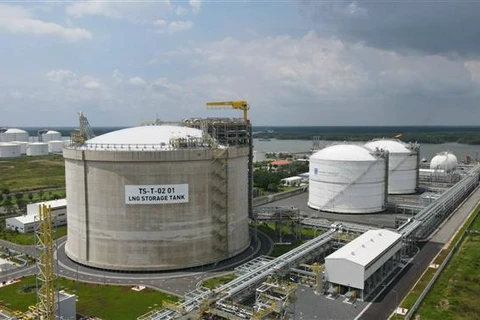
Oil and gas enterprises apply technology to better exploit natural resources. (Photo: VietnamPlus)
 Hanoi (VNA) – Developing renewable energy resources is expected to help Vietnam reach its target of carbon neutrality by 2050, said insiders.
Energy transition, replacing traditional fossil fuel sources to using cleaner and low-emission forms of energy and moving towards carbon neutrality is an important part of Vietnam’s future energy landscape.
Resolution No. 55 of the Politburo dated February 11, 2020 clearly states that ensuring national energy security is an important foundation and premise for socio-economic development.
To realise Vietnam's commitment to cutting emissions to net zero by 2050 announced at the 26th UN Climate Change Conference (COP26) in the UK in 2021, Vietnam's National Power Development Plan to 2045 (PDP VIII) also focuses on a "greener" orientation and development of electricity sources.
According to a report by the Ministry of Industry and Trade (MoIT), Vietnam's energy demand has continued to grow strongly, in which, the primary energy demand in the 2010- 2019 period increased by 6% per year. In the next five years, the annual electricity demand is predicted to grow at about 8.5%.
The ministry and the Electricity of Vietnam (EVN) said that the electricity supply in 2020-2025 will face many difficulties and challenges, especially in the event of extreme weather.
Therefore, using energy economically and effectively is a practical solution to help improve economic efficiency, conserve national energy resources, protect the environment, and reduce greenhouse gas emissions. These will all contribute to minimising the impacts of global climate change.
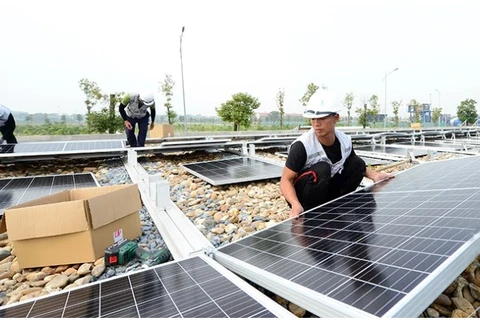
 Photo: EVN’s workers maintain electrical equipment (Photo: VietnamPlus)
 According to Nguyen Anh Tuan, Chairman of the Scientific Council of Vietnam Energy Review, if Vietnam saves approximately 9% of energy by 2030, it will reduce 10 million tonnes of oil equivalent or a 40% reduction in gasoline consumption.
Many businesses operating in textiles and steel production have invested in technology applications to reduce energy consumption and promote sustainable growth.
Pham Cong Thao, Deputy General Director of Vietnam Steel Corporation (VNSteel), said that in the process of reducing emissions, VNSteel prioritises investing in electric furnace technology to replace blast furnaces, and developing new technologies to produce steel from ore without using coke.
In addition, many businesses have also expanded investment in using wind power, solar energy, and green extracted hydrogen to replace LNG, or developing solutions to capture and bury carbon.
Experts said that about two-thirds of the total national emissions come from the energy sector. These include energy used in industrial production, electricity, and transportation. Electricity production alone accounts for 30% of the total emissions of the country.
Bruce Delteil, Managing Director of McKinsey Vietnam, said that renewable energy development will help Vietnam achieve the goal of net zero emissions by 2050.
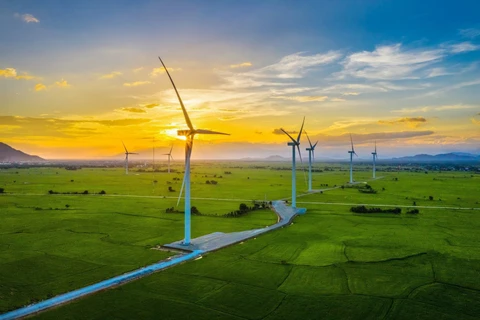
 GE Renewable Energy’s wind turbine (Photo: VietnamPlus)
 Accordingly, Vietnam needs to promote the development of wind and solar power, ensuring that by 2050, the installed wind and solar power capacity will reach about 150GW and 70GW, respectively.
If Vietnam exploits its natural advantages, the country can be a net exporter of renewable energy and become a green hydrogen production hub, Delteil said.
Experts said new electricity sources will have to be produced mainly from renewable energy - such as wind and solar power, wave energy, and power produced from waste and biomass. He added that Vietnam has great potential to develop these on a large scale.
However, they noted that it is necessary to carefully calculate the real potential, thus perfecting the legal system, mechanisms, and policies to develop this power source./.