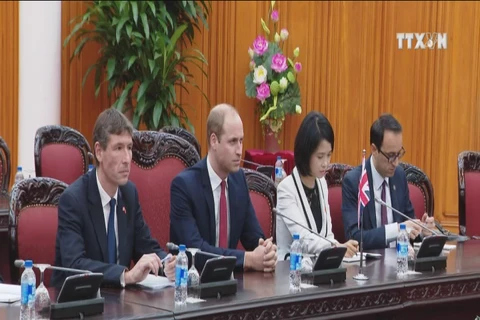
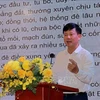
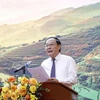
Prince William addresses the conference. (Photo: VNA)
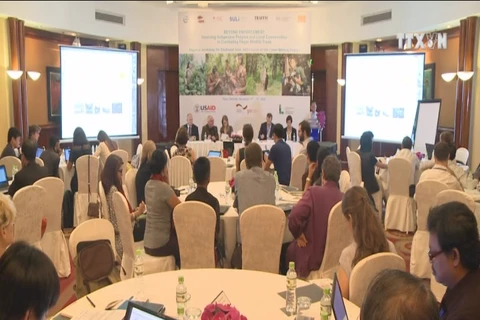
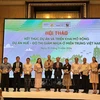
 Hanoi (VNA) – The third International Wildlife Trade Conference opened in Hanoi on November 17 with the participation of 47 countries, the European Union, 7 international organisations and over 40 inter-governmental and non-governmental organisations.
Vietnam’s Vice President Dang Thi Ngoc Thinh; Laos’ Deputy Prime Minister Sonxay Siphandone; the UK’s Duke of Cambridge, Prince William Arthur Philip Louis; and Deputy Secretary General of the UN Yury Fedotov were prominent guests at the event.
Addressing the conference, Vice President Dang Thi Ngoc Thinh emphasized that Vietnam has attached importance to preserving bio-diversity and protecting wildlife, particularly endangered species. The country set up its first nature reserves in the 1960s, and now owns a system of national parks, nature reserves and reserves dedicated to specific endangered species, with a total area of more than 2.2 million hectares.
The Vice President highlighted the fact that during the globalization process, the illegal trade of wildlife is no longer limited to any single country, but has expanded to global scale. The trade involves international crime syndicates, thus threatening the existence of many rare species, causing insecurity and social disorder, undermining efforts towards sustainable development and the UN’s Millennium Goals on environmental protection and human development.
She stressed that if responsible and drastic actions are not taken immediately, many wildlife species will disappear forever, which will leave both direct and indirect impacts on social security, ecological environment and humankind’s safety.
At the same time, the Vice President noted that wildlife protection is a global issue, and no single country or agency can effectively deal with it without a comprehensive cooperative mechanism and high-level commitment to action. She called on the international community to take a multi-faceted approach to the issue, focusing on carrying out synchronous measures from completing legal regulations and institutions, enhancing law enforcement to eliminating illegal wildlife markets, launching campaigns to reduce demand for wildlife products and developing sustainable livelihoods for communities living in nature reserves, while strengthening international cooperation and coordination in those efforts.
Vice President Dang Thi Ngoc Thinh said the conference has a heavy task that is to assess the implementation of issued statements, analyse commitments made by the international community and member country, define challenges and obstacles in the fight against the illegal trade of wildlife.
Countries must turn commitments into actions and an effective mechanism is needed to monitor the illegal trade of wildlife, she said.
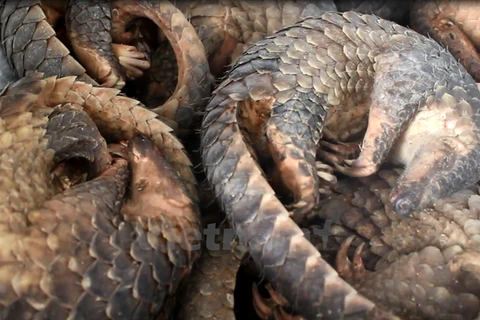
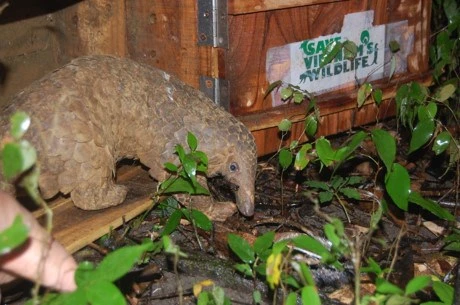
Prince William said despite commitments and efforts made by countries, many challenges remain ahead, the illegal hunt of pangolin, rhino and elephant still continues.
According to him, the question is whether countries, businesses and NGOs have done enough to realise their pledges.
Prince William stressed that better measures and stronger actions are needed to fight crimes of this kind, bring those criminals to justice, including corrupted persons who allow those crimes to take place. Young people should be involved in the fight, for the future of later generations.
UN Deputy Secretary General Yury Fedotov, who is Executive Director of the UN Office on Drugs and Crime, affirmed that countries should promote cooperation, ensure the capacity of judges and security forces to issue proper sentences on criminals of illegal wildlife trade.
He pledged that the UN will provide utmost support to countries in dealing with those crimes.-VNA