Three Vietnamese dishes among best street foods in Asia: CNN

Three Vietnamese signature dishes – "banh mi", "pho", and iced coffee – have been mentioned in a CNN list of 50 of the best street foods in Asia, which is recognised as being just a "small sampling of the region's wonderful food traditions."
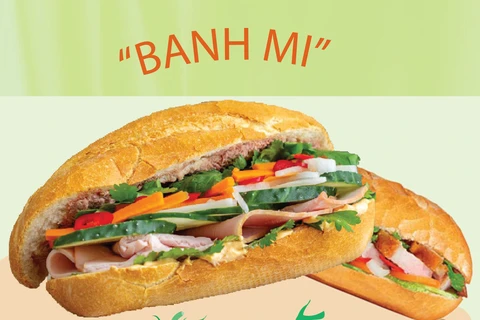
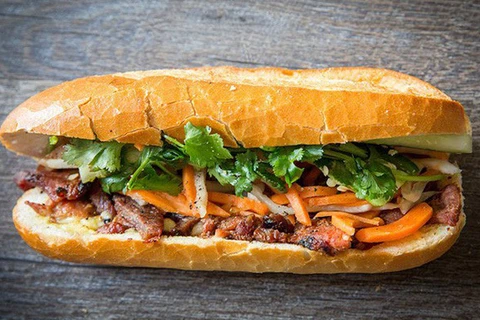
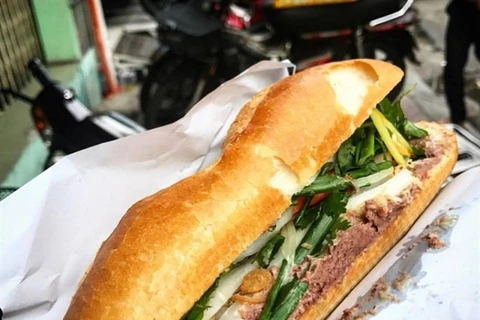
Three Vietnamese dishes among best street foods in Asia: CNN ảnh 1 Banh mi is the Vietnamese food introduced among the 50 must-try, much-loved street foods and beverages in Asia by CNN. (Photo: BBC)

Hanoi (VNA) – Three Vietnamese signature dishes – "banh mi", "pho", and iced coffee – have been mentioned in a CNN list of 50 of the best street foods in Asia, which is recognised as being just a "small sampling of the region's wonderful food traditions."

"The French may have introduced baguettes to Vietnam, but the country's famed 'banh mi' is a uniquely Vietnamese creation," CNN said.

The ingredients of "banh mi" will vary from the North to the South and the East to the West, but the classic combination includes pork, pickled vegetables, coriander, chilli and a healthy smear of pâté sandwiched by a crispy, fluffy baguette.

The sandwich is thought to have first appeared in Sai Gon's alleys in the late 1950s before spreading to the rest of the country and then to the world. Today, one can easily find "banh mi" in street stands, markets, and restaurants worldwide, from New York to Seoul and Australia.

Vietnamese people consider the sandwich a convenient takeaway food, as the main meal or a supplement providing full nutritional value.

Meanwhile, iced coffee is a traditional Vietnamese coffee recipe. It is particularly popular among the youth and office workers who usually start their days with a cup of iced coffee or gather with their friends on plastic stools strewn along the sidewalks in big cities like Hanoi or Ho Chi Minh City.

"Served by street vendors and cafes alike, 'ca phe', as it's known in Vietnam, can be enjoyed many ways – drink it black, with condensed milk, a touch of sugar or mixed with coconut milk," CNN said.

"Sit down, make new friends on a plastic stool, or keep exploring with your chilled refreshment in hand."

According to the American news channel, the third representative of Vietnamese street food on CNN's list is "pho", which few street foods can compete with.

"Roadside stalls and cafes serve up bowl after bowl of this hearty noodle soup, which is known for its aromatic and nuanced broth, springy rice noodles, and tender protein (usually beef or chicken)," it said.

The soup is a national dish found all over the country, though it originated in the north before being taken to the south, where people have added their influences to the dish.

It is typically served alongside a selection of fresh garnishes, like herbs, bean sprouts, lime, chilli sauce, and chilli slices, so gourmets can tailor the noodle soup to their liking.

According to CNN, when it comes to street foods, Asia delivers big on variety and flavour. The vast region sprawls across equatorial tropics, mountain ranges, volcanic islands, and frenetic megacities, so it's no surprise that diversity abounds.

Yet there are many similarities, too. With centuries of migration and trade, many recipes have traversed borders only to become a local speciality thousands of miles from their origin.

Other must-try, much-loved street foods and beverages in Asia mentioned in CNN's list include Chili crab in Singapore, Khao jee (grilled sticky rice patty on a stick with a thin egg coating) in Laos; bubble tea and stinky tofu in Taiwan; Curry fish balls and egg waffles in Hong Kong (China); Kimbap in the Republic of Korea; Takoyaki (octopus balls) in Japan; Crab omelettes and Sai krok Isan (pork sausages) in Thailand; Jalebi (batter fried into swirling shapes) and Vada pav (deep-fried potatoes) in India; and Jianbing (pancake filled with think eggs, spring onions, radishes, chili sauce, and sausage or chicken) in China./.
VNA

See more

An exhibition on "do" paper and recycled materials at Dien Hong flower garden. (Photo: nhandan.vn)

Art reawakens Hanoi's public spaces

Last year, Hanoi saw a surge in both quantity and quality of public art endeavours, a leap forward in the art of breathing new life into urban landscapes

The horse image symbolises resilience, endurance, and spirit of “success upon arrival.” (Photo: VNA)

Horse mascot leaves strong impression at spring fair

A major attraction is a unique “Eight galloping horses” (Bat Ma) sculpture displayed at the To Trinh gemstone booth. Carved from a rare monolithic jade block, the artwork features eight spirited horses racing across golden rice fields. The harmonious blend of pure jade veins and natural golden tones enhances both its aesthetic depth and symbolic meaning, evoking prosperity and abundance associated with Vietnam’s rice civilisation.

Delegates cut the ribbon to launch the 46th Spring Flower Festival at Tao Dan Park. (Photo: VNA)

Festive activities herald Lunar New Year of the Horse

A vibrant array of cultural and media events has been launched across Vietnam to welcome the Lunar New Year of the Horse 2026, highlighting both the country’s enduring traditions and its dynamic socio-economic progress.

A calligraphy booth at the festival (Photo: VNA)

Spring Calligraphy Festival 2026 opens in Hanoi

A central attraction remains the traditional New Year calligraphy request activity, featuring 35 booths staffed by calligraphers selected through a rigorous, transparent evaluation process.

A ritual to welcome new year of Muong people in Phu Tho (Photo: nhandan.vn)

Unique Lunar New Year traditions on display

Each ethnic group brings its own unique Tet customs to the Vietnam National Village for Ethnic Culture and Tourism on the outskirts of Hanoi, creating a rich and colourful cultural mosaic.

Polish Ambassador to Vietnam Joanna Skoczek (R) attends a cultural event in Vietnam (Photo: VNA)

Cultural, people-to-people interactions anchor Vietnam–Poland relations: diplomat

Skoczek also pointed to striking similarities between Vietnam’s Tet and Poland’s Christmas Eve traditions, particularly the emphasis on family reunions, symbolic meals and shared rituals passed down through generations. Despite differences in customs and cuisine, she said the essence of the celebrations remains universal: bringing loved ones together to welcome a new start.

A Tet flower street is held for the first time at the Thang Long Imperial Citadel during the Lunar New Year 2026. (Photo: VNA)

Tet flower street held for first time at Thang Long Imperial Citadel

More than a seasonal attraction, the flower street also functions as a formal cultural venue for receiving ambassadors, their spouses and representatives of diplomatic missions attending the Vietnam Discovery Day 2026 programme. Its linkage with an external event further reinforces the Thang Long Imperial Citadel’s position as a key platform for introducing Vietnam’s cultural identity to international friends.

The recreation of Tien lich (calendar presentation ceremony), an important year-end ritual in which the royal court presented the new calendar for the coming year to the king, within a programme at the Thang Long Imperial Citadel in Hanoi on February 10. (Photo: VNA)

Hanoi recreates Lunar New Year court ritual at Thang Long Imperial Citadel

Organised by the municipal People’s Committee in coordination with the Vietnam National Commission for UNESCO, the programme recreated a range of ceremonial practices once performed in the royal court. These included the Tien lich ritual, in which calendars were formally distributed to the court and the public; the Thuong tieu ceremony featuring the ceremonial New Year pole erected to ward off evil spirits and welcome spring; the ritual release of carp to send the Kitchen Gods to heaven; and the solemn changing-of-the-guard ceremony inside the imperial citadel. Together, the activities helped audiences better understand the cultural, spiritual and ceremonial order of Vietnam’s feudal past.