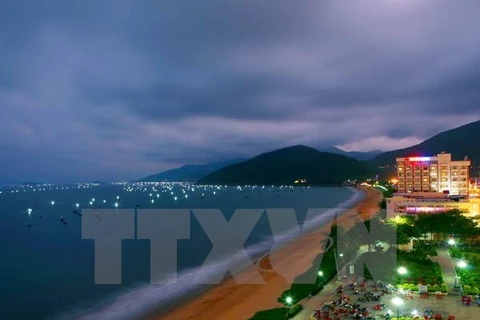
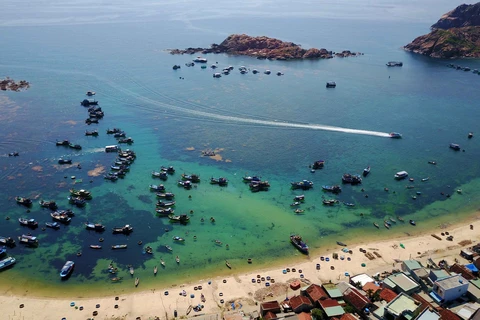
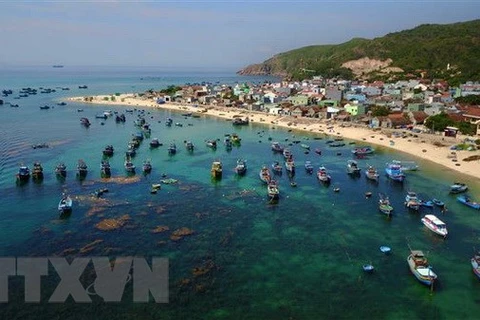
An aerial view of Hon Kho island (Photo: VNA)
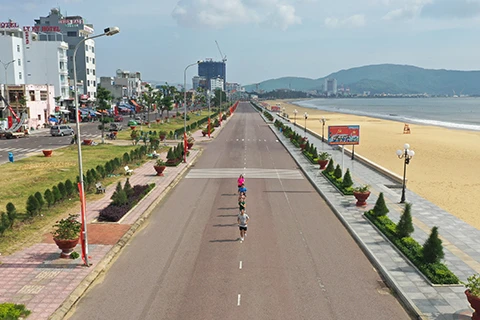
 Hanoi (VNS/VNA) - Provided with beautiful landscapes, long beaches and rich cultural and marine resources, Binh Dinh province is expected to transform into a key destination for both domestic and foreign visitors.
But like some other areas, the province's biggest hurdle in becoming more attractive to tourists is its lack of developed infrastructure.
“Binh Dinh’s tourism sector has been developing less than expected because the infrastructure and facilities are still limited and underdeveloped,” said Nguyen Tien Dat, deputy director of tourism company Transviet.
The underdevelopment of infrastructure connecting different tourism sites has made it hard for visitors to come to the province, according to Ho Quoc Dung, chairman of the provincial People’s Committee.
Provincial authorities and businesses had been focusing on building accommodations for tourists but construction had still not been able to keep pace with demand, Huynh Cao Nhat, director of the provincial Department of Tourism, said.
According to the two officials, the accommodation capacity, especially in quality four- and five-star hotels, has not matched the increase of the number of visitors to the province, particularly in the peak season (summer).
The province can only provide accommodation for 70-75 percent of the total number of people who try to book rooms, so the remainder cannot come.
The lack of unique products and services is also a problem for the province, making tourists unwilling to stay longer and spend more.
The different areas of Binh Dinh province are not connected by quality infrastructure, and there are not many traditional cultural activities for tourists to experience.
The problems faced by the tourism sector in Binh Dinh are also common in other provinces, holding back national development.
In 2018, Vietnam received nearly 15.5 million international visitors, a yearly increase of 20 percent, according to the Vietnam National Administration of Tourism (VNAT). But that figure puts the nation behind Thailand (38 million), Malaysia (26 million), Singapore (18.5 million) and Indonesia (15.8 million).
The average amount spent by international tourists during their stays in Vietnam was 912 USD and the average per-day spending of foreign visitors was 96 USD with the average stay lasting 9.5 days.
The figures are lower than those recorded in neighbouring countries. Thailand recorded average total spending of 1,500 USD and 136 USD daily spending average.
Just 30-33 percent of foreign visitors come back to Vietnam, while the figure in Thailand is more than 60 percent.
According to Hoang Nhan Chinh, head of the Tourism Advisory Board secretariat, four main challenges have hindered the development of Vietnam’s tourism sector.
They are: complex administrative procedures for visas, low competitiveness and sustainability of tourism sites, underdeveloped infrastructure and facilities and ineffective promotion of the Vietnamese tourism to international markets.
“The tourism sector is an inter-regional industry," Chinh told Vietnam News Agency. "But in Vietnam, the connection between regions is not good enough.
“We don’t have an appropriate national policy to develop a sustainable tourism sector and we haven’t lured the attention of private companies to join the overhaul of the industry.
“The Government needs to improve its management of the sector because the VNAT is now torn between the role of managing the sector and the role of organising tourism activities,” he said.
Of the four challenges, visa-related issues are considered a top priority for Vietnamese Government agencies as specialists say resolving those issues may provide a serious boost to the number of international travellers to Vietnam.
Nguyen Tien Dat, deputy director of Transviet, said Indonesia saw its free visas as the main driver of its tourism sector. In the last five years, its move to grant free visas to visitors from more than 160 countries and territories had helped the Southeast Asian country reach record growth of the number of foreign travellers.
“There must be a more flexible visa management regime,” said Nguyen Quoc Ky, chairman cum general director of Vietravel.
Foreign visitors can only stay in Vietnam for maximum 15 days, then they have to exit the country and can only return 30 days later.
“That is the biggest challenge if we want foreign travellers to stay longer in Vietnam,” Ky said.
Chinh said the Tourism Advisory Board conducted a survey that addressed visa issues and other key problems.
Thirty-five percent of the respondents said the visa regulations limited the time they decided to spend in Vietnam.
“The Government should consider raising the maximum visa expiration to 30 days as done by other regional countries,” he said.
“We also need to remove the requirement that forces travellers to stay out of Vietnam for 30 days after their visas expire before coming back.”
“And we have to make sure all information about visa regulations is posted online and is available to foreign travellers,” Chinh said.
Customised and community-based
Apart from changing visa regulations, there need to be customised products and services that meet the requirements of each international visitor, said Phan Ha, director of Luxury Travel Vietnam Co Ltd.
Other areas that need improvement are culture, cuisine, content and community benefits, he said, adding that they could help Vietnam attract visitors willing to spend more for luxury services.
Local authorities must improve their management of local areas and raise awareness of environmental protection among both local people and visitors on environmental protection, said Dat from Transviet.
The Government must find ways to attract private companies to fund tourism development projects, Chinh said. — VNS/VNA
VNA