UPCoM tightens control over listed companies

A new set of regulations will be imposed on companies either looking to be or already listed on the Hanoi Stock Exchange’s (HNX) Unlisted Public Company Market (UPCoM).
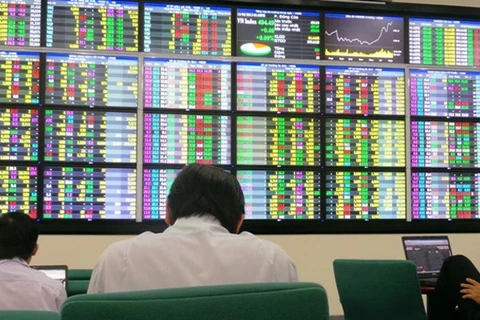
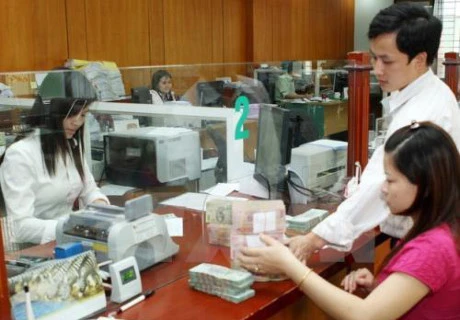
UPCoM tightens control over listed companies ảnh 1HNX employees monitor stock trades in their ​Hanoi office. (Photo: VNA)

Hanoi (VNA) - A new set of regulationswill be imposed on companies either looking to be or already listed on theHanoi Stock Exchange’s (HNX) Unlisted Public Company Market (UPCoM),increasing the level of inspection and monitoring on these entities andpreventing investors from buying unqualified stocks by underperformingbusinesses.

The HNX issued the Decision 455/QD-SGDHN lastweek, which added two more notches to the discipline scales for listed companies.From now on, in addition to the previous penalties of temporary suspension ofstock trade and limitation on traded stocks, two more sanctions in the forms ofan initial reminder and an ultimate permanent ban from trading on the UPCoMwill be applicable for all companies across all categories.

The reason for this new addition for the UPCoM’sregulations is the rapid expansion of the stock market. In less than two yearsfrom December 2015 to June 2017, the amount of listed companies has increased by2.2 times, from 256 to 571 stocks. Market capitalisation is currently 440billion VND (19.6 million USD) and market’s liquidity is now 200 billion VND(8.9 million USD) per session.

As such, the actuality of listed companies onthe UPCoM  has become much more complex, with charter capitals rangingfrom hundreds of thousands dollar to billions of dollar, with huge corporationssuch as the Airports Corporation of Vietnam, the Thermal Power Joint StockCompany in Hai Phong or the Vietnam Steel Corp.

However, this also means the quality of businessentities would fluctuate greatly across categories, from extremely high returnto hinging on the verge of severe loss. Under the situation, it is necessaryfor the authorities to increase the complexity of management and regulations,in order to improve transparency and protect investors on the market, hence theissuance of Decision 455.

Out of the four discipline methods, theslightest which is simply an initial reminder, is used for those who fail topublish their annual or biannual financial reports 30 days later than the HNX’sset date.

The next level of temporary trade suspension fora maximum of five sessions is applied should the company show any of thefollowing anomalies: suspicious fluctuation of stock price and amount traded,failure to publish the company’s annual financial report 45 days later thanrequired and annual general meeting’s minute six months since the end of thefinancial year, as well as withholding any changes in business performance.

The third discipline tier, limitation on stocktrade, is implemented in case the company’s owner’s equity drops below zero,its production ceases for more than one year, its latest financial report spotsany incongruence, its stocks become delisted or the company itself fails toamend the cause of its stocks’ delisting.

The final and most severe discipline method ofstock trade ban is reserved for any company that fails to identify itsheadquarter as the same address given in its business certificate, or anycompany exposed by the HNX and other authorities to have committed frauds intheir trade portfolio including false information affecting investors’decisions and violation of information disclosure regulations on the stockmarket.

Most recently, on June 28, 2017, the HNXannounced limitations on stock traded for seven companies on the UPCoM, inwhich they are only allowed to be traded during the weekly Friday session witha total amount of 91.2 million stocks, which equals to 912 billion VND (40.6million USD).

The HNX said they would allow these companies, whose stock codesare listed as PPG, TNM, MCI, MMC, DCI, PXI and HBI, to resume normal trading assoon as they fix the cause of their failure to publish the relevant informationregarding their company performance and financial reports.

Furthermore, the decision added to the existingregulations on stock price fluctuation to handle special cases in which newlylisted stocks’ referential price is the same as its ceiling and floor prices,or when the referential price is as small as 100 VND (0.004 USD).-VNA
VNA
See more

Activities in Chan May Bay, part of the Chan May–Lang Co Economic Zone in Hue city. (Photo: VNA)

Hue steps up investment drive in Chan May–Lang Co Economic Zone

Covering more than 27,000ha, the Chan May–Lang Co Economic Zone is emerging as a key economic, urban, industrial and eco-tourism centre in southeastern Hue, with functional areas dedicated to seaports, industry, non-tariff activities, urban development and tourism.

The Ministry of National Defence's inter-agency inspection team visits La Gi Fish Port in Phuoc Hoi ward, Lam Dong province. (Photo: VNA)

Lam Dong's IUU fishing prevention efforts inspected

According to the Lam Dong provincial IUU Fishing Prevention Steering Committee, all 8,177 fishing vessels measuring at least 6 metres in length have been registered and updated in the national fisheries database VNFishbase.

A member of Minh Quang Cooperative in Hung Yen province works on a farm. (Photo: VNA)

Vietnam aims to link half of farm cooperatives with enterprises by 2030

The Ministry of Agriculture and Environment will promote links between cooperatives, enterprises, science and technology organisations and other economic entities along with carrying out programmes to develop concentrated agricultural, forestry and fisheries raw material areas and enhance value chain production.

The night-time economy is increasingly seen as an important avenue for Vietnam’s tourism sector to extend visitors’ stays (Photo: VNA)

Revitalising growth momentum for night-time economy

The night-time economy has moved beyond being merely an add-on service to become a new growth driver for tourism. Night-time activities can “awaken” familiar heritage spaces and breathe new life into them. Art, light and music experiences after dark can create distinctive attractions while meeting the desire of middle- and high-end visitors to explore cultural depth.

A livestream session promotes green-skinned pomelos grown in Cho Lach commune, Vinh Long province. (Photo: VNA)

E-commerce reshapes rules of game

Once fixed fees, payment fees, infrastructure charges and service packages are included, sellers may have to spend around 24.5-27.6% of their revenue on platforms. The figure shows that the era of easy selling and low costs in e-commerce has officially come to an end.

Ho Chi Minh City targets third-quarter growth of over 11% (Photo: VNA)

Ho Chi Minh City targets third-quarter growth of over 11%

Ho Chi Minh City will continue to implement drastic measures to achieve double-digit growth, targeting GRDP growth of at least 11.07% in the third quarter of 2026, 9.43% in the first nine months and 12.3% in the fourth quarter, with a view to completing the full-year goal of 10% or more.

MM Mega Market An Phu supermarket in Ho Chi Minh City is brightly decorated for the National Day holiday. (Photo: VNA)

Domestic consumption up over 13%, tourism continues strong growth

The total retail sales of goods and consumer service revenues in August were estimated at 679.8 trillion VND (26 billion USD), up 1.6% from the previous month and 14.9% year-on-year. In the January-August period, the figure reached 5.24 quadrillion VND, representing a 13.3% increase year-on-year.

A production line of Onaga Co., Ltd. (Japan) at HANSSIP (Photo: nhandan.vn)

Hanoi moves to maintain appeal to FDI inflows

In the first eight months of 2026, the capital city attracted more than 3.7 billion USD in FDI, equivalent to 83% of the plan set for the year. Newly registered FDI exceeded 572 million USD across 450 projects, up 175.78% in project numbers and 209.46% in capital compared to the same period last year. Additional registered capital topped 492 million USD, while capital contributions and share purchases exceeded 2.6 billion USD.

Saigon Marina IFC is the first private-sector project contributing to realising the goal of developing the Vietnam International Financial Centre in Ho Chi Minh City. (Photo: VNA)

VIFC offers various opportunities to attract forein investment

Turning the VIFC into an effective channel for international capital will require clear rules, quality projects and strong connections between investors and domestic businesses. Meeting these requirements will be key to transforming investor interest into concrete capital flows and investment projects in Vietnam.

Production line at Yadea Vietnam’s smart manufacturing plant, which has an investment of more than 100 million USD, in Tan Hung Industrial Park, Bac Ninh province. (Photo: VNA)

Development model for new era – An inevitable trend

International organisations broadly agree that shifting the growth model from reliance on traditional factors toward technology and innovation is no longer an option for Vietnam, but an imperative of the times.

At a commune administrative service centre in Hung Yen province (Photo: VNA)

Government determined to cut administrative procedures to drive double-digit growth

Resolution No. 258/NQ-CP, dated August 31, 2026, calls for substantive and comprehensive reform, with a focus on maximum cuts and simplification of administrative procedures and business conditions. It also seeks to shift management from pre-licence inspection to post-licence inspection based on risk management, while strengthening real-time, data-driven oversight and putting people and businesses at the centre of public services.