Urban railways help cut greenhouse gas emissions: JICA survey

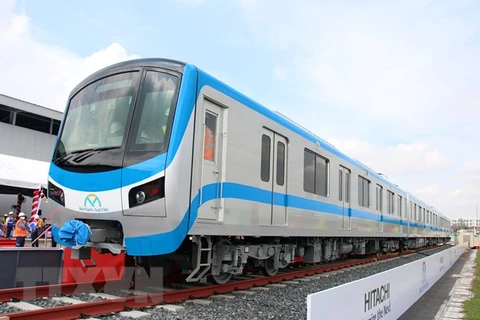
Urban railways are an effective means of transport that will help cut greenhouse gas emissions in Hanoi and HCM City, which have both experienced serious air pollution in recent years, according to a survey by the Japan International Cooperation Agency (JICA).
Urban railways help cut greenhouse gas emissions: JICA survey ảnh 1At the workshop (Photo: VNA)

Hanoi (VNA) -
Urban railways are an effective means of transport that will helpcut greenhouse gas emissions in Hanoi and HCM City, which have both experiencedserious air pollution in recent years, according to a survey by the JapanInternational Cooperation Agency (JICA).

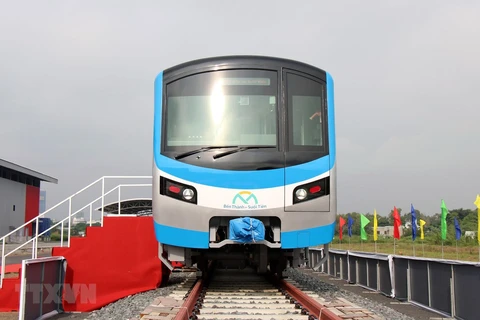
The survey was conducted from February 2019 to September 2020 regarding Hanoi’smetro lines No 1 and No 2 and HCM City’s metro line No 1, which are being builtusing Japanese ODA, and was released at a workshop in Hanoi on October 23.

JICA experts estimate that Hanoi’s metro lines have the potential to lowercarbon emissions by more than 94,000 tonnes per year, while the southern hub’sline may contribute a 56,877-tonne reduction each year.

JICA Chief Representative Murooka Naomichi said he hopes the survey will helpraise public awareness about the importance of metro lines in major cities likeHanoi and HCM City.

Along with satisfying local people’s travel demand, metro lines also contributeto realising Vietnam’s target of reducing greenhouse gas emissions by 9 percentby 2030 compared to the Business-As-Usual Scenario under the updated NationallyDetermined Contribution (NDC), which was recently submitted to the UN FrameworkConvention on Climate Change, he said.

At the workshop,Director of the Ministry of Transport’s Department of Environment Tran AnhDuong spoke highly of JICA’s support, adding the survey will be used tocomplete the transport sector’s measurement system.

According to a recent interview, 81 percent of people living along HCM City’smetro line No 1 and 66 percent of those along Hanoi’s metro line No.1 said theyare willing to change from their usual means of transport and take the train./.
VNA
See more

Zambia's Minister of Agriculture Reuben Mtolo Phiri (first, left), learns about the OM19 rice variety grown at Tien Thuan cooperative in Thanh Quoi commune,, Can Tho city (Photo: VNA)

Can Tho shares agricultural transformation experience with Zambia

Rice production remains Can Tho’s key industry. Alongside maintaining production, Can Tho has encouraged value chain linkages among farmers, cooperatives and businesses, while accelerating the application of science and technology, mechanisation and digital transformation in farming.

Staff members of the Hanoi Public Administrative Service Centre handle administrative procedures for local residents. (Photo: VNA)

Hanoi: 95% of administrative procedures to be handled from home

The plan targets that at least 80% of administrative procedures under the city’s authority will be provided as fully online public services, while more than 95% of applications will be received and processed entirely online. By June 30, 2026, about 80% of administrative procedures are expected to be restructured based on integrated data systems, with the figure rising to 95% by the end of the year.

Delegates at the SEAN Future Forum NextGen Workshop 2026 held in Jakarta, Indonesia on March 9 (Photo: VNA)

Vietnam contributes youth perspectives to AFF NextGen initiative

The ambassador expressed confidence that fresh perspectives, innovative thinking and lessons drawn from the workshop will be proposed to AFF 2026, representing the voice of the younger generation in shaping ASEAN’s future in line with their aspirations.

A young volunteer donates blood during the 2026 Red Sunday programme. (Photo: VNA)

Nearly 5,000 people join blood donation campaign in Ho Chi Minh City

According to health authorities, Vietnam collected nearly 1.75 million units of blood in 2025, with 98% from volunteer donors, equivalent to around 1.75% of the population participating in blood donation. Large-scale campaigns such as Red Sunday have played a key role in achieving these results.

More than 30 kilogrammes of various drugs trafficked from Cambodia to HCM City were seized in a police operation in March 2025. (Photo: VNA)

Ho Chi Minh City aims to become drug free by 2030

Every commune, ward or residential area in Ho Chi Minh City is expected to meet official drug-free standards by the end of 2029, while schools, hospitals, government offices, businesses and social organisations across the city are to remain free of drug activity.

Military forces take a resident from a flooded area. Photo: VNA

Da Nang, Oxfam join hands to support flood victims

In the coming time, the Da Nang Red Cross Society will continue to coordinate with Oxfam to implement support activities in Nong Son commune, helping residents overcome difficulties and stabilise their livelihoods.

Training on response to reservoir incidents (Photo: VNA)

Central Civil Defence Fund established to bolster disaster response

The Central Civil Defence Fund is authorised to receive, manage and use voluntary contributions from domestic and foreign entities and individuals, plus transfers from provincial civil defence funds in line with the PM’s decisions and allocations from relevant state financial sources outside the state budget, all earmarked for incident and disaster response and recovery efforts.