Prime Minister Nguyen Xuan Phuc (C) chairs an online meeting between the Government and the National Steering Committee for COVID-19 Prevention and Control. (Photo: VNA)
Hanoi (VNA) - Vietnam was a bright spot in 2020 for its success in controlling the COVID-19 pandemic, protecting people’s health and maintaining stable economic development in the context of the world struggling to cope with the crisis.
Europe, the US, and many other regions and countries were still facing difficulty controlling the pandemic at the end of the year, with the number of infections and deaths constantly rising.
According to the Ministry of Health’s General Department of Preventive Medicine, Vietnam has experienced four COVID-19 outbreaks.
The first was detected on January 23. As of December 24, the country confirmed 1,433 COVID-19 patients, including 693 community infections.
Vietnam has worked hard to effectively respond to community infection throughout the four outbreaks of the disease, especially the one in the central city of Da Nang in late July that spread to nearby localities.
Entire political system fights COVID-19
The entire political system, relevant sectors, agencies, and localities quickly joined in the effort and remained steadfast in control measures: prevention, detection, quarantining, zoning, and stamping out to effectively respond to the disease.
With the motto “fighting COVID-19 is like fighting the enemy”, the army, police, and health forces worked together to form concentrated quarantine areas, tightly controlled cross-border travel via small trails to ensure the timely detection of cases, and zoned, quarantined and stamped out the outbreak immediately.
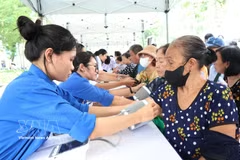
The prevention and control of COVID-19 was actively supported by people nationwide.
Vietnam has recorded 35 COVID-19-related fatalities so far. All died due to serious underlying diseases. It is considered to have successfully controlled the pandemic.
The outbreaks have all been brought under control, with no cases of infection in the community. Imported cases were immediately quarantined upon arrival.
The country is making every effort to complete the “dual goals” of pandemic prevention and economic recovery.
Deputy Prime Minister Vu Duc Dam emphasised that this success is thanks to the leadership of the Party and the participation of the entire political system and the people.
Successfully treating “super difficult” cases
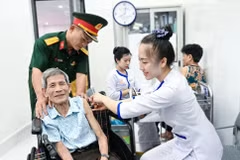
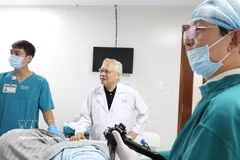
Most COVID-19 cases in Vietnam have been successfully treated, while the number of fatalities accounted for a small percentage. The National Hospital for Tropical Diseases has treated most COVID-19 patients in the country, including those in serious condition.
In the first and second outbreaks, there were a number of seriously ill patients, some on the verge of death. Finally they all recovered, with the most outstanding cases being Patients 19 and 91.

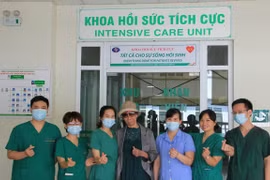
Patient 91 and representatives of the British Consulate General in Ho Chi Minh City and nurses and doctors on the day of discharge. (Source: VNA)
Patient 91 is a male British pilot who underwent treatment for a record 116 days.
Medical experts said he was a very special case, with rapid and complex disease progression. He experienced critical periods, and at one time his lung capacity fell to only 10 percent.
Doctors from the Hospital for Tropical Diseases and the Cho Ray Hospital in HCM City and leading medical experts in Vietnam worked together to develop the best possible treatment for the patient.
He was discharged from hospital on July 11 and returned home in fairly good health.
Meanwhile, Patient 19 underwent 87 days of treatment at the National Hospital for Tropical Diseases. She had three cardiac arrests, with the longest being 40 minutes, and was in critical condition many times. She was treated with continuous ECMO (extracorporeal membrane oxygenation) therapy for 17 days to filter her blood.
Deputy Minister of Health Nguyen Truong Son said the Treatment Subcommittee under the National Steering Committee for COVID-19 Prevention and Control has adopted many initiatives, applied modern scientific solutions, and exerted every effort to treat COVID-19 patients, contributing to minimising the death toll and cross-infection in medical examination and treatment facilities.
The rate of recovered patients was 96.4 percent, he noted.
Professor and Dr Luong Ngoc Khue, Director of Medical Examination and Treatment Administration at the Ministry of Health, said that one of the crucial factors contributing to the success in treating COVID-19 patients in Vietnam was the rational organisation of treatment for patients in health facilities from communal to central levels.
The health sector regularly updated diagnostic and treatment guidelines, as recommended by the World Health Organisation (WHO), and the treatment experience of countries around the world.
Made-in-Vietnam COVID-19 vaccines
In addition to the achievements of the health sector in prevention and treatment, Vietnam quickly succeeded in isolating the new coronavirus strain (SARS-CoV-2) in February, becoming one of the first countries in the world to cultivate the virus.
It also successfully researched and manufactured SARS-CoV-2 test kits and diagnostic reagents for the virus.
Notably, the Ministry of Health directed domestic manufacturers to strengthen research activities towards producing vaccines for COVID-19 prevention and drugs for treatment.

Deputy Prime Minister Vu Duc Dam visits a case of clinical trial of made-in-
Vietnam has four manufacturers who are studying and producing COVID-19 vaccines: Polyvac and the Institute of Vaccines and Medical Biologicals (IVAC), Vaccine and Biological Production No.1 (VABIOTECH), the Centre for Research and Production of Vaccines and Biologicals (POLYVAC), and the Nanogen Pharmaceutical Biotechnology JSC (NANOGEN).
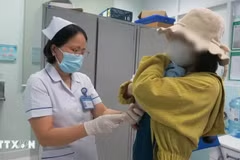
As of the end of December, NANOGEN had carried out a trial of its anti-COVID-19 vaccine Nano Covax on humans. This is the first vaccine made in Vietnam that has completed the research process and achieved high efficiency in the trial.
It promises to be the first “Made-in-Vietnam” vaccine to be released in the market.
Deputy Prime Minister Vu Duc Dam affirmed that the successful production of the vaccine is a pride of not only the scientific community but also the health sector.
He also underlined the importance of continuing disease prevention and control measures.
Health Minister Nguyen Thanh Long estimated that over 70 percent of the population must be vaccinated to ensure community immunity./.