The Mekong Delta region, having earned the monikers of the rice bowl, fruit and seafood basket of the country, and following the restructuring of administrative units, is now standing at the threshold of becoming a modern, sustainable industrial centre.
Nearly 18,000 enterprises with registered capital of 172.5 trillion VND (6.6 billion USD) and 93,600 workers were established in Vietnam in October this year, according to the National Statistics Office.
Resolution 42, enacted in 2017 to pilot bad debt settlement for credit institutions, was introduced in response to a sharp rise in non-performing loans (NPLs). It empowered credit institutions to seize and liquidate collateral assets, expediting debt recovery. After more than six years of implementation, the resolution delivered certain results but expired last year.
New orders increased for the second consecutive month, and at a much faster pace than in September. The rate of expansion was the quickest since July 2024, reflecting improved customer demand.
With the current recovery momentum, the trade and services sector is expected to continue being a bright spot in Q4, driving GDP growth and ensuring a balance between domestic consumption and exports amid ongoing global economic fluctuations.
Vu Van Chung, deputy director of the agency, said Asian countries remain Vietnam’s largest investment partners, with more than 35,600 valid projects and total registered capital of 402 billion USD, accounting for nearly 80% of total FDI inflows into the country.
Singapore’s The Business Times noted that the Vietnamese Government is intensifying investment efforts to advance ambitious reform agendas and realise its growth objectives for 2026.
Running from November 5–11, CCS 111 focuses on advancing service liberalisation and facilitation in ASEAN by removing barriers, enhancing transparency, reducing policy risks, and simplifying administrative procedures to enable businesses and service providers to operate more efficiently.
The Government of Vietnam on November 6 updated the World Trade Organisation (WTO)’s Committee on Rules of Origin (CRO) on adjustments to the agencies and organisations authorised to issue certificates of origin (C/O), as well as on the application of QR codes in the C/O issuance process.
SemiExpo Vietnam 2025, themed “Powering Vietnam’s Semiconductor Ambition,” brings together around 5,000 delegates and feature 200 booths from major global technology corporations such as Lam Research, Coherent, Qorvo, Amkor, GlobalFoundries, Micron, Tokyo Electron, KLA, STMicroelectronics, Soitec, and Siemens.
Hanoi will open an online store showcasing Hanoi's products on the e-commerce platform Shopee. It will introduce digital tools such as electronic signatures, e-contracts, e-invoices, and product traceability systems for local producers and businesses participating in the booth.
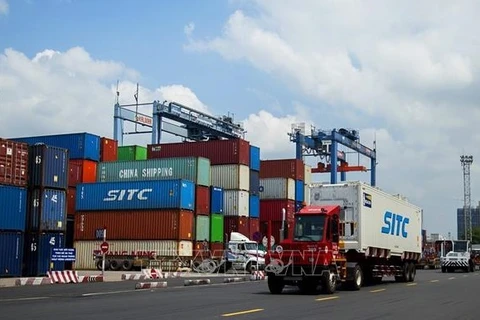
China, the US, the Republic of Korea (RoK), and Japan continued to be Vietnam’s major import markets, offering strong potential for export acceleration in the remaining months of the year.
Despite the obstacles, Vietnam is moving in the right direction. If executed effectively, the IFC could become a strategic step toward Vietnam’s goal of achieving high-income status by 2045.
Implementing ESG is essential for businesses of all sizes to remain resilient amid rapid market shifts. Those who commit early to sustainable and responsible practices will gain stronger positions in global value chains.
The delegation, comprising leading British offshore wind enterprises, carried out a five-day programme in HCM City and Hanoi to study the market, connect with potential partners, and promote clean energy cooperation.
The State Bank of Vietnam set the daily reference exchange rate at 25,103 VND/USD on November 7, up 3 VND from the previous day.
Sustainable consumption is not simply a social trend but a vital requirement for Vietnam’s deeper international integration and sustainable development.
Vietnamese enterprises have set records across multiple areas, demonstrating strong export momentum that not only expands trade but also reinforces Vietnam’s position in global supply chains.
The Vietnamese stock market experienced a widespread decline on November 6, marked by weak demand and cautious investor sentiment.
The Vietnam Innovation Summit, an annual international forum organised by InnoLab Asia, not only discusses policy and trends but also serves as a global bridge, bringing knowledge, resources, and cooperation opportunities from advanced innovation ecosystems worldwide to Vietnam.