Column of smoke from a factory in HCM City (Photo: VNA)
 Hanoi (VNA) – Vietnam has actively implemented the Montreal Protocol and measures to reduce greenhouse gas (GHG) emissions to preserve the ozone layer, earning international recognition, said Deputy Minister of Natural Resources and Environment Le Cong Thanh.
The official made the statement on the occasion of the International Day for the Preservation of the Ozone Layer 2018 (September 16).
He noted that Vietnam completely eliminated the use of chlorofluorocarbon (CFC), Halon and CTC in 2010 and ended the use of HCFC-141b in Styrofoam production in 2015, thus meeting the requirement of cutting HCFCs consumption by 10 percent.
The country is working to get rid of other HCFC compounds in a bid to bring the figure up to 35 percent.
In addition, the use of Methyl Bromide has been banned in Vietnam since 2015, except for the examination of imported goods in the country.
In accordance with the revised version of the Montreal Protocol, developing countries, including Vietnam, will begin to phase out the use of HFC from 2029 and keep the consumption rate at only 20 percent from 2045.
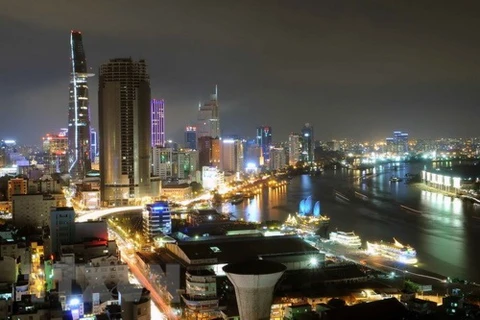
Ho Chi Minh City, as the nation’s leading economic hub with rapid urbanisation rate and population growth, is facing environmental challenges and rising GHG emissions.
Meanwhile, awareness of businesses and people on the issues remain limited, said Nguyen Thanh Thuy from the Vietnam Academy of Social Sciences.
Report of the Japan International Cooperation Agency (JICA) showed that HCM City released about 38.5 million tonnes of carbon dioxide in 2013, or 16 percent of the country, while its population only accounts for nine percent. GHG emissions of the city stand among the world’s highest level.
To control GHG emissions, the city has encouraged programmes applying clean and environmentally-friendly technologies.
Notably, HCM City signed a cooperation agreement with Japan’s Osaka city in the 2016-2020 period, along with a memorandum of understanding in 2013 on low carbon city development.
Osaka launched two Joint Crediting Mechanism (JCM) projects providing equipment for HCM City in 2015.
Besides, the city has invested in clean fuel vehicles to reduce emissions in transport, with about 840 vehicles running on compressed natural gas (CNG).
In 2018, the city will implement the extended phase of the Project to Support the Planning and Implementation of NAMAs in a MRVable Manner (SPI-NAMA), with the support of JICA.
Furthermore, it will devise projects to lower GHG emissions in 10 fields of urban planning, energy, transport, industry, water management, waste management, construction, health, agriculture, and tourism.-VNA
The official made the statement on the occasion of the International Day for the Preservation of the Ozone Layer 2018 (September 16).
He noted that Vietnam completely eliminated the use of chlorofluorocarbon (CFC), Halon and CTC in 2010 and ended the use of HCFC-141b in Styrofoam production in 2015, thus meeting the requirement of cutting HCFCs consumption by 10 percent.
The country is working to get rid of other HCFC compounds in a bid to bring the figure up to 35 percent.
In addition, the use of Methyl Bromide has been banned in Vietnam since 2015, except for the examination of imported goods in the country.
In accordance with the revised version of the Montreal Protocol, developing countries, including Vietnam, will begin to phase out the use of HFC from 2029 and keep the consumption rate at only 20 percent from 2045.
Ho Chi Minh City, as the nation’s leading economic hub with rapid urbanisation rate and population growth, is facing environmental challenges and rising GHG emissions.
Meanwhile, awareness of businesses and people on the issues remain limited, said Nguyen Thanh Thuy from the Vietnam Academy of Social Sciences.
Report of the Japan International Cooperation Agency (JICA) showed that HCM City released about 38.5 million tonnes of carbon dioxide in 2013, or 16 percent of the country, while its population only accounts for nine percent. GHG emissions of the city stand among the world’s highest level.
To control GHG emissions, the city has encouraged programmes applying clean and environmentally-friendly technologies.
Notably, HCM City signed a cooperation agreement with Japan’s Osaka city in the 2016-2020 period, along with a memorandum of understanding in 2013 on low carbon city development.
Osaka launched two Joint Crediting Mechanism (JCM) projects providing equipment for HCM City in 2015.
Besides, the city has invested in clean fuel vehicles to reduce emissions in transport, with about 840 vehicles running on compressed natural gas (CNG).
In 2018, the city will implement the extended phase of the Project to Support the Planning and Implementation of NAMAs in a MRVable Manner (SPI-NAMA), with the support of JICA.
Furthermore, it will devise projects to lower GHG emissions in 10 fields of urban planning, energy, transport, industry, water management, waste management, construction, health, agriculture, and tourism.-VNA
VNA