Vietnam contributes to dynamic, prosperous Mekong sub-region

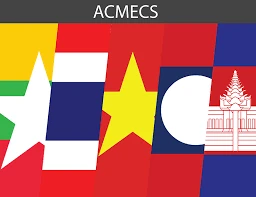
Vietnam has been making practical contributions to turning the Mekong sub-region into a dynamic and prosperous economic area via CLMV and ACMECS cooperation framework.
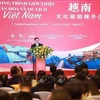
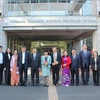
Vietnam contributes to dynamic, prosperous Mekong sub-region ảnh 1Vietnam participates in ACMECS Ministerial Forum on Responsible Tourism (Source: VNA)

Hanoi (VNA) – Vietnam has been making practical contributions to turning the Mekong sub-region into a dynamic and prosperous economic area via CLMV and ACMECS cooperation framework, Deputy Prime Minister and Foreign Minister Pham Binh Minh has affirmed.

As the 8th Cambodia-Laos-Myanmar-Vietnam Summit (CLMV-8), the 7th Ayeyawady-Chao Phraya-Mekong Economic Cooperation Strategy Summit (ACMECS-7) and the World Economic Forum on Mekong (WEF-Mekong) are taking place in Hanoi on October 25-26, the Deputy PM wrote an article on the CLMV and ACMECS cooperation frameworks.

According to Minh, Vietnam, as the east gateway of the Mekong sub-region, is an indispensable component of the East-West Economic Corridor and the South Economic Corridor.

The country has proactively proposed and implemented many ideas, contributed to the drafting of numerous important documents, and promoted initiatives for the sub-region’s development, while providing development assistance to other countries in the region, including assistance in terms of human resources and infrastructure.

In the CLMV framework, Vietnam has created a CLMV scholarship fund which offers dozens of scholarships to students from Cambodia, Laos and Myanmar each year. The programme is appreciated by beneficiary countries which have recommended extending it during 2016-2020.

Vietnam acts as a coordinator in many fields in both CLMV and ACMECS frameworks and has implemented many practical activities helping promote comprehensive cooperation among countries.

Well aware of the importance of the sustainable use of natural resources in Mekong river basin, Vietnam actively promoted cooperation on environment and management of water resources. Vietnam is the first country to raise the idea of establishing a working group on environment within the framework of ACMECS and currently is a co-chair of the group.

In 2016, Vietnam hosted several meetings of specialised working groups and senior officials of the CLMV and ACMECS. The country undertook a number of improvements to help the working groups to be more professionally organised and coordinate more smoothly, which is welcomed by CLMV and ACMECS member nations.

The ACMECS-7 and the CLMV-8 in Hanoi, which have the theme of “Towards a dynamic and prosperous Mekong sub-region: Seizing opportunities, shaping the future”, will provide an occasion for leaders to review the implementation of approved action plans and reach consensus on cooperation measures to improve competiveness of economies, promote regional integration and respond to common challenges, for the Mekong sub-region’s future of peace and prosperity.

Deputy PM Minh affirmed his belief that with the determination and efforts from the member countries, the two events will open up a new chapter for Mekong sub-region cooperation and contribute greater to sustainable development and prosperity in the region.

On the occasion, at Vietnam’s initiative, the World Economic Forum on Mekong region (WEF Mekong) will be organised for the first time alongside the CLMV8 and ACMECS7 to promote the region’s potential to the international business community.

The conference also promises to gather creative ideas and bring about cooperation opportunities between world-leading corporations and prestigious enterprises in the region, thus attracting investment capital for infrastructure, human resources and connectivity.

An overview of CLMV and ACMECS history

With the goal of closing the development gap between members of the Association of South East Asian Nations (ASEAN), particularly between the CLMV and the other six members, and facilitating the integration of CLMV into the developing course of the region, on November 28, 2004, leaders of Cambodia, Laos, Myanmar and Vietnam organised the first CLMV Summit in Laos.

The conference passed the Vientiane Statement on Boosting Economic Cooperation and Integration among CLMV with main sectors selected for cooperation being trade-investment, agriculture, industry, transport, tourism and human resources development.

The CLMV is an open mechanism, which aims to optimise the potential and advantages of each member country while serving as a channel to call for financial and technical support from other ASEAN countries and development partners.

The CLMV is also a forum for member countries to coordinate their viewpoints to protect their own interests in the process of economical integration in the ASEAN as well as between ASEAN and partners outside the region such as the US, China, Japan, the Republic of Korea and the European Union.

Meanwhile, the ACMECS was set up by Cambodia, Laos, Myanmar, Thailand and Vietnam with the ultimate goal of ensuring peace, stability, and prosperity. The main goal of ACMECS is to improve competitiveness and promote economic growth in border areas, promote agriculture and industry, create more jobs and narrow income gap between countries.

The ACMECS cooperation focuses on eight fields, which are trade-investment, agriculture, industry-energy, transport, tourism, human resources, health and the environment.

After 13 years of operation, the CLMV and ACMECS cooperation has contributed to strengthening a peaceful and stable environment in the region, promoting economic, trade and investment ties among member countries and narrowing development gap in the ASEAN.

Thanks to extensive economic reforms and efforts in liberalising and facilitating trade and investment, the Mekong region has become a dynamic development region and an important driving force for ASEAN’s growth.

The highlight of the CLMV and ACMECS cooperation is to aim for specific results with outstanding projects and programmes being many new roads in the East-West Economic Corridor and the South Economic Belt, and many bilateral and multilateral agreements on transport, customs and immigration procedures, and scholarships.

The CLMV and ACMECS are also important mechanisms for Mekong countries to coordinate efforts to cement trust and hold dialogues to seek solutions to common challenges like water resources, climate change and diseases based on the harmony of interests of all sides.

According to Deputy PM Minh, the CLMV and ACMECS cooperation still has great potential for improvement, with the immediate requirements of renewing the forms of partnership and selecting appropriate priority cooperation fields which should suit the situation and needs of each member country.-VNA
VNA

See more

Prime Minister Le Minh Hung chairs the working session with the Standing Board of the Hanoi Party Committee on June 11. (Photo: VNA)

Prime Minister urges Hanoi to target higher growth, become leading innovation hub

The PM emphasised that Hanoi must achieve its 11% growth target for 2026 through comprehensive solutions and regular reviews of growth scenarios. He called on the city to unlock growth potential in processing, manufacturing, trade, services, finance, banking, insurance, transport, logistics, construction and real estate, while controlling inflation and market stability.

Party General Secretary and State President To Lam addresses the conference. (Photo: VNA)

Top leader calls for better quality of institutional development

Party General Secretary and State President Lam underscored the need for a new mindset that places judicial reforms within a unified rule-of-law framework: good law-making, strict law enforcement, an honest judiciary, safeguarded justice, controlled power, protected human and citizens’ rights, and national development supported by a transparent, effective and coherent institutional system.

A damaged road is seen following the earthquake near General Santos City, the Philippines, on June 9, 2026. (Photo: Xinhua/VNA)

Messages of sympathy sent to Philippines over losses caused by earthquake

General Secretary of the Communist Party of Vietnam Central Committee and State President To Lam, and Prime Minister Le Minh Hung on June 11 sent messages of sympathy to Philippine President Ferdinand Romualdez Marcos over great losses of life and property caused by a recent earthquake in the southern Philippines.

Vietnamese Deputy Prime Minister Le Tien Chau delivers a speech at the 31st Future of Asia Conference in Tokyo on June 11 (Photo: VNA)

Vietnam proposes three Asian cooperation orientations

Drawing on Asia’s development journey, Vietnamese Deputy Prime Minister Le Tien Chau distilled three lessons: resilience as the bedrock of sustainable development, cooperation as the engine of a stable and open future, and reform and innovation as essential catalysts for economies adapting to a fast-changing era.

☕ Afternoon briefing on June 11

☕ Afternoon briefing on June 11

A national conference disseminating and implementing Politburo Resolution No. 06-NQ/TW, the launch of the 14th national red journey blood donation campaign, and the 2026 national high school graduation examination are among news highlights on June 11.

Dr. Gnel Rattha, President of the Cambodia – Russia Business Association and an expert in geopolitics and international economics, grants an interview to the Vietnam News Agency. (Photo: VNA)

Cambodian expert hails AFF 2026 as milestone in multilateral party diplomacy

AFF 2026 is a testament to Vietnam’s ability to pursue a foreign policy of independence, self-reliance, and deeper international integration. The forum’s agenda also demonstrated the host country’s organisational capacity in broadening dialogue beyond the government level, bringing together representatives of major ASEAN cities, youth groups, and the private sector, said Dr. Gnel Rattha, President of the Cambodia–Russia Business Association.

Flag-raising ceremony marking the 57th anniversary of the founding of the Association of Southeast Asian Nations (ASEAN), organised by the Vietnamese Ministry of Foreign Affairs in Hanoi on August 8, 2024. (Photo: VNA)

AFF 2026 potential to become an incubator of ideas for ASEAN’s future agenda: expert

Collins Chong Yew Keat, a strategic, security and foreign affairs analyst at the Universiti Malaya, said that Vietnam’s decision to organise the forum was highly timely, as the bloc is currently facing a range of interconnected challenges, from major-power competition, maritime tensions and supply chain disruptions to non-traditional issues such as climate change and technological transformation.

Party General Secretary and State President To Lam speaks at the national conference held on June 11 to disseminate and implement Politburo Resolution No. 06-NQ/TW. (Photo: VNA)

Top leader highlights strategic role of foreign affairs in new development era

With the determination of the entire political system, Resolution No. 06 will soon be translated into practical outcomes, enabling foreign affairs to fully perform its pioneering and strategic role in advancing Vietnam’s aspiration to become a developed, independent, self-reliant and self-strengthening nation in the new era, said top leader To lam.

The Vietnam–Cambodia friendship monument is inaugurated on June 10 in Pursat province of northern Cambodia (Photo: VNA)

New Vietnam–Cambodia friendship monument inaugurated in Pursat province

The Vietnam–Cambodia Friendship Monument stands as a symbol of the solidarity and friendship between the two countries, serving as a historical and cultural landmark that pays tribute to Vietnamese volunteer soldiers and experts who fought alongside Cambodian forces and people against common enemies for peace, independence, and freedom.

Deputy Prime Minister Le Tien Chau meets with Japanese Foreign Minister Motegi Toshimitsu on June 10. (Photo: VNA)

Vietnam, Japan seek to deepen all-round relations

Meeting with Japanese Foreign Minister Motegi Toshimitsu on June 10, Deputy PM Le Tien Chau thanked Japan for its effective cooperation and significant contributions to Vietnam’s socio-economic development over the years, expressing support for Japan’s increasingly active role in regional and global affairs through initiatives in digital transformation and energy security.

☀️ Morning digest on June 11

☀️ Morning digest on June 11

Party General Secretary and State President To Lam's reception for Timor-Leste PM Kay Rala Xanana Gusmão, Standing Deputy PM Pham Gia Tuc's meeting with US Deputy Secretary of State Christopher Landau, and the conclusion of third ASEAN Future Forum are among news highlights on June 10 evening.

Foreign Minister Le Hoai Trung meets with UK Parliamentary Under-Secretary of State Seema Malhotra in Hanoi on June 10, 2026, as part of the British official’s visit to Vietnam. (Photo: Ministry of Foreign Affairs)

Vietnam, UK seek to lift bilateral trade to 10 billion USD

At the meeting, Foreign Minister Le Hoai Trung thanked the UK for its high-level participation in the ASEAN Future Forum and reaffirmed Vietnam’s support for stronger ASEAN–UK ties. Marking five years of the ASEAN–UK Dialogue Partnership, he stressed Vietnam’s determination to effectively fulfil its role as ASEAN Coordinator for relations with the UK for the 2024–2027 period.

Delegates at the workshop on commemorating 5 years of ASEAN - UK Dialogue Relations in Hanoi on June 10 (Photo: VNA)

Vietnam reaffirms commitment to advancing ASEAN ties with New Zealand, UK

The ASEAN-New Zealand Forum on Subregional Cooperation and a workshop marking the fifth anniversary of ASEAN-UK Dialogue Partnership relations (2021-2026) were hosted by Vietnam’s Ministry of Foreign Affairs in its capacity as coordinator of ASEAN’s relations with New Zealand and the UK for 2024-2027.

The 181st Session of the FAO Council takes place in Rome, Italy, from June 8–12, 2026. (Photo: VNA)

Vietnam a model for effective South-South cooperation: FAO

Vietnam’s participation in the 181st Session of the FAO Council in Italy demonstrates its active and responsible role in multilateral food and agriculture mechanisms, while reaffirming the country’s commitment to addressing food security challenges, promoting sustainable agricultural development, adapting to climate change and strengthening international cooperation in agrifood system transformation.