Vietnam – economic bright spot in 2020

Vietnam has emerged as an economic bright spot with a growth rate of 2.91 percent in 2020, which is attributable to the country’s efforts in containing COVID-19 and timely support policies to people and businesses, international organisations said.
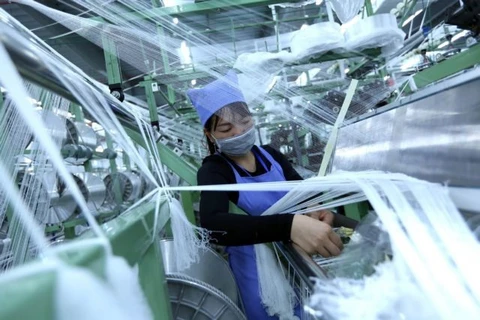
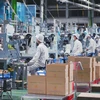
Vietnam – economic bright spot in 2020 ảnh 1Illustrative image (Source: VNA)

Hanoi (VNA) – Vietnam hasemerged as an economic bright spot with a growth rate of 2.91 percent in 2020,which is attributable to the country’s efforts in containing COVID-19 andtimely support policies to people and businesses, international organisationssaid.

The International Monetary Fund (IMF)predicted that Vietnam’s economy will strongly recover in 2021, reaching macrostability across spheres, from growth to current account deficit andemployment.

In July, the IMF said transparency is avery important factor in Vietnam’s success, and the multi-media approach hasconsolidated the people’s trust and ensured that the whole society abide bypandemic control measures.

In its World Economic League Table 2021,the Centre for Economics and Business Research (CEBR) said Vietnam’s economy isexpected to move to the 19th position in 2035.

The country’s annual rate of GDP growthis forecast to pick up to an average of 7 percent between 2021 and 2025.

Over the subsequent ten years, theVietnamese economy will expand by 6.6 percent on average each year, the centresaid.

In an article titled “A new study showsemerging economies are catching up,” The Economist of the UK said “the most successful club spans all today’s advancedeconomies as well as 16 emerging markets, such as China, India, Malaysia,Thailand and Vietnam.”

The UK-based BBC News said Vietnam hasminimised the economic damage from COVID-19 and is the only country in SouthEast Asia on track for growth in 2020.

“The country has seen slower growth thisyear and its once-thriving tourism sector has taken a particularly bad hit, butit has avoided the worst economic effects of the pandemic.”

Professor Vladimir Mazyrin, leader ofthe Centre for Vietnamese and ASEAN Studies of the Far East Institute of theRussian Academy of Sciences, has described the results of economic developmentof Vietnam in 2020 as an extraordinary success.

In an interview with Sputnik, theleading Russian expert on Vietnamese economy said positive results were postedamid recession and general crisis.

“For example, within ASEAN, only threecountries - Vietnam, Myanmar and Laos - have positive GDP growth. All othercountries are red.”

Vietnam’s 2020 growth is estimated at2.91 percent.

Prof. Maryzin said this is a greatsuccess, which will definitely help Vietnam rise to a higher position in allworld rankings in the near future.

So Vietnam's success can be called aphenomenon, he added./.
VNA
See more

Workers at a textile factory in Hanoi (Photo: VNA)

Supporting industries seek fresh growth momentum

Against a backdrop of global uncertainty and supply chain restructuring, the Government has introduced a range of measures aimed at injecting new momentum into domestic manufacturing. New provisions covering workforce training, testing and certification, trade promotion and technology upgrades have been implemented.

Workers package fruits at the factory of Vina T&T Group (Photo: nhandan.vn)

Vietnamese exporters adapt to escalating Middle East conflict

The Ministry of Industry and Trade’s Export-Import Department forecasts upward pressure on global prices for consumer goods, fuel, and crude oil in the coming time. Such hikes could exert indirect but broad negative effects on Vietnam’s overall production and trade, with particular exposure in exports destined for the Middle East.

The MoIT will closely monitor global oil prices, output, inventories and trade flows to adjust imports and domestic supply accordingly. - Illustrative image (Photo: VNA)

Vietnam triggers fuel contingency plan over Middle East crisis

The Ministry of Industry and Trade will closely monitor global oil prices, output, inventories and trade flows to adjust imports and domestic supply accordingly. It will also intensify oversight of key traders’ compliance with their 2026 minimum reserve obligations.

Workers process tra fish for export. (Photo: VNA)

Agro-forestry-fishery exports up over 17% in first two months

Of the total export value in the January–February period, agricultural products accounted for 6.09 billion USD, up 17.1% year-on-year. Seafood exports reached 1.76 billion USD, marking a sharp increase of 23.3%, while forestry products brought in 2.82 billion USD, up 7.4%.

Many private businesses are investing in the service and real estate sectors in Da Nang. (Photo: VNA)

Da Nang augments efforts to attract high-quality investments

Da Nang has consistently implemented business support policies and a selective investment attraction strategy, prioritising high technology, smart city building and sustainable development, thereby strengthening investor confidence and enhancing the city’s competitiveness in the new development phase.

Export activities at the Cai Mep - Thi Vai port cluster (Photo: VNA)

Southern region opens wide to new wave of US investment

Since 2025, US enterprises have increasingly explored investment opportunities across provinces in the Southern Key Economic Region. Ho Chi Minh City has emerged as a leading destination, highlighted by multiple cooperation agreements concluded in late 2025.

Visitors explore Vietnamese furniture products at HawaExpo 2026. (Photo: VNA)

Ho Chi Minh City’s HawaExpo 2026 triples in scale

Held under the theme “Gateway to Vietnam Furniture Prowess” and featuring more than 2,500 booths, the four-day event is expected to serve as a gateway to exploring the genuine capabilities of Vietnam’s wood and furniture industry, as well as a strategic trading hub for international markets.

Deputy Governor of the State Bank of Vietnam Pham Thanh Ha answers reporters’ questions. (Photo: VNA)

SBV vows agile policy response amid global headwinds

In the coming period, the SBV will calibrate interest rate management in line with macroeconomic developments and inflation trends, while requiring credit institutions to publicly disclose lending rates to enhance transparency.